
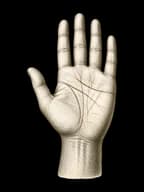
A single transverse palmar crease is one crease running across the palm where two major transverse creases are more commonly seen. It can occur in a healthy person and, by itself, is not a diagnosis. Some older palmistry and medical material calls it a “simian line” or “simian crease”; the neutral anatomical term is more accurate and respectful.

Medical boundary: A hand photo cannot diagnose a genetic, developmental, neurological, or other health condition. If the crease is part of a real health concern, discuss the whole clinical picture with a qualified professional.
What is a single transverse palmar crease?
Most palms show separate upper and lower transverse creases across the central hand. In a single transverse pattern, one crease extends across the palm instead. It may appear on one hand or both.
MedlinePlus explains that palmar creases develop before birth, that most people have three major creases, and that a single crease occurs in about 1 out of 30 people. It also stresses that the pattern is often normal. When clinicians consider it, they do so alongside medical history, symptoms and other physical findings—not as a standalone verdict.
This is the key distinction: an anatomical feature can be associated with a condition without diagnosing it. Height, heart rate, skin marks and crease patterns all need context. One visible feature does not establish a cause.
Want to see yours?
Scan your palm for a full interpretive reading.

Place your palms here
Both palms, please: your left on the left, your right on the right.
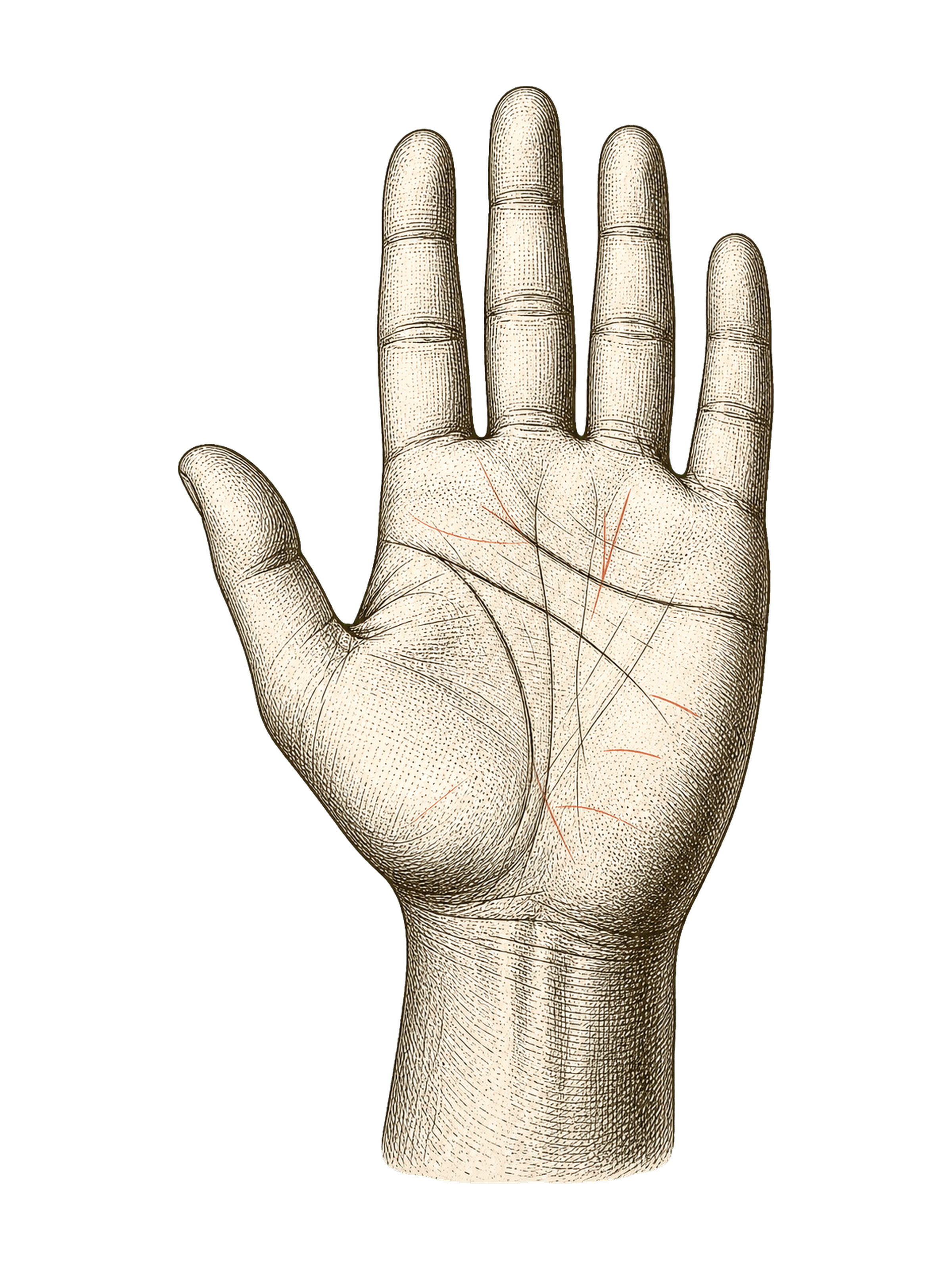
Tap to upload

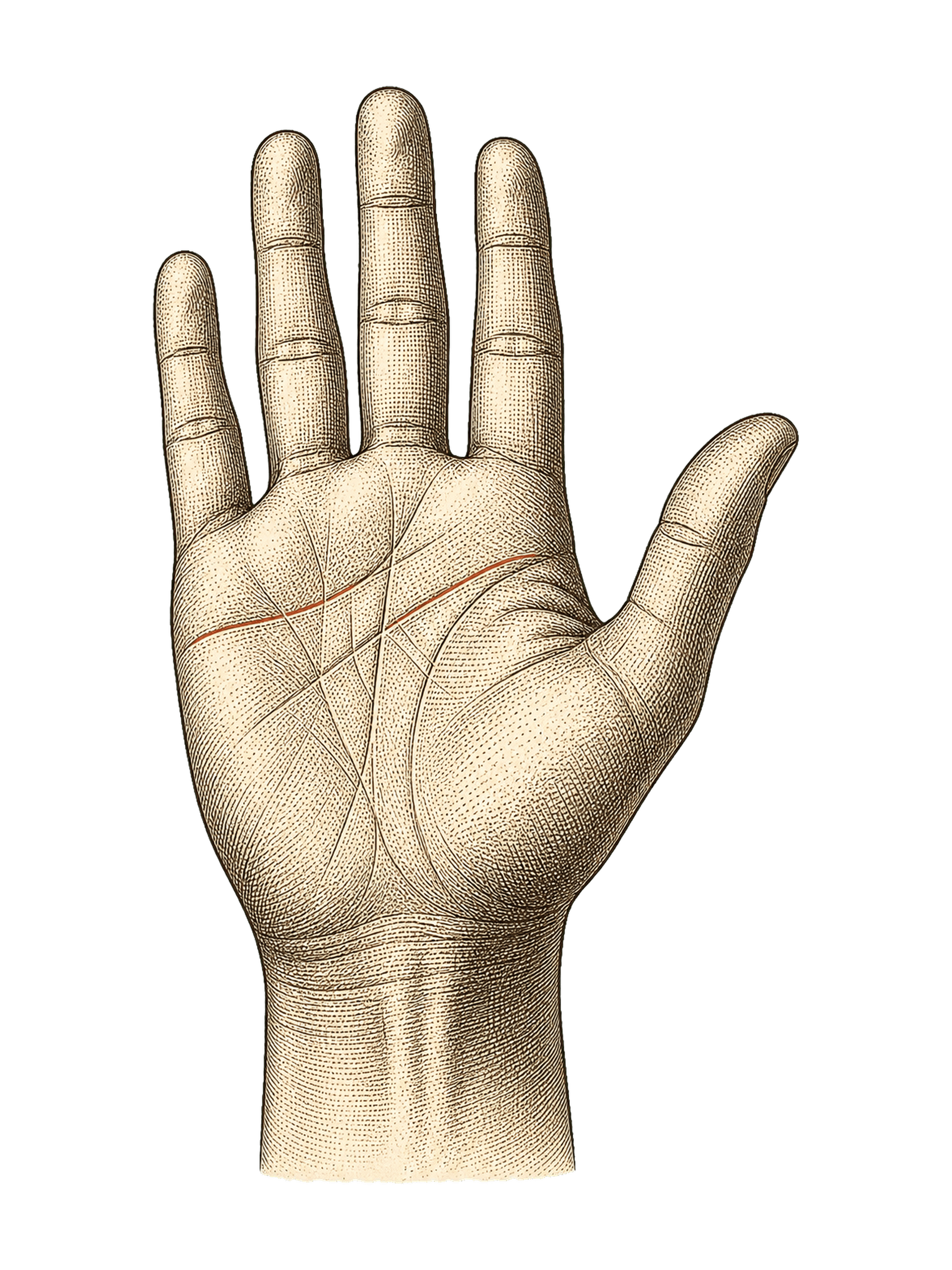
Tap to upload
Required · 18 or older
Photo privacy · Refund terms ·Details
- Your photos are sent to our analysis provider to write your reading. This browser may temporarily keep pending photos for sign-in or recovery. Photos sent from your phone are kept temporarily for hand-off. See our privacy policy for details.
- When you press Read my palms, both photos go to our analysis provider for a clarity check before payment. This checks the photos, not the validity of a reading.
- Doesn't sound like you? Email us within 7 days of your first reading for a full refund, if you haven't used a second. If a photo can't be read, your credit is returned.
- Next: your reading uses one of your readings, or a short checkout if you have none.
Photo tips
 Photo tips
Keep your palm flat, fingers slightly apart and lines in focus. Use bright, even light, and photograph each palm the same way.
 ✓ Like this
 ✕ Too dark
 ✕ Fingers cut off
Why the older “simian line” wording is a problem
The older label compares the crease with non-human primate anatomy. It persists because people still search for it and historical books use it, but it can be demeaning when applied to a person.
Use “single transverse palmar crease” in normal conversation. If you mention the old term, do it once to orient a searcher, then move on. Language should describe the hand without reducing the person to a feature.
The same restraint applies to palmistry. Dramatic names make ordinary variation feel ominous. Neutral description lowers the temperature before interpretation starts.
Is it linked with Down syndrome?
A single transverse crease can be one of many physical features observed in some people with Down syndrome, but it is neither required nor sufficient for diagnosis. The NHS Genomics Education Programme lists it among possible clinical features and explains that diagnostic confirmation uses genetic testing.
That means you cannot work backwards from one palm crease to a diagnosis. Many people with the crease do not have Down syndrome, and not every person with Down syndrome has that crease. A responsible article must say both parts.
PalmMingle is not a medical device. It does not analyse hand photos for Down syndrome or any other condition. Please do not upload a palm expecting a health screen.
What does palmistry traditionally say?
Popular palmistry often treats the single crease as a merger of the head and heart lines. From that visual idea, readers may describe thought and feeling as closely joined, then add claims about intensity, focus, stubbornness, or all-or-nothing behaviour.
These are traditional interpretations, not psychological findings. The crease does not prove that someone is intense, gifted, difficult, impulsive, emotionally controlled, or unable to separate logic from feeling. Those labels can become self-fulfilling when applied to a child or another person.
If you choose to use the symbolism for yourself, make it a question: “When do my feelings and decisions become hard to separate?” Then test your answer against actual situations. Do not assign the reading to somebody who did not ask for it.
When do palmar creases form?
The hand develops early in pregnancy. The NCBI Bookshelf overview of hand embryology describes hand morphogenesis during the embryonic and fetal period and notes that creases appear prenatally. This is anatomy, not evidence of a pre-written personality.
Main flexion creases help the skin fold as the hand moves. Their prenatal formation is one reason a large crease pattern should not be treated as a record of later moral choices, career outcomes, or emotional history.
The surface appearance of a palm can still change with growth, use, skin condition, injury and ageing. That is different from claiming a major line redraws itself when destiny changes. Our evidence guide on whether palm lines change over time keeps those claims separate.
How to look at the crease responsibly
- Describe what you see without labelling the person.
- Use the current anatomical term.
- Keep medical association separate from diagnosis.
- Keep palmistry interpretation separate from medical evidence.
- Ask a clinician—not an app—about health concerns.
This approach does not remove the curiosity. It prevents curiosity from becoming fear. The Mercury-line guide applies the same medical boundary to another name that can sound alarming.
Frequently asked questions
Is a single transverse palmar crease rare?
MedlinePlus gives an approximate frequency of 1 in 30 people. Frequency can vary across populations and definitions, so avoid turning that figure into a claim that a specific person is medically unusual.
Does it mean the head and heart lines are literally fused?
That is palmistry's visual interpretation. Anatomically, it is a variant pattern of palmar flexion creases, not the physical joining of thought and emotion.
Should a child be tested because of one crease?
One crease alone does not establish a condition. A qualified clinician can decide whether any assessment is appropriate based on the child's overall health, development, history and other findings.
Can PalmMingle interpret it?
PalmMingle may describe the pattern within palmistry's symbolic tradition if it is visible, but it must not diagnose or imply a clinical condition. Read the AI palmistry safety scope before using the service.
Sources and further reading
- MedlinePlus: Single palmar crease
- NHS Genomics Education: Down syndrome (trisomy 21)
- NCBI Bookshelf: Embryology, Hand
A crease is a feature of a hand. It is not a diagnosis, a personality, or a future.
Palmistry is an interpretive tradition, not a diagnostic tool. PalmMingle frames palm readings as entertainment and self-reflection, not prediction.