
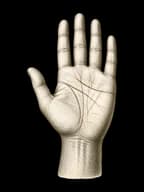
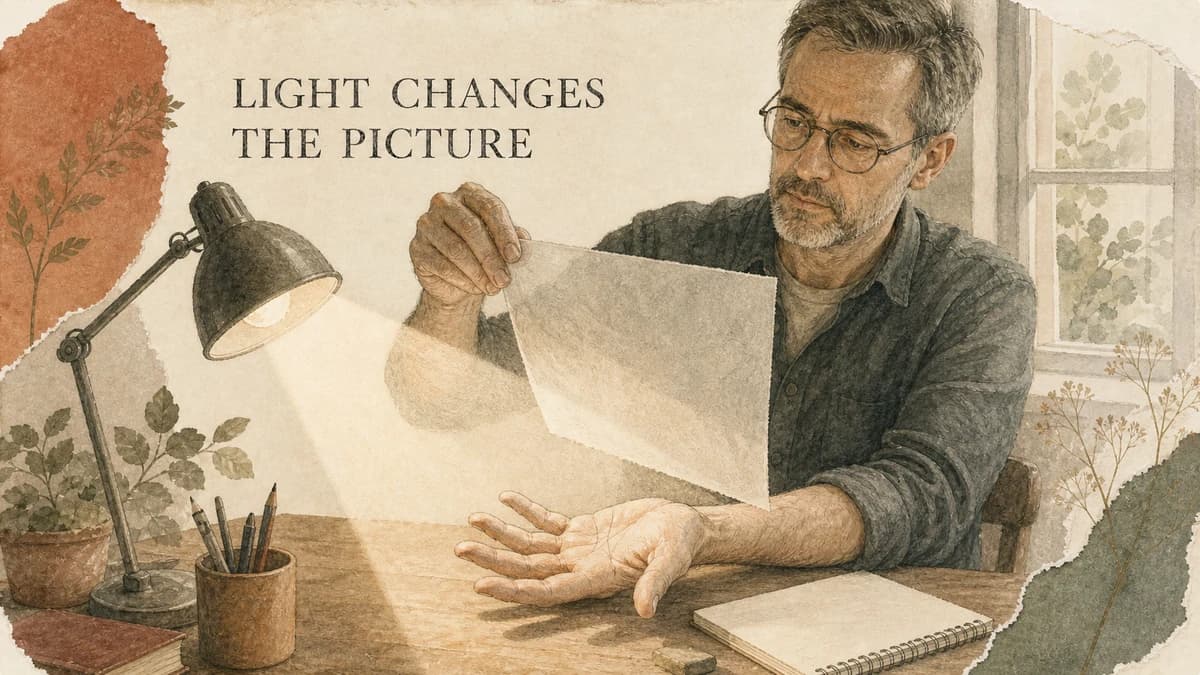
Palm lines can look different over time, but that sentence needs precision. The major palmar flexion creases are established before birth and remain stable landmarks as the hand grows. Fine wrinkles, crease depth, skin texture, scars and what a camera captures can change. None of those changes proves that personality, fate, health, or future events have changed.
Quick answer: Major architecture is largely stable; surface detail and appearance are not. Compare like-for-like photos before concluding that a line itself changed.
When do the main palm creases form?
Hand development begins early in pregnancy. The NCBI Bookshelf review of hand embryology describes hand morphogenesis across the embryonic and fetal period and notes that palmar creases appear before birth.
A cadaveric anatomy paper, “Can palmar creases serve as landmarks for the deeper neuro-vascular structures?”, notes in its discussion that the principal creases form during fetal development and then grow with the hand. The major patterns are therefore not a diary written by later career changes, relationships, habits, or moral choices.
This does not make every crease identical for life. “Stable landmark” is not the same as a frozen photograph. A child's hand grows. Skin ages. Tissue, movement, work, injury and environmental exposure affect what the surface looks like.

Want to see yours?
Scan your palm for a full interpretive reading.
Place your palms here
Both palms, please: your left on the left, your right on the right.
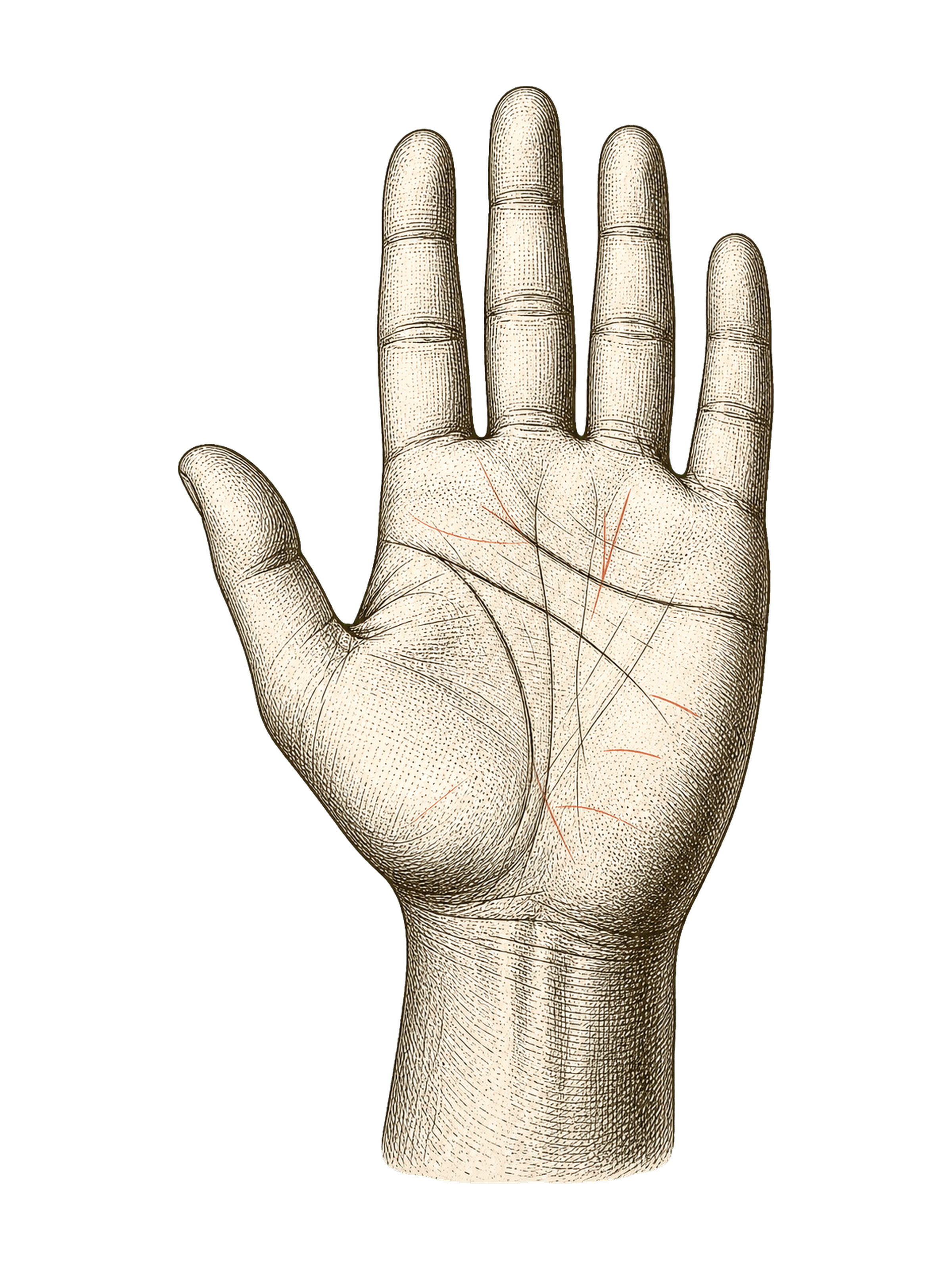
Tap to upload

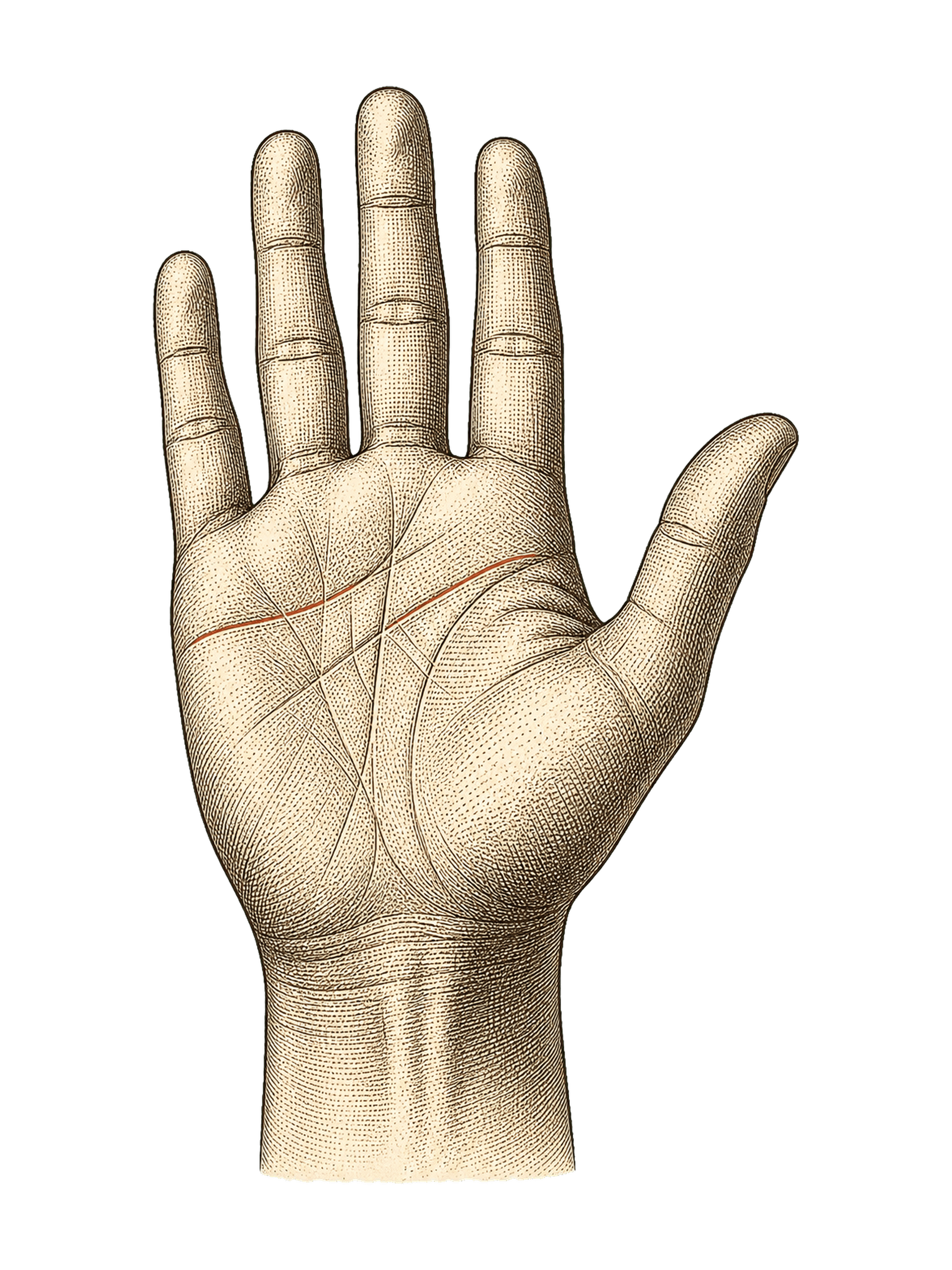
Tap to upload
Required · 18 or older
Photo privacy · Refund terms ·Details
- Your photos are sent to our analysis provider to write your reading. This browser may temporarily keep pending photos for sign-in or recovery. Photos sent from your phone are kept temporarily for hand-off. See our privacy policy for details.
- When you press Read my palms, both photos go to our analysis provider for a clarity check before payment. This checks the photos, not the validity of a reading.
- Doesn't sound like you? Email us within 7 days of your first reading for a full refund, if you haven't used a second. If a photo can't be read, your credit is returned.
- Next: your reading uses one of your readings, or a short checkout if you have none.
Photo tips
 Photo tips
Keep your palm flat, fingers slightly apart and lines in focus. Use bright, even light, and photograph each palm the same way.
 ✓ Like this
 ✕ Too dark
 ✕ Fingers cut off
What can genuinely change?
Several ordinary factors alter palm appearance:
- Growth: proportions and line lengths scale as the hand develops.
- Skin hydration: dryness can make fine lines look more numerous or pronounced.
- Ageing: skin texture, elasticity and fine wrinkling change.
- Use and pressure: repeated contact can produce calluses and alter contrast around creases.
- Injury and healing: cuts, burns, surgery and scars can interrupt or cross existing patterns.
- Swelling or body change: temporary or longer-term tissue changes affect depth and shadow.
- Photography: angle, focus, exposure, sharpening and hand tension can create apparent differences.
These are plausible physical explanations. They should be checked before a symbolic one.
What palmistry says about changing lines
Palmistry traditions often claim that the active hand changes with choices while the passive hand preserves inherited potential. Some manuals describe minor lines appearing, fading or strengthening as circumstances change. Cheiro's Palmistry for All, for example, describes the so-called Health line as especially subject to change.
That is evidence of what the tradition teaches, not proof that a fading crease records improved health or a new branch predicts an event. To establish a link, researchers would need consistent definitions, controlled images, blinded assessment and outcomes specified in advance. A before-and-after anecdote cannot separate real surface change from lighting, memory and selective interpretation.
PalmMingle therefore treats any “change” reading as a reflective comparison. It does not say that destiny has rewritten the hand.
How to compare your palms properly
If you want a useful record, standardise the images:
- Use the same hand and note which one it is.
- Use the same camera or similar lens distance.
- Photograph straight on with the palm relaxed.
- Use soft, even light from the same direction.
- Do not add sharpening, beauty filters, or heavy contrast.
- Include the full palm and finger bases.
- Record the date and any injury or skin condition.
Then compare major lines separately from fine surface marks. Ask: are the same endpoints and main paths present? Does the difference disappear when lighting matches? Is a new mark actually a scar or callus?
If the photo is not comparable, the conclusion is not “my fate line changed.” It is “these images cannot answer the question.”
Can the heart, head, or life line change?
Their depth and visual continuity may appear different, while their major route usually remains recognisable. A crossing wrinkle can make a line look broken. Dryness can add chain-like texture. A scar can produce a genuine local interruption.
Those changes do not alter the safety rules:
- A life line does not measure lifespan. See the life-line myth guide.
- A head line does not diagnose cognition or mental health.
- A heart line does not diagnose heart disease or determine relationship outcomes.
An anatomical change deserves an anatomical explanation first. A symbolic reading can remain optional and secondary.
Does a new line mean your future changed?
No conclusion about the future follows from a new or newly visible line. Often, what changed is the image, the skin surface, or your attention. Once you learn a palmistry category, you also become more likely to notice a faint crease that was present before.
You can still use the discovery as a prompt. If a new-looking Sun line makes you think about sharing creative work, choose a real action—publish a draft, practise, ask for feedback. The action may change your prospects. The crease does not do the work.
What an AI photo comparison can and cannot tell you
An image system can compare visible patterns only when the inputs are clear and consistent. It cannot determine whether a difference represents fate, hidden illness, emotional growth, or a future event. It also cannot recover detail that a blurred or overexposed photo never captured.
PalmMingle provides a reading of the image you submit at that time. A later reading may differ because the hand, photo, or interpretation differs. That is not proof of biological or predictive change. Read the AI palmistry scope before buying a reading.
Frequently asked questions
Do palm lines change every few months?
Fine surface details can appear different, but a recurring schedule is not established. Standardised photos are necessary before claiming even a visual change.
Can exercise or manual work change palm lines?
Use can affect calluses, skin thickness and surface appearance. It does not reliably rewrite the major creases into a new personality or future.
Do scars count as palm lines?
No. A scar may cross or alter a crease, but it is healed tissue after injury, not a newly generated palmistry line.
Should a new palm mark worry me?
Palmistry cannot assess it. Seek appropriate medical advice for a new, changing, painful, bleeding, or otherwise concerning skin feature.
Sources and further reading
- NCBI Bookshelf: Embryology, Hand
- “Can palmar creases serve as landmarks for the deeper neuro-vascular structures?” (Surgical and Radiologic Anatomy)
- MedlinePlus: Single palmar crease
- Cheiro, Palmistry for All (1916), historical source
Photograph carefully, describe modestly, and never mistake a changed image for a changed destiny.
Palmistry is an interpretive tradition, not a diagnostic tool. PalmMingle frames palm readings as entertainment and self-reflection, not prediction.