
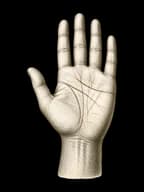
Field guide
How to read palms
Where the lines run, what tradition says about them, and the point at which honest reading stops and invention begins.
What is palm reading actually claiming?
Less than most people assume, and less than most palmistry writing implies. Palmistry is an interpretive tradition — a very old, internally consistent vocabulary for describing hands and, through them, temperament. It is not a diagnostic instrument and it has no scientific validation. Nothing in the creases of your palm knows what will happen to you in March.
What the tradition is genuinely good at is giving you language. Reading a hand forces you to sit with a set of specific claims about how you handle feeling, decision and effort, and to answer each one honestly. That is the same mechanism a well-written personality questionnaire uses, minus the questionnaire. We have written about this at more length in is palm reading real and is there any science behind palm reading. Read those first if you want the argument before the technique.
Which hand should you read?
The usual instruction — “left for women, right for men” — is a modern simplification and not what the older sources say. The more useful convention is dominant versus non-dominant. The non-dominant hand is read as the disposition you arrived with; the dominant hand as what you have done with it. The interesting information is almost never in either hand alone. It is in the difference between them.
So read both, and pay attention to where they disagree. A head line that is markedly straighter on the dominant hand than the other one is the kind of divergence worth sitting with. The full case for this is in which hand to read for palmistry.
Where do the four major lines run?
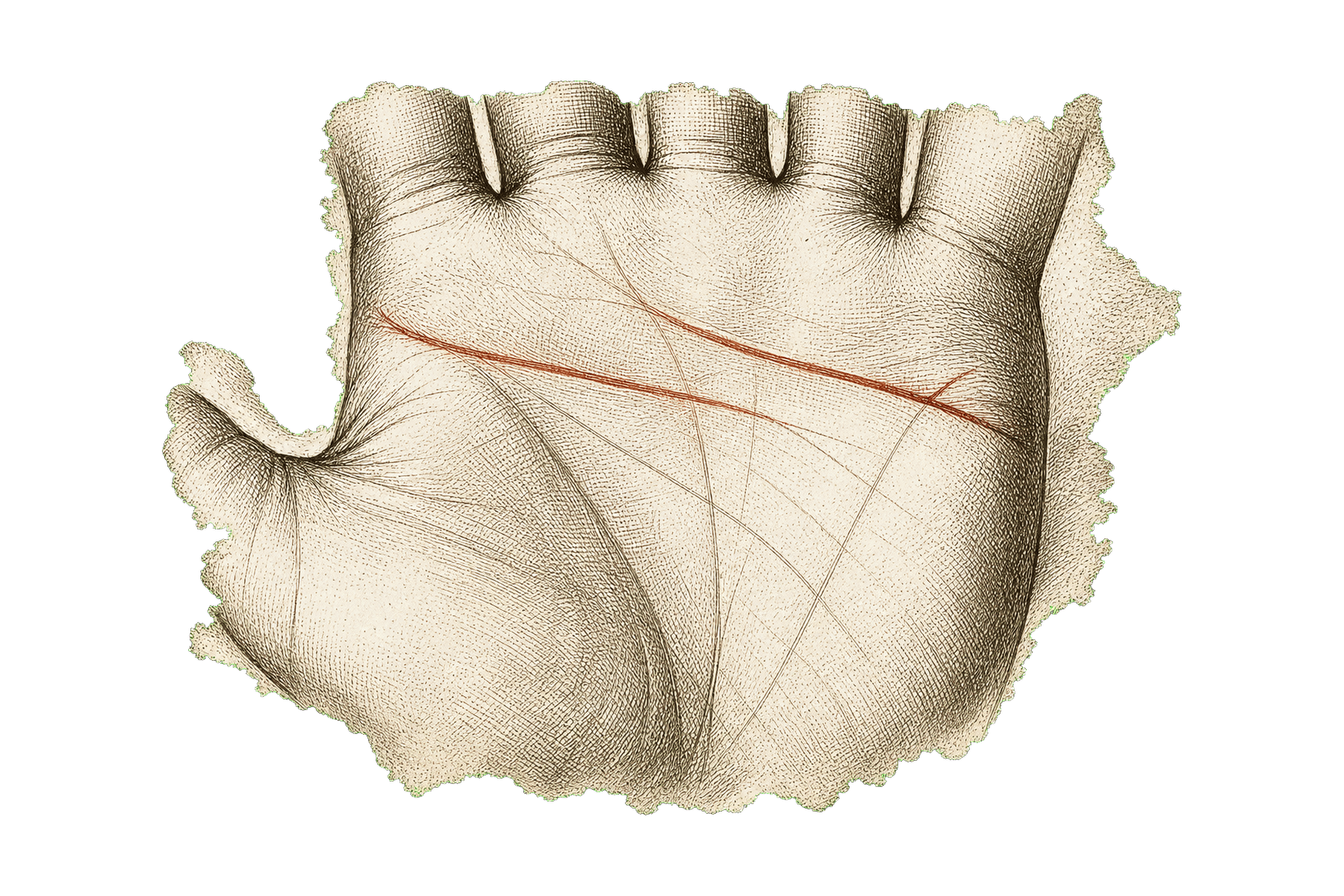
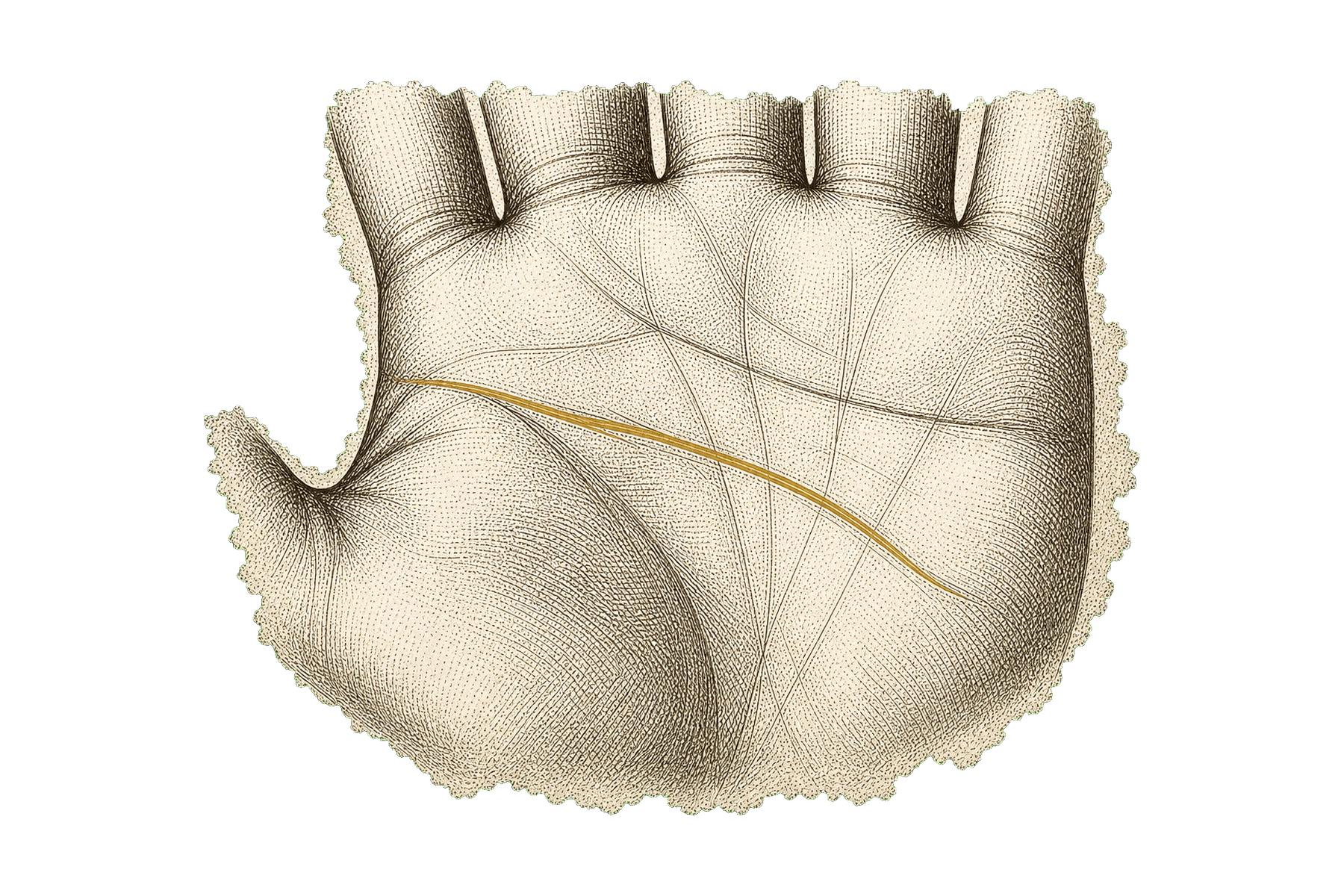
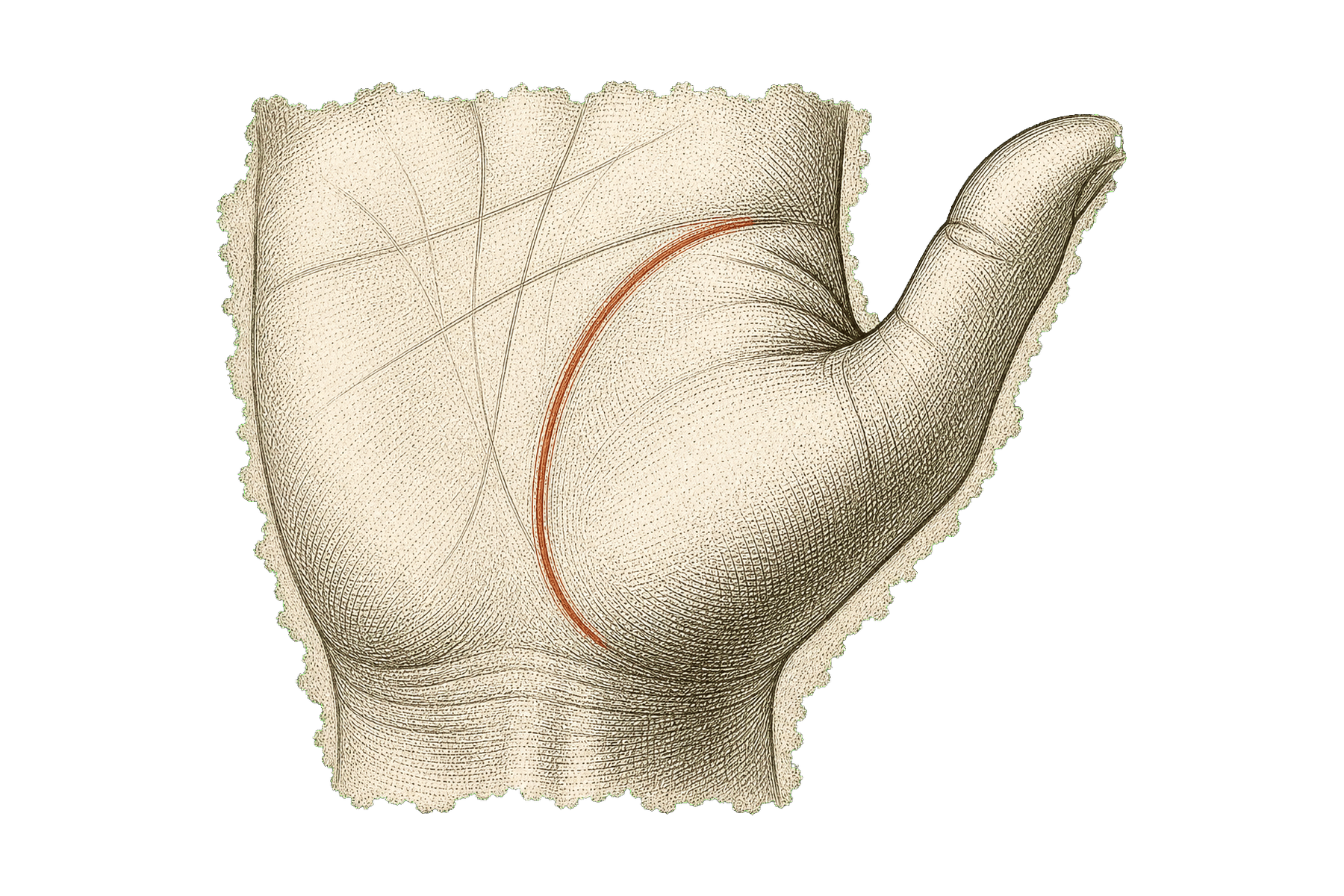
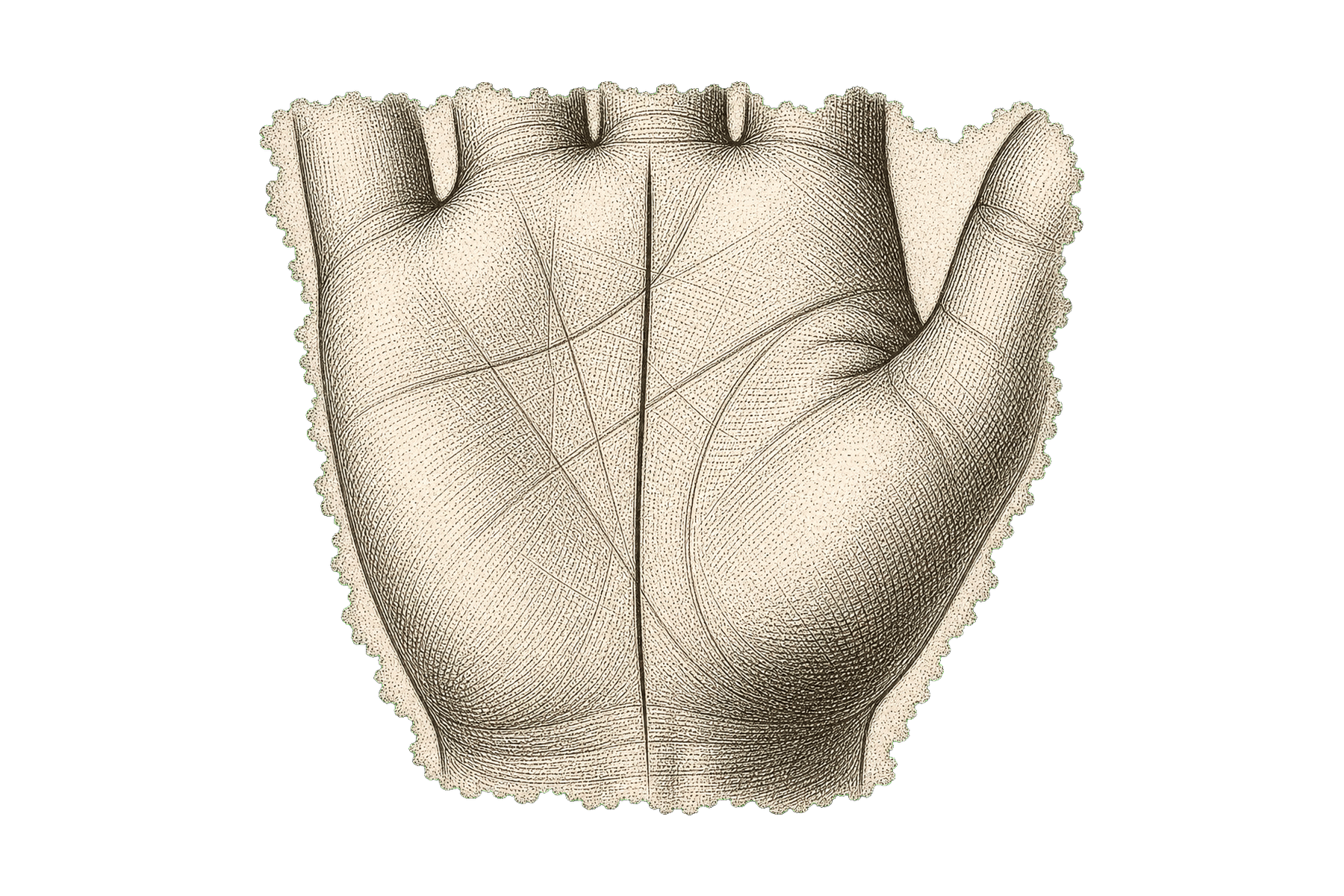
Open your hand flat, palm up, fingers slightly apart, in even light. Four creases carry almost all of the traditional interpretation.
The heart line is the uppermost of the long horizontal creases, running across the palm below the fingers. The head line runs roughly parallel beneath it, starting near the gap between thumb and index finger. The life line curves around the base of the thumb, enclosing the mount at its root. The fate line, when it is present at all, runs vertically up the middle of the palm toward the middle finger.
In the Indian tradition these carry Sanskrit names — Ayu Rekha, Matri Rekha, Pitri Rekha and Urdh Rekha respectively — and the vocabulary is worth knowing, because the Sanskrit names describe relationships rather than the flat English labels of “heart” and “head”.
How do you read the heart line?
Tradition reads the heart line for emotional style rather than romantic fate. Its length, curve and ending matter more than its depth. A line that curves upward and ends high, between or under the index and middle fingers, is read as expressive — feeling is stated rather than managed. A line that runs straight across, ending bluntly, is read as contained: the same feeling, less externalised.
Breaks and chains along the line are where most people panic, and where most popular palmistry is at its worst. Traditionally a broken heart line is read as a discontinuity in emotional life, not a verdict on it. We have written specifically about that in the broken heart line, and about the line generally in what your heart line says.
How do you read the head line?
The head line is read for how you think, not how much. The two things to look at are its curve and its start. A head line that curves down toward the wrist is read as associative and imaginative; one that runs straight across is read as literal and decisive. Neither is the better hand to have — the tradition treats them as different instruments, and both have a characteristic failure mode.
Where it begins matters too. A head line joined to the life line at its start is read as caution, a slower separation from the received view; a clear gap between them is read as independence, sometimes impulsiveness. There is more on all four variations in head line palm reading.
Does a short life line mean a short life?
No, and this is the single most damaging misreading in popular palmistry. The life line has never been a lifespan gauge in any of the serious traditions. It is read for vitality and constitution — the quality of your physical engagement with the world, not its duration. A short life line is read as energy that is concentrated rather than diffuse.
If you have been quietly worried about yours, read the life line palm reading myth and then stop worrying about it.
What if you have no fate line?
Plenty of hands do not have one, and its absence is unremarkable. The fate line is read for the sense of a directing thread through a life — a vocation, an organising commitment. A faint or missing line is traditionally read as a life shaped by the person rather than by a single trajectory, which is a description many people would recognise and few would call a deficit. Breaks in it are read as changes of direction, not failures. More in the fate line guide.
Each shape a reading can name, from a forked heart line to an open centre, has its own page among the line patterns.
What do the mounts and hand shapes add?
The mounts are the fleshy pads at the base of each finger and around the palm’s edges, each named for a classical planet — Jupiter under the index, Saturn under the middle, Apollo under the ring, Mercury under the little finger, with Venus at the thumb’s base and Luna opposite it. A mount that stands notably higher than its neighbours is read as emphasis in that register: ambition, gravity, expression, communication, appetite, imagination.
Hand shape works as a coarser filter. The four-element scheme — earth, air, water, fire — sorts hands by the ratio of palm length to finger length. Square palm with short fingers is earth: practical, grounded. Square palm with long fingers is air: verbal, analytic. Long palm with long fingers is water: receptive, sensitive. Long palm with short fingers is fire: fast, forceful. It is a four-box taxonomy for something continuous, and it is wrong at the edges more often than its confidence suggests — which is the subject of palm hand shapes meaning.
How do you take a photograph good enough to read?
Even, indirect light — a window on an overcast day is close to ideal, and direct sun is not, because it throws the hard shadows that get mistaken for line breaks. Lay the hand flat and open with the fingers slightly apart, palm square to the camera rather than angled. Fill most of the frame with the hand. Keep the camera steady; a blurred crease and a shallow crease look identical to any reader, human or otherwise.
What should you do with what you find?
Treat every line as a proposition to argue with, not a result to accept. The value of an hour spent on your own hand is not the conclusions — it is that you had to give a specific answer to a specific question about yourself, and you either recognised the description or you did not. Both outcomes tell you something. Only one of them is flattering, which is roughly the right ratio.
If you would rather have the whole hand read at once, with the hedges kept in, that is what this site does.
Three readings for one price, paid before the first is generated. See pricing.