
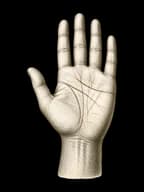
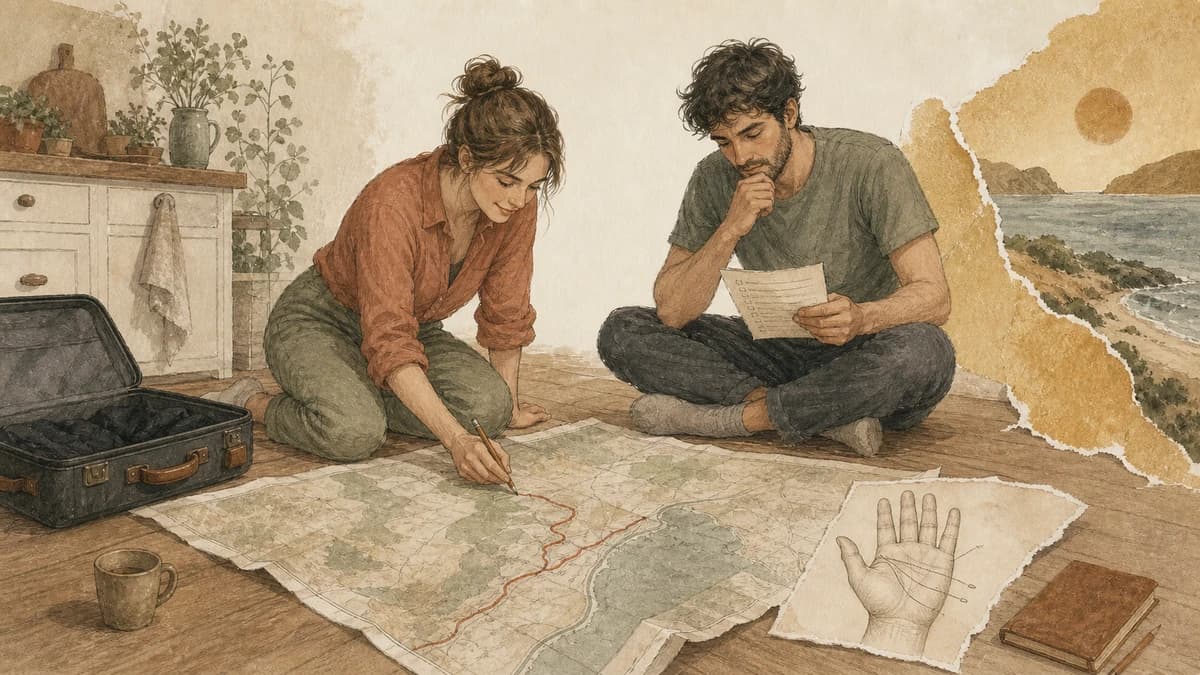
Travel lines in palmistry are fine lines that move from the life-line area toward the outer lower palm, especially the Mount of the Moon. Some readers also use horizontal lines already on that outer edge. The tradition links them with journeys, relocation, or a pull toward unfamiliar places. They cannot confirm that a trip will happen, provide a date, secure a visa, or predict an accident.
Quick answer: Look on the lower half of the palm, between the life line and the outer edge opposite the thumb. Keep the reading symbolic. Use official travel and immigration sources for real decisions.
Where are travel lines on the palm?
First locate the life line curving around the thumb pad. Then find the Mount of the Moon, the padded area along the outer lower palm opposite the thumb.
Western palmistry commonly calls two kinds of fine creases “travel lines”:
- branches leaving the life line and bending toward the Moon mount;
- short lines running across or into the Moon mount from the outer edge.
Cheiro's Palmistry for All describes both in a chapter titled “Travels, Voyages and Accidents.” That title captures the old predictive style. It documents what a prominent practitioner taught in 1916; it does not demonstrate that a crease forecasts an itinerary or danger.
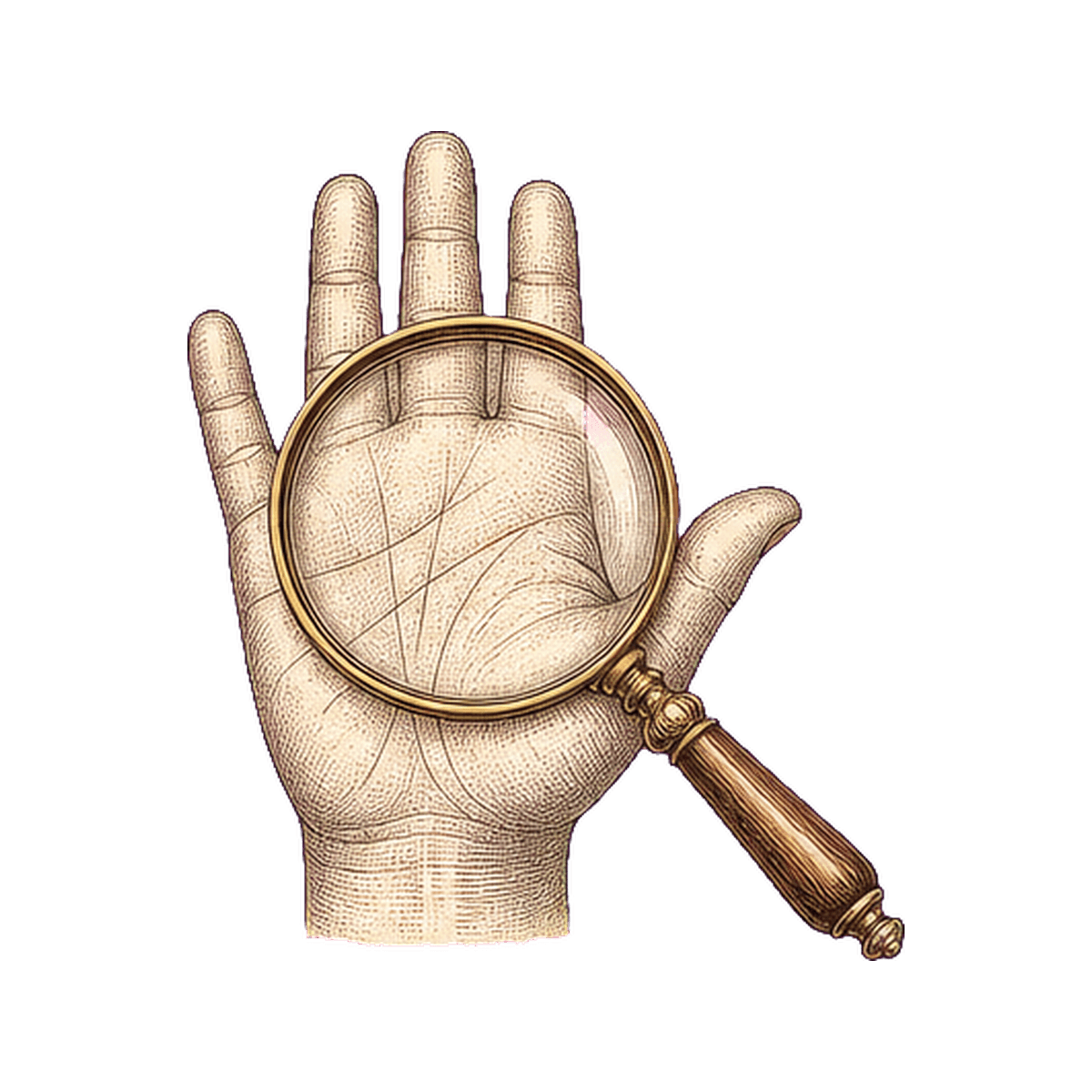
Want to see yours?
Scan your palm for a full interpretive reading.
Place your palms here
Both palms, please: your left on the left, your right on the right.
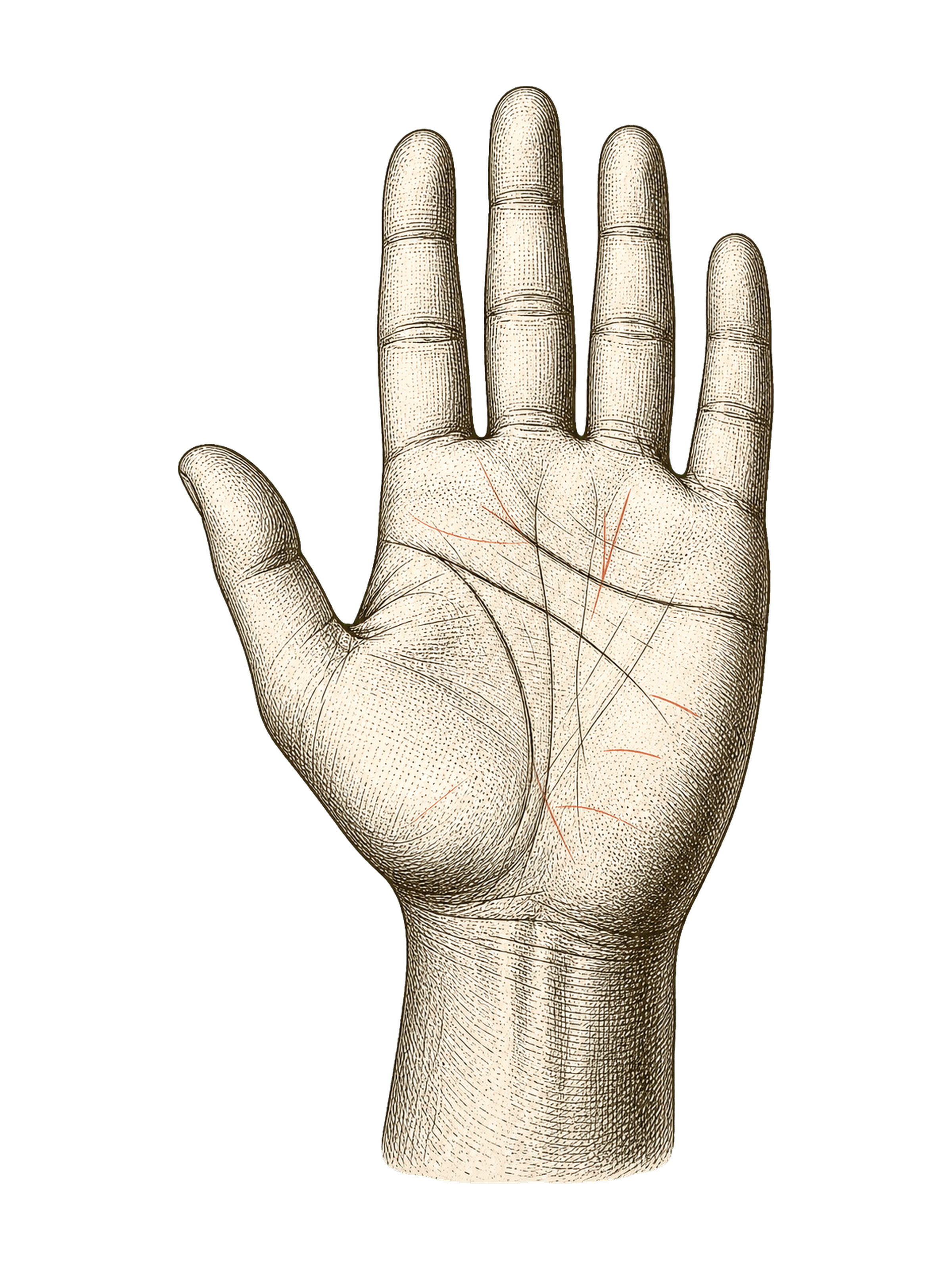
Tap to upload

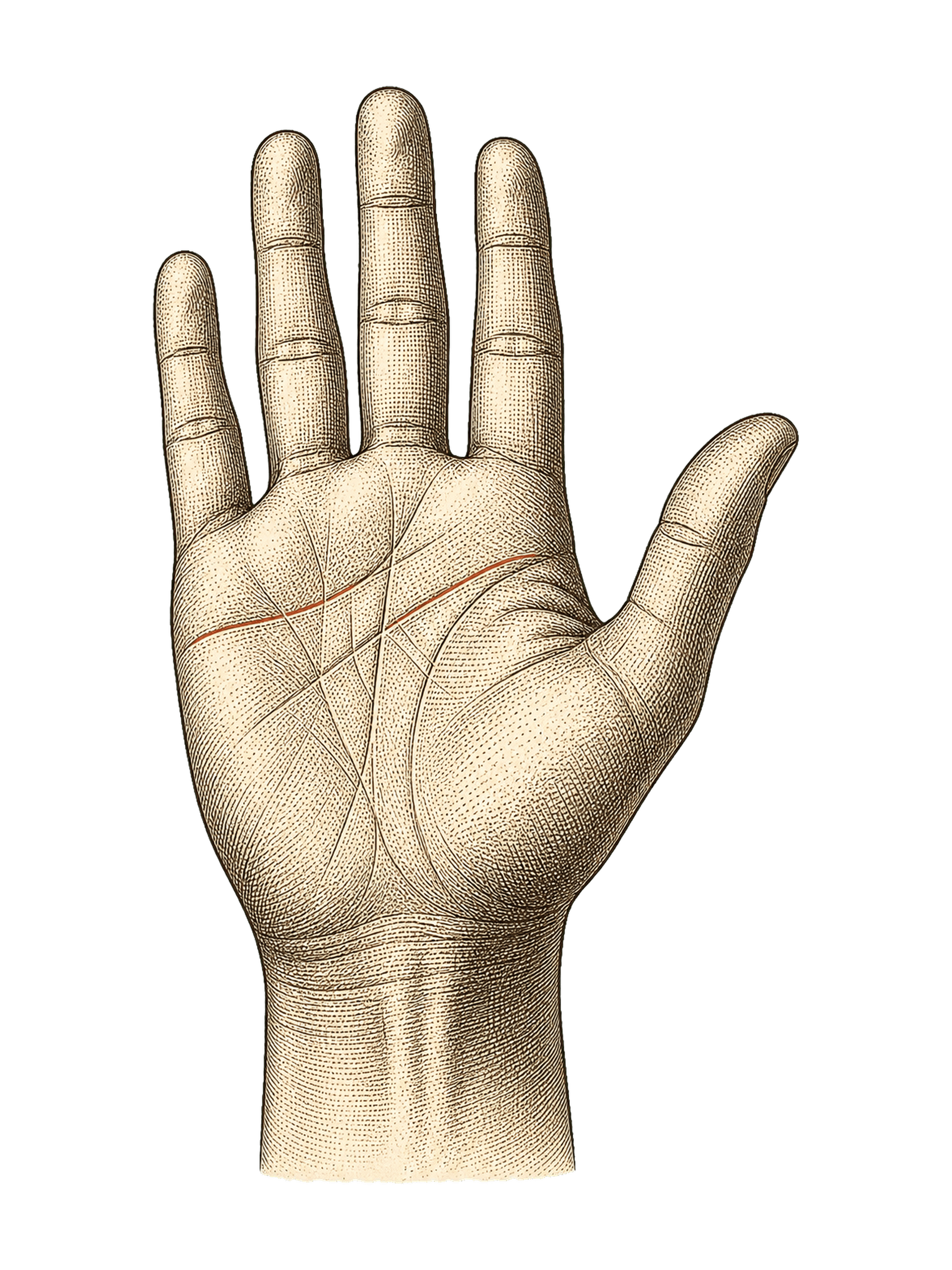
Tap to upload
Required · 18 or older
Photo privacy · Refund terms ·Details
- Your photos are sent to our analysis provider to write your reading. This browser may temporarily keep pending photos for sign-in or recovery. Photos sent from your phone are kept temporarily for hand-off. See our privacy policy for details.
- When you press Read my palms, both photos go to our analysis provider for a clarity check before payment. This checks the photos, not the validity of a reading.
- Doesn't sound like you? Email us within 7 days of your first reading for a full refund, if you haven't used a second. If a photo can't be read, your credit is returned.
- Next: your reading uses one of your readings, or a short checkout if you have none.
Photo tips
 Photo tips
Keep your palm flat, fingers slightly apart and lines in focus. Use bright, even light, and photograph each palm the same way.
 ✓ Like this
 ✕ Too dark
 ✕ Fingers cut off
Travel line versus ordinary fine crease
The outer palm contains many shallow folds because the hand bends, grips and contacts surfaces. Palmistry does not offer a scientifically validated threshold separating a “travel line” from ordinary variation.
If you want to use the visual category consistently:
- Look for a line with a clear direction toward the Moon area.
- Do not count temporary scratches or colour boundaries.
- Compare multiple neutral photos if the line is faint.
- Record uncertain features as uncertain.
Avoid treating every short horizontal line as a separate future trip. That creates an unfalsifiable diary where any journey can be matched to something after it happens.
What do travel lines mean traditionally?
Old and modern palmists often divide interpretations by length, depth, origin and crossings. A long branch from the life line may be called relocation; small edge lines may be called shorter journeys; a strong line toward the Moon may be connected with life abroad. Marks crossing a travel line can attract warnings about delay or danger.
None of these shapes can tell you:
- whether a visa will be granted;
- when or whether you will move country;
- whether a journey will be safe;
- whether an airline, border authority, employer, or landlord will accept your plans;
- whether travel is financially sensible.
The useful reflective theme is openness to change. You might ask: Where am I seeking novelty? What would I need to feel prepared for a move? Am I escaping something or moving toward something? Those questions belong to you; the crease is only a prompt.
Why timing claims do not hold up
Traditional readers sometimes map ages along the life line and assign a date to the point where a travel branch leaves it. Different systems use different scales, and the start and endpoint of a fine line are subjective. That means two readers can produce different dates from the same hand.
A date that cannot be measured consistently is not a reliable basis for booking, resigning, applying, or waiting. Build a real timeline from passport validity, application processing, money, work, care responsibilities and current official rules.
For UK visa and immigration decisions, use GOV.UK's visas and immigration service. For US international travel information, use the US Department of State. Rules change; a palm line does not update with them.
How to use the symbol without outsourcing the decision
Turn the line into a planning exercise:
- Symbolic prompt: “I keep thinking about a move.”
- Evidence check: Which destination, cost, rule, risk, and deadline are real?
- Small action: Check official entry requirements or price a realistic budget.
- Decision owner: You, with appropriate professional advice—not the hand.
This preserves the imaginative part of palmistry while reconnecting it to reality.
If you request a PalmMingle reading, the result may discuss traditional themes visible in your photo. It cannot approve travel, immigration or safety choices. See what the AI reading covers before purchase.
Frequently asked questions
Which hand shows foreign travel?
Palmistry traditions differ. Some prioritise the dominant hand; others compare both. Our which-hand guide separates those conventions from observation. Neither hand can prove future travel. Use both only for symbolic comparison.
Does a line from the life line to the Moon mount mean relocation?
That is a common traditional interpretation. It is not evidence that relocation will occur.
Can a broken travel line predict a cancelled trip?
No. A break can be ordinary crease variation, skin texture, lighting, or a palmistry symbol. Check the real booking and travel conditions.
Can palmistry predict a travel accident?
No. Do not use it for risk assessment. Follow current official advice, transport guidance, insurance terms and local conditions.
Sources and further reading
- Cheiro, Palmistry for All (1916), “Travels, Voyages and Accidents”
- GOV.UK: Visas and immigration
- US Department of State: International travel
Let a travel line start a question if you enjoy the tradition. Let documents, evidence and judgement answer it.
Palmistry is an interpretive tradition, not a diagnostic tool. PalmMingle frames palm readings as entertainment and self-reflection, not prediction.