

To end a friendship, decide whether you want a pause, less contact or a clear ending, then communicate that decision in a proportionate way. Keep your explanation specific and your contact boundary understandable. You can be considerate without promising to continue a relationship you have decided to leave.
For a clear ending: “I've thought about our friendship, and I have decided to step away. I won't be continuing our calls or one-to-one plans. I wish you well.” If it is safe and appropriate, you can add a brief reason. You do not need to deliver a verdict on the other person's character.
Decide what you are ending before you explain it
Use language that matches your decision. A pause leaves open a future conversation; reduced contact changes the relationship; an ending closes the offer of friendship. Mixing those meanings can leave both people with different expectations. If you are unsure, acknowledge that uncertainty rather than presenting a permanent decision you do not mean.
| Your actual decision | What to say clearly | What not to imply |
|---|---|---|
| A temporary pause | What contact you need to stop, and when you will revisit it | That everything will definitely return to normal |
| A less close friendship | Which plans or topics you no longer want | That you are available for the same level of intimacy |
| An ending | That you are stepping away and what contact will stop | “Maybe soon” if you do not intend to reconnect |
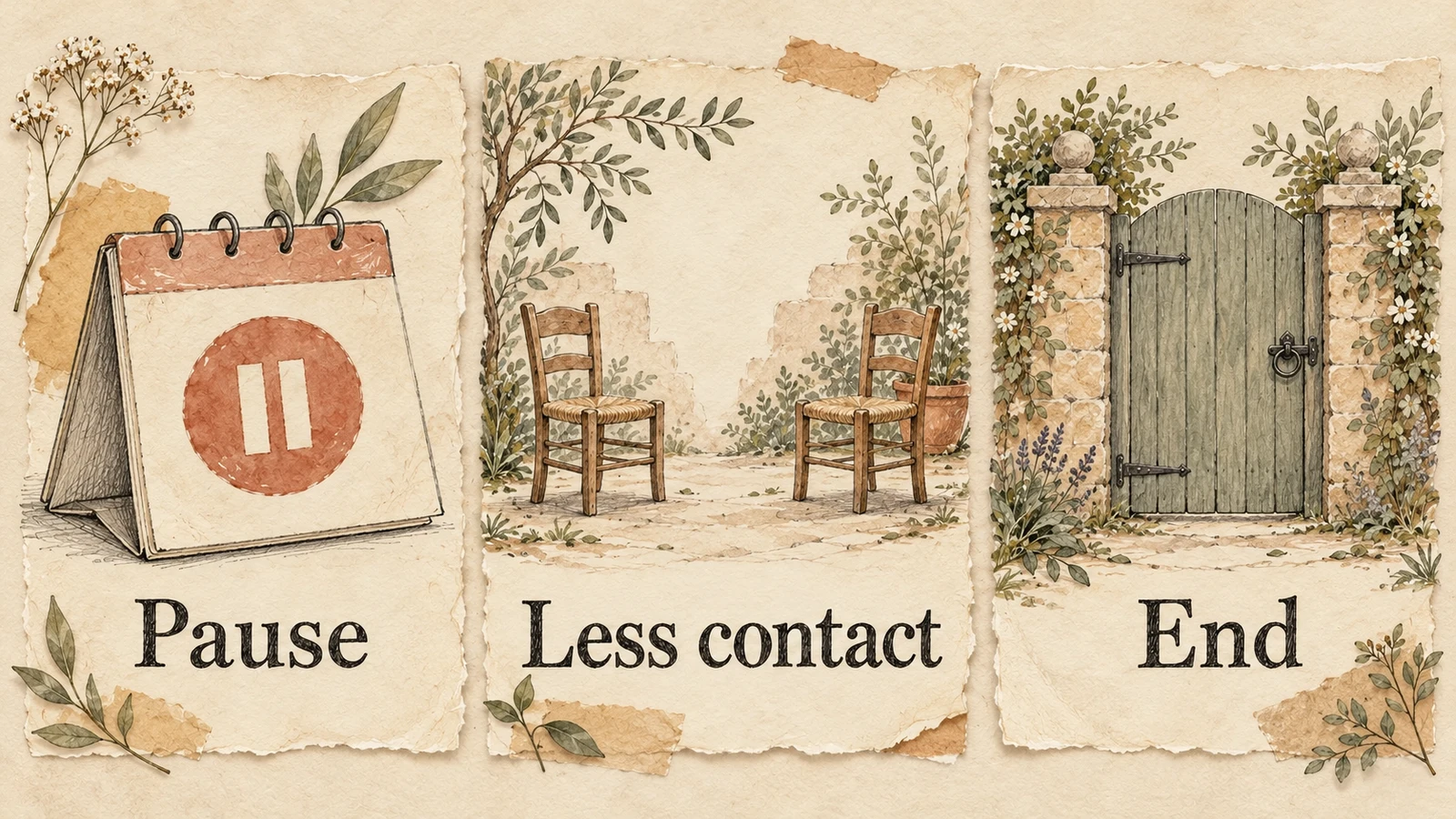
The Centre for Innovation in Campus Mental Health's friendship guide treats endings as a range of approaches shaped by what is practical, aligned with your values and safe. It does not offer one universal breakup method. Think about the relationship you actually have, including whether you share work, classes or a close social circle.

Want to see yours?
Scan your palm for a full interpretive reading.

Place your palms here
Both palms, please: your left on the left, your right on the right.
Add a photo

Add a photo
Required · 18 or older
Photo privacy · Refund terms ·Details
- Your photos are sent to our analysis provider to write your reading. This browser may temporarily keep pending photos for sign-in or recovery. Photos sent from your phone are kept temporarily for hand-off. See our privacy policy for details.
- When you press Read my palms, both photos go to our analysis provider for a clarity check before payment. This checks the photos, not the validity of a reading.
- Doesn't sound like you? Email us within 7 days of your first reading for a full refund, if you haven't used a second. If a photo can't be read, that reading is returned.
- Next: your reading uses one of your readings, or a short checkout if you have none.
Photo tips
 Photo tips
Keep your palm flat, fingers slightly apart and lines in focus. Use bright, even light, and photograph each palm the same way.
 ✓ Like this
 ✕ Too dark
 ✕ Fingers cut off
Separate a repair conversation from an ending conversation
If you want something to change and would stay if it did, make that request rather than announcing an ending to force a response. If you have already decided to leave, avoid presenting it as a problem they can solve. The difference is whether you are inviting a shared decision or explaining your own.
A repair request: “When plans change without telling me, I lose time and money. I need us to confirm before I book. Can we do that?”
A decision to leave: “I've raised this before, and I have decided I don't want to continue the friendship. I won't be making further plans.”
You can own your contribution without changing the decision: “I should have said sooner that I was unhappy. I'm sorry I let that build up. I still need to step away.”
If you want repair, start with telling a friend they hurt you. A breakup message should not be a disguised test of how hard they will fight to keep you.
Choose a medium that fits the situation
Choose a call, message, letter or meeting according to what is safe, accessible and clear for both people. A written message can help you be precise; a conversation can allow questions if you are willing to have one. The campus guide linked earlier includes different ways to hold the conversation rather than requiring a face-to-face meeting.
For an ordinary disagreement in a close friendship, you might offer a short call. For a casual connection that has mutually faded, a formal announcement may be unnecessary. If there is intimidation, repeated boundary-crossing or fear of retaliation, prioritize your safety and seek appropriate support rather than arranging a private meeting for etiquette's sake.
Do not recruit a mutual friend to deliver the news because the conversation is uncomfortable. Practical help or support can be useful; making another person speak for you can put them in the middle. If safety requires an intermediary, treat that as a specific arrangement rather than a friendship rule.
Use a short message that does not attack their identity
Describe your decision and the contact boundary without listing every grievance. A brief explanation can be honest; a detailed prosecution may invite an argument about each example. Use words you can stand behind later, including if the message is shared. Avoid diagnoses, humiliation and claims about what everyone else thinks.
When the friendship no longer fits:
I value parts of the time we have shared, but I don't want to continue the friendship. I am stepping away from our one-to-one contact. I know that may be painful to hear.
After a repeated problem:
I've asked for the jokes about my private life to stop. They have continued, and I have decided to end our friendship. Please don't contact me for personal catch-ups.
When you want a pause:
I need a break from our calls and messages. I will contact you next month to say whether I am ready to talk. Please give me that space in the meantime.
Only give a date or promise future contact if you intend to honor it. “For now” can sound gentler, but it should describe a real uncertainty rather than hide a final decision.
Plan for the practical overlap
Before sending a message, identify the things that will still connect you: borrowed items, paid bookings, shared responsibilities, work or a group event. Decide how you will handle each without turning every logistical exchange into a fresh emotional conversation. You can end the friendship while still dealing fairly with commitments you made.
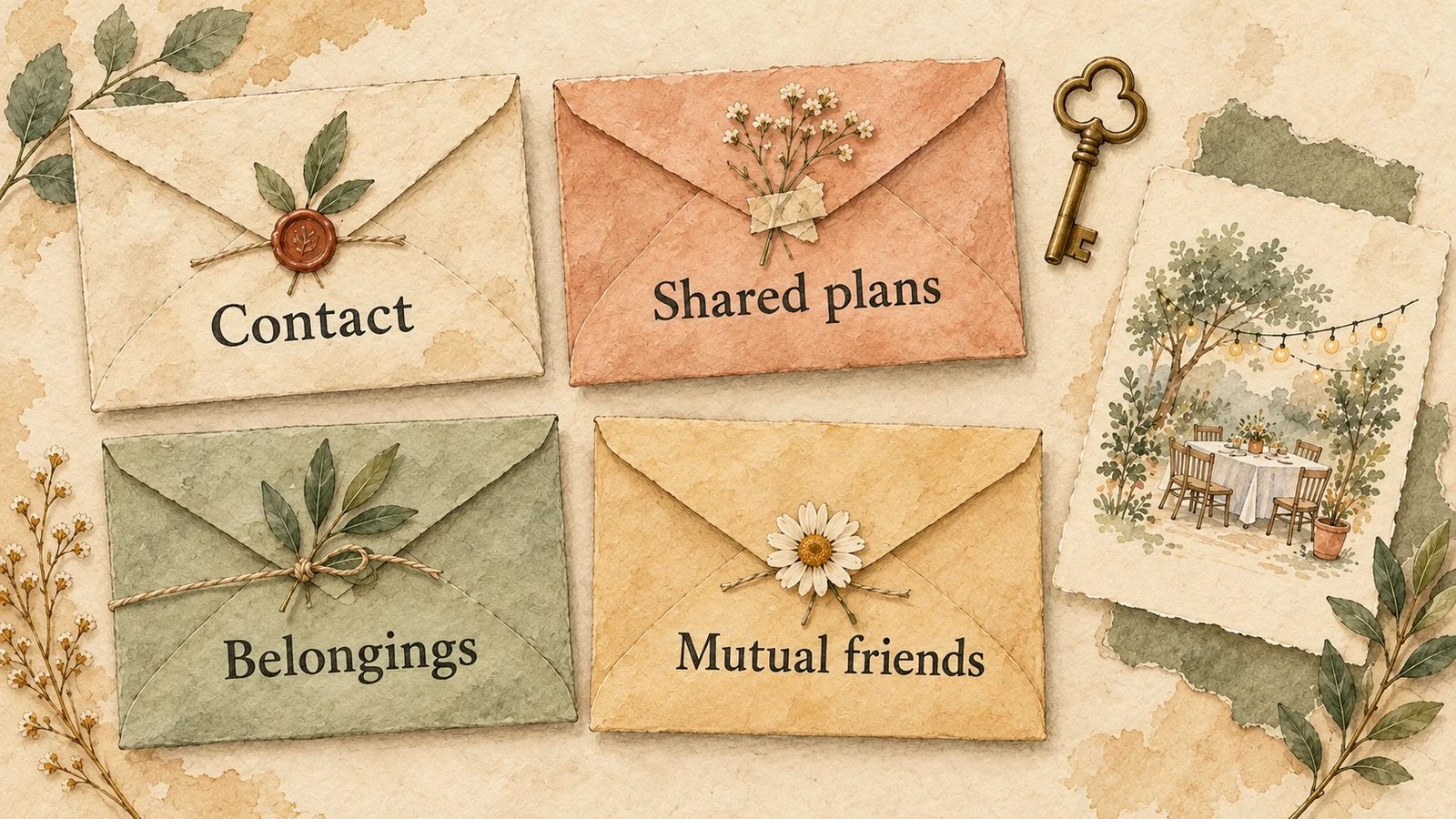
For example, “I will leave your books with the venue's reception on Friday, if that works for you” makes one arrangement without demanding a goodbye meeting. Confirm permission before involving a third party. If a booking involves money, check the actual terms and discuss the outstanding commitment directly rather than assuming the breakup cancels it.
For shared groups: “I will be civil when we are at the same events. I won't be arranging private time together.” You cannot promise that every encounter will feel comfortable, but you can describe your own conduct.
Respond once, then follow the boundary you named
You can hear that the other person is hurt without withdrawing a decision you mean. If you are open to a conversation, say what it is for. If you are not, avoid repeatedly reopening the issue to relieve your own guilt. Clarity includes acting consistently with the message after you send it.
- They ask why: give the brief reason you are willing to discuss.
- They promise change: decide whether that changes your decision; do not imply it does if it does not.
- They disagree: “I understand you see it differently. My decision is still to step away.”
- They keep contacting you: restate the boundary if appropriate, then use available contact controls and support according to the situation.
Tell mutual friends what they need to know without asking them to vote: “We are no longer close. I don't want you to relay messages or choose sides.” You can ask for support without circulating private details.
For the receiving end, read what to do after a friendship breakup. If your aim is a continuing relationship with clearer limits, see boundaries with friends.
PalmMingle's AI palmistry page explains symbolic reading as entertainment and reflection. A palm mark cannot decide whom you should keep or leave; make this decision from the relationship and your circumstances.
Palmistry is an interpretive tradition, not a diagnostic tool. PalmMingle frames palm readings as entertainment and self-reflection, not prediction.