

To stop giving unsolicited advice, pause before suggesting a solution and ask what kind of support the other person wants. Let them finish a thought, check what you heard, and ask whether they want company, ideas or practical help. You can be a useful listener without having the perfect answer.
Try this next time a friend describes a difficult day: “Was the hardest part what happened, or having to deal with it alone?” Then listen to their answer instead of preparing your own story. A useful follow-up comes from what they said, not from a list you are trying to complete.
Give attention you can actually keep
Choose a level of attention you can sustain, and be honest if you cannot listen now. A distracted conversation with repeated promises that you are listening can be more frustrating than a clear offer to talk later. Put down the task, move somewhere quieter if possible, and tell your friend how much time you have.
“I want to hear this properly. I have to leave soon; can we talk after dinner?” is a real offer if you follow through. If the issue is urgent, ask that directly rather than assuming it can wait.
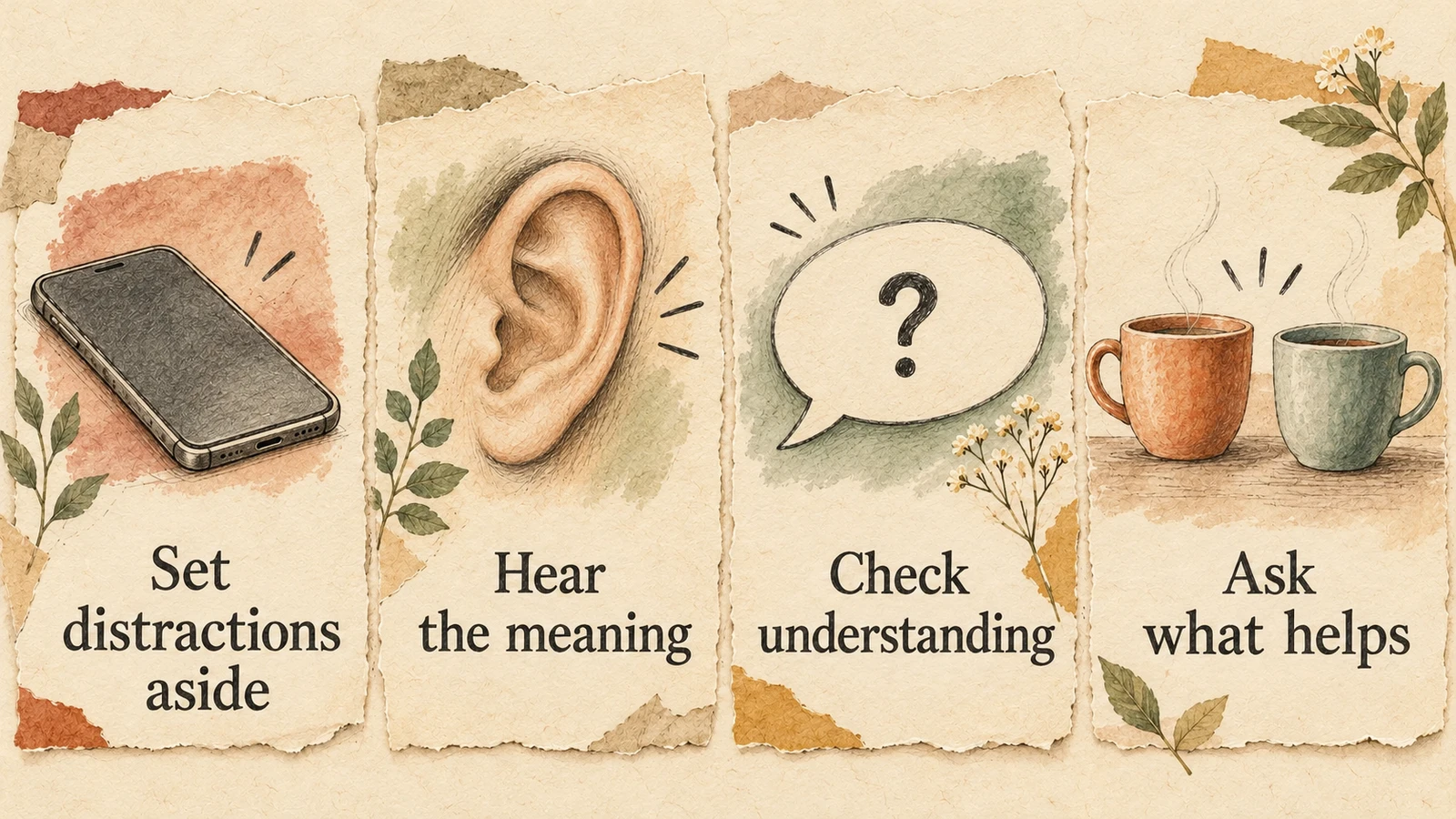
You do not need to perform constant eye contact, sit perfectly still or imitate someone else's facial expressions. Agree on what helps both of you follow the conversation: a walk, fewer background sounds, written messages, facing each other or taking a pause. Attention is something to communicate about, not a posture test.
Want to see yours?
Scan your palm for a full interpretive reading.


Place your palms here
Both palms, please: your left on the left, your right on the right.
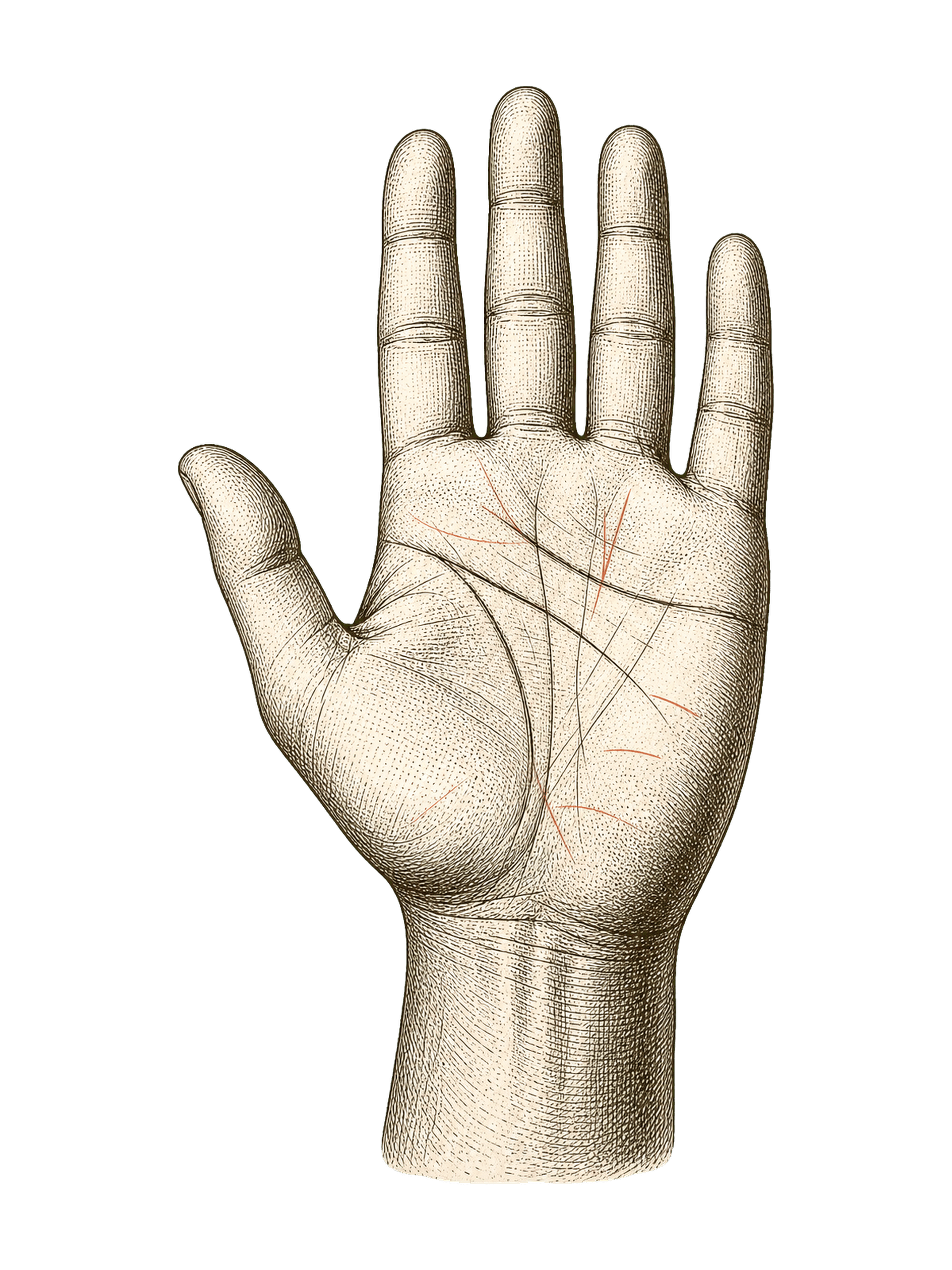
Add a photo

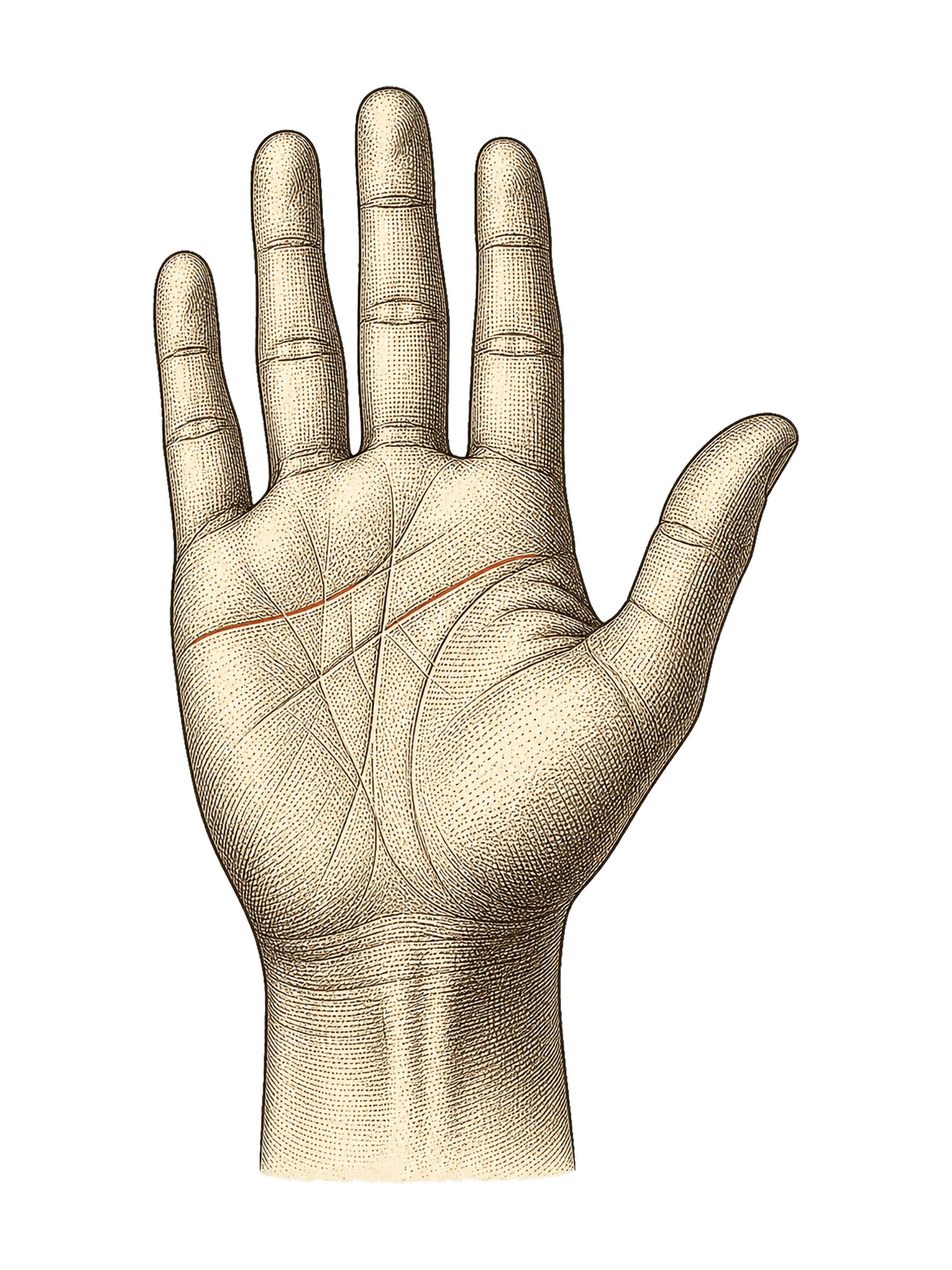
Add a photo
Required · 18 or older
Photo privacy · Refund terms ·Details
- Your photos are sent to our analysis provider to write your reading. This browser may temporarily keep pending photos for sign-in or recovery. Photos sent from your phone are kept temporarily for hand-off. See our privacy policy for details.
- When you press Read my palms, both photos go to our analysis provider for a clarity check before payment. This checks the photos, not the validity of a reading.
- Doesn't sound like you? Email us within 7 days of your first reading for a full refund, if you haven't used a second. If a photo can't be read, that reading is returned.
- Next: your reading uses one of your readings, or a short checkout if you have none.
Photo tips
 Photo tips
Keep your palm flat, fingers slightly apart and lines in focus. Use bright, even light, and photograph each palm the same way.
 ✓ Like this
 ✕ Too dark
 ✕ Fingers cut off
Listen for the part that matters to them
Separate the event from its significance. A friend may describe a cancelled lunch, but the painful part might be that they had arranged childcare, wanted to share news or felt forgotten. Do not choose the meaning for them. Offer a tentative summary that gives them room to correct you.
Compare these replies:
| Your friend says | A reply that closes the topic | A reply that checks the meaning |
|---|---|---|
| “They changed the plan again.” | “Just stop going.” | “Was it the change itself, or not being asked?” |
| “My presentation went badly.” | “I'm sure nobody noticed.” | “Which part are you most disappointed about?” |
| “I don't know whether to go.” | “You have to go.” | “What makes you want to go, and what is putting you off?” |
These are starting points, not questions to fire in sequence. If your friend says they do not want to explain, respect that. You can still offer company without access to the whole story.
Check understanding without parroting
Use a short summary in your own words, then let the speaker change it. The goal is to find out whether you understood, not to prove you have mastered a technique. “So you wanted help with the workload, and the reply felt like criticism. Have I got that right?” is useful only if “no” is an acceptable answer.
The distinction has some research support. In a 2014 study by Weger and colleagues, participants receiving active-listening responses felt more understood than those receiving advice or simple acknowledgements. Satisfaction did not differ between the listening and advice conditions. These were initial interactions, not a test of lasting friendship improvement.
Avoid turning every sentence into “What I hear you saying is…” Pick a moment when the meaning is uncertain. If the speaker corrects you, update your understanding: “Ah, you weren't asking them to do it for you. You wanted them to notice how much you were carrying.”
Work through one conversation before offering a solution
Let the other person's answer determine your next move. A conversation can include empathy and action, but advice is more useful when you know which problem it is meant to address. This example starts with a practical complaint and uncovers a different need without assuming a hidden motive.
Friend: “They gave the project to someone else after I did all the preparation.”
You: “That sounds disappointing. What did they tell you?”
Friend: “That the other person has more experience. I understand that, but nobody even thanked me.”
You: “So you can see the reason for the decision, but your contribution went unacknowledged?”
Friend: “Exactly. I don't need a plan tonight. I'm just upset.”
You: “Okay. I'm here. Tell me about the work you put into it.”
If they had asked for help raising the issue, the next step could have been drafting a message together. Listening is not a promise never to offer ideas; it helps you find out whether ideas are wanted.
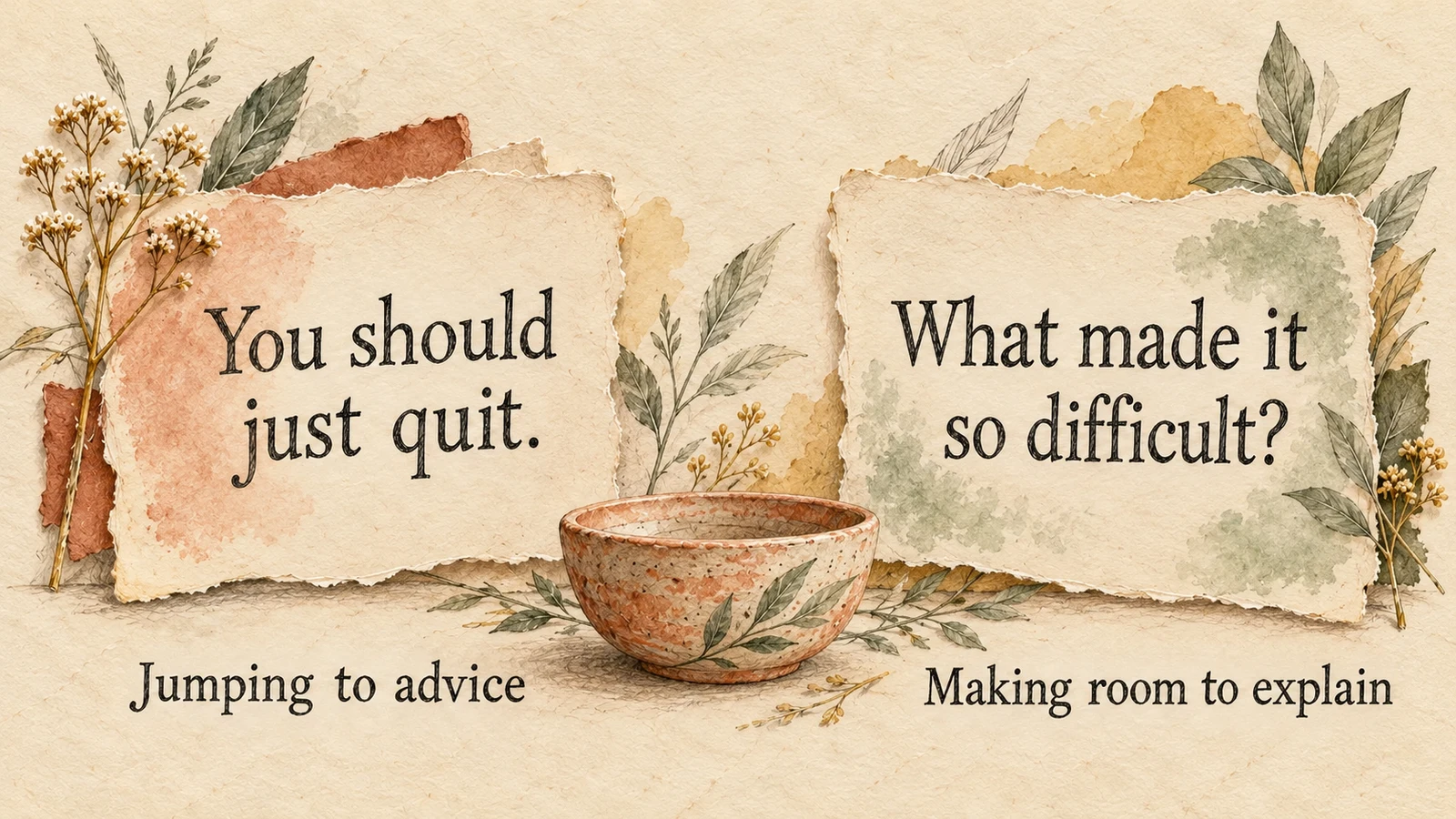
Repair an interruption while the conversation is still happening
If you interrupt, acknowledge it briefly and return the floor. Do not make your friend comfort you about being a bad listener. You can say, “I jumped in. You were explaining what happened after the meeting; please carry on.” Then stop talking long enough for that invitation to mean something.
The same repair works when you drift into your own experience: “I started telling my version. Yours may be different. What was it like for you?” A relevant personal story can help later, but it should not replace their turn.
If both of you speak at once regularly, ask for a workable arrangement. “I lose my thought when we overlap. Can we finish one point at a time?” You can also ask whether a pause means “I am done” or “I am thinking.” You do not have to guess the same way every time.
Ask what kind of help would fit
Before switching from listening to action, offer a small choice. “Would you like me to listen, help think through options, or do something practical?” is clearer than assuming every difficult story needs a solution. Your friend can also say they do not know yet; you can stay with the conversation without making them choose immediately.
The Mental Health Foundation's support guidance recommends letting people share at their own pace and checking understanding rather than rushing to diagnose. You can use that modest principle in everyday friendship without becoming a counsellor.
If a conversation needs a limit, say so with care: “I can listen for a little longer tonight. Can we pick this up tomorrow?” Listening does not require unlimited availability or accepting insults. For that next step, see setting boundaries with friends.
Make the next conversation a little easier
Choose one habit to practise: put the phone away, ask a follow-up tied to the answer, or check one important detail before giving advice. Afterwards, ask yourself what you learned that you did not know at the start. You are looking for understanding, not a count of questions or a perfect performance.
For lighter conversations, try the small-talk examples. If you tend to rush into solutions when someone is upset, use words for comforting a friend. And if you prefer a conversation with more depth, these questions for friends leave room to pass.
PalmMingle's AI palmistry explanation offers a separate route into symbolic self-reflection. A reading is entertainment and reflection; how well you listen is something to explore through actual conversations and feedback.
Palmistry is an interpretive tradition, not a diagnostic tool. PalmMingle frames palm readings as entertainment and self-reflection, not prediction.