

Comfort a friend by acknowledging what happened, letting them describe it in their own words and asking what kind of support would help. You do not need to make the problem disappear or persuade them to feel positive. Start with something honest: “That sounds really disappointing. Would you like to talk, have company or think through what comes next?”
This guide is for everyday setbacks such as rejection, a difficult day or disappointing news. After a death, use the more specific guide to supporting a grieving friend. The words and practical needs can differ.
Acknowledge the setback before trying to reframe it
Respond to the experience your friend is describing before offering a brighter interpretation. “You worked hard for that, and not getting it hurts” leaves room for disappointment. “It was probably a bad opportunity anyway” may ask them to adopt your explanation before you know what the loss means to them.
You can acknowledge a feeling without agreeing with every conclusion. If they say “I failed one interview, so I'm useless,” you might reply, “You are really disappointed about the interview. I don't think it tells us that you are useless.” That takes the feeling seriously while keeping a broad self-judgment separate from the event.
Avoid making reassurance more certain than your knowledge: you cannot promise they will get the next job, that someone will change their mind or that everything happened for a reason.

Want to see yours?
Scan your palm for a full interpretive reading.


Place your palms here
Both palms, please: your left on the left, your right on the right.
Add a photo

Add a photo
Required · 18 or older
Photo privacy · Refund terms ·Details
- Your photos are sent to our analysis provider to write your reading. This browser may temporarily keep pending photos for sign-in or recovery. Photos sent from your phone are kept temporarily for hand-off. See our privacy policy for details.
- When you press Read my palms, both photos go to our analysis provider for a clarity check before payment. This checks the photos, not the validity of a reading.
- Doesn't sound like you? Email us within 7 days of your first reading for a full refund, if you haven't used a second. If a photo can't be read, that reading is returned.
- Next: your reading uses one of your readings, or a short checkout if you have none.
Photo tips
 Photo tips
Keep your palm flat, fingers slightly apart and lines in focus. Use bright, even light, and photograph each palm the same way.
 ✓ Like this
 ✕ Too dark
 ✕ Fingers cut off
Offer a small menu when you do not know what they need
Ask whether they want company, listening, practical help or space. Offer a small choice and let them decline it or say they do not know. If they do not know, suggest one gentle possibility and leave them free to refuse it.
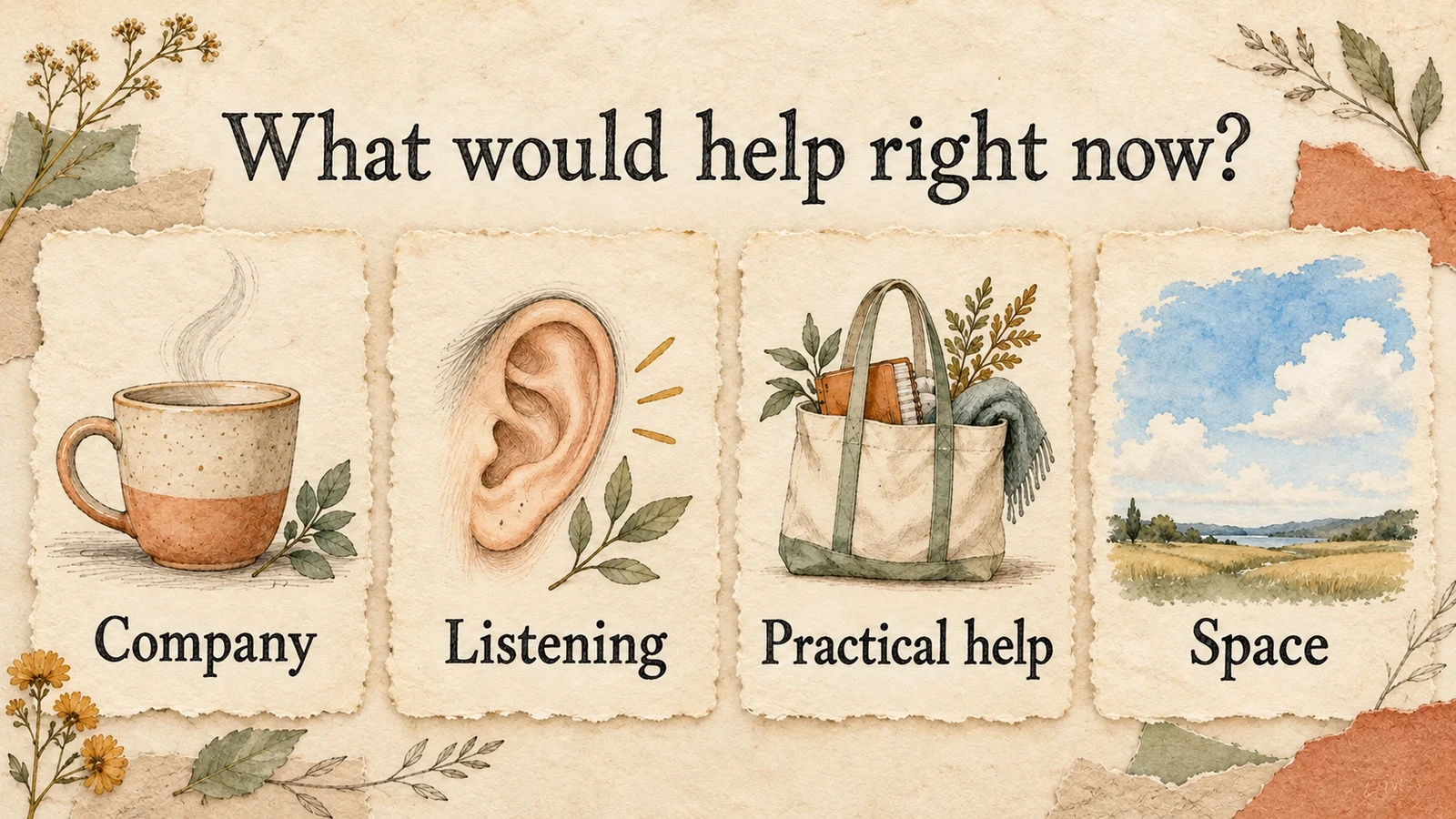
For example:
- Company: “I can sit with you for a bit. We don't have to talk about it.”
- Listening: “Do you want to tell me what happened?”
- Practical help: “Would it help if I brought dinner while you deal with this?”
- Space: “Would you prefer some time alone? I can check in tomorrow if you want.”
Keep the offer within what you can do. Do not promise to be reachable all night if you cannot be. A smaller kept promise is an honest form of care.
Use words that fit the actual situation
Name the part you understand and stay curious about the part you do not. You do not have to claim to know exactly how your friend feels. The examples below acknowledge a setback and offer a next move without promising an outcome or deciding that one response suits everyone.
After a job rejection
You put a lot into that application. I'm sorry the answer was no. Do you want to talk about it tonight, or leave the job search alone for a bit?
If they want help later, ask which task would be useful: reading a draft, practising an answer or making space for a break. Do not send vacancies immediately unless that is what they want.
After a romantic rejection
It hurts when you hoped for something different. Would a walk or some company help this evening?
Avoid insulting the other person or encouraging your friend to keep pursuing an explicit no. Comfort can support your friend while respecting someone else's boundary.
After an embarrassing moment
I can hear that you keep replaying it. Do you want me to listen, or would you like my view of what happened?
Ask before supplying your assessment. You might have useful perspective, but you cannot know what every person in the room thought.
When the setback cannot be quickly changed
I don't have an answer that makes this okay. I can stay with you while you work out what you need next.
Only offer to stay if you can. If there is a practical limit, state it: “I can be here until dinner, and we can decide who else you want to call.”
Listen without turning the conversation into an investigation
Let your friend decide how much detail to share. Ask questions that help you understand, rather than demanding evidence or trying to catch an inconsistency while they are upset. If you did not hear something clearly, ask; if a detail is private, you can support them without knowing it.
The Mental Health Foundation's support guidance recommends listening, letting the person set their pace and avoiding a rush to diagnose. Those are useful limits for a friend offering support, not instructions to provide therapy.
Try “What part is weighing on you most?” rather than a string of questions about every event. When the person stops speaking, give them room to think. For more examples, read how to be a better listener.
Repair the moment if you minimized it
If you say something dismissive, correct the actual words and return attention to your friend. You do not need a long speech about your intentions. “I said ‘at least’ and made it sound smaller than it is. I'm sorry. What I meant is that I care, and I want to understand.”
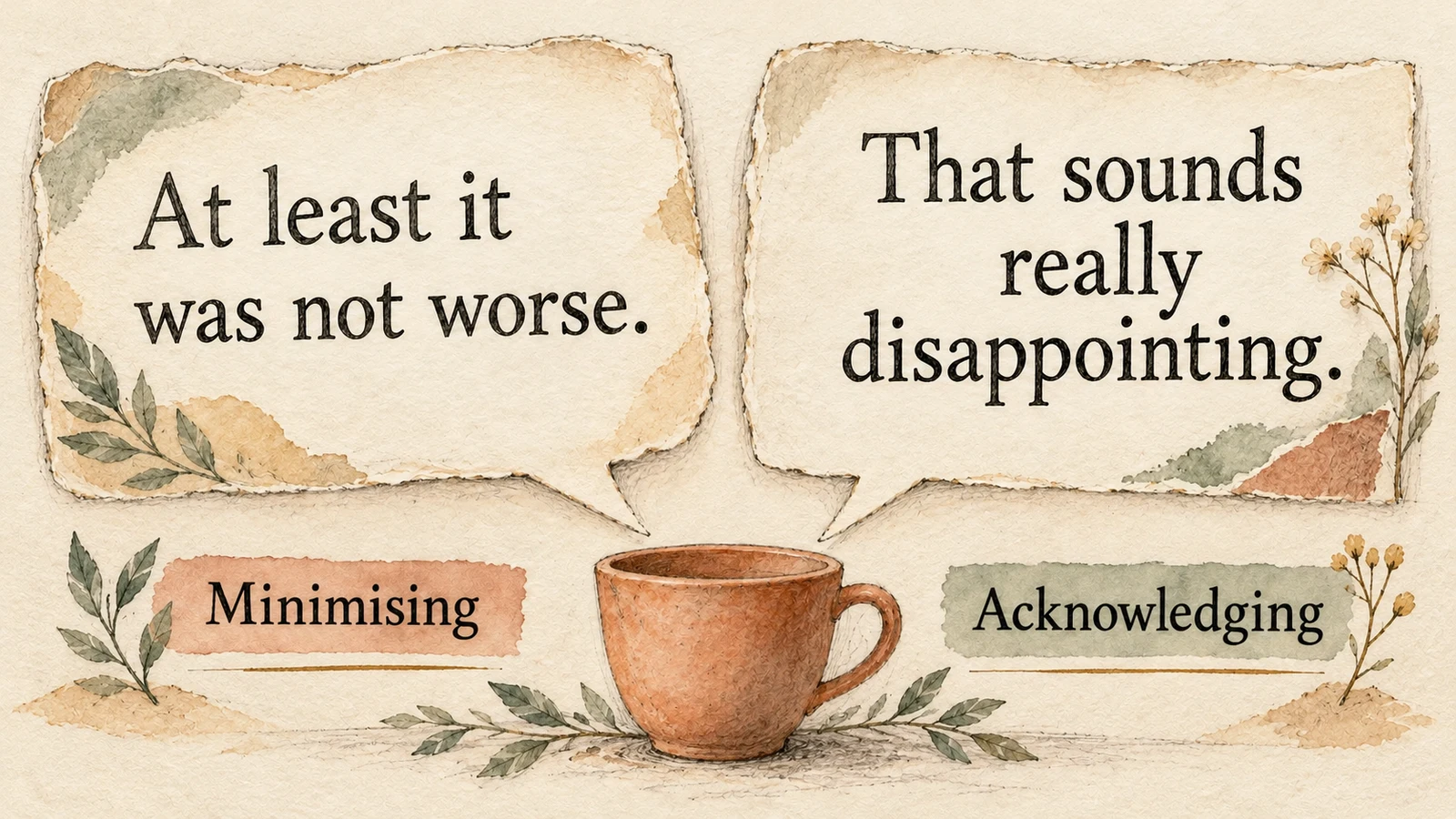
If they say they want no advice, stop offering it. If they say they want a different kind of support, decide honestly whether you can provide that. An apology becomes more useful when the next action changes.
Avoid demanding reassurance that you are still a good friend. They may not have the energy to explain or forgive immediately. You can make the repair and give them space to respond.
Make a practical offer without taking over
Help with a task they actually want help with. Ask before contacting other people, sharing their news, arranging a visit or spending money on their behalf. Your friend's upset does not remove their right to make decisions about their own situation.
For example, “Would you like me to read the email with you?” leaves more control with them than “Give me your phone; I'll answer it.” If they accept, agree on the scope: proofreading, discussing options or sitting nearby while they write.
If they need professional or urgent support, help them reach an appropriate service rather than trying to carry everything yourself. You can remain a friend while acknowledging what you are not equipped to do.
Follow up on what they told you
Make a later message specific enough to show you remembered, without requiring a report. “Thinking of you after yesterday. Do you want company later, or a quiet evening?” is different from asking whether they have cheered up. Keep any promise you make, and accept that the answer may differ from yesterday's.
For more wording, see checking in on a friend. For your own availability, use friendship boundaries. For support from afar, the long-distance friendship guide helps you choose a contact plan that fits both schedules.
PalmMingle's palmistry guide describes optional entertainment and reflection. It cannot explain why a setback happened or promise a better outcome. Your friend's words, preferences and practical situation are the useful guide to comfort.
Palmistry is an interpretive tradition, not a diagnostic tool. PalmMingle frames palm readings as entertainment and self-reflection, not prediction.