
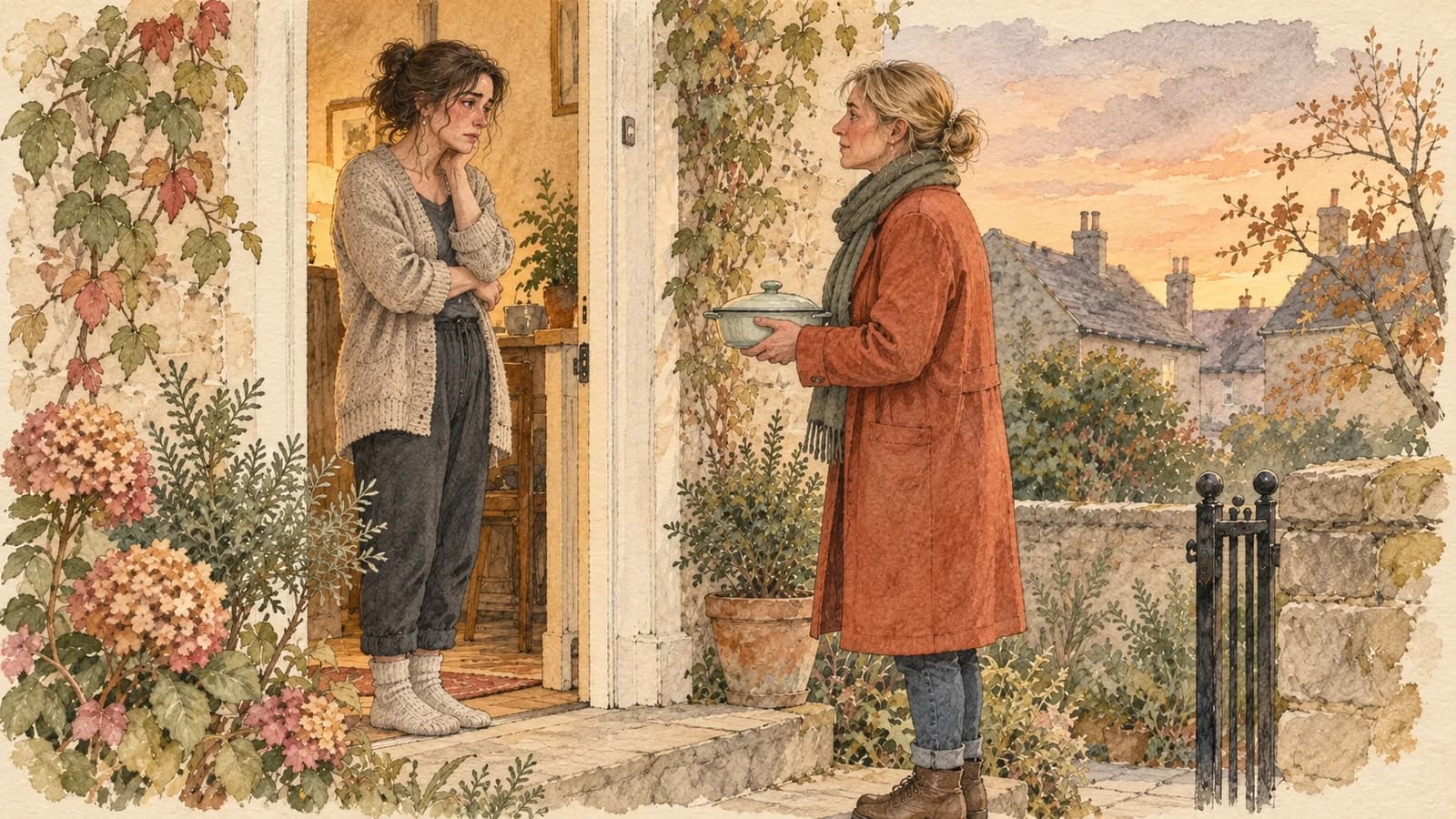
Support a grieving friend by making contact, listening without trying to fix the loss, and offering specific help they can accept or decline. Keep showing up after the funeral, when messages may have slowed down. Let your friend choose whether to talk about the person who died, ordinary life or nothing at all.
A first message can be simple: “I'm so sorry about your dad. I'm thinking of you. You don't need to reply. I can bring dinner on Thursday if that would help.” Change the relationship and offer to match what you actually know and can do.
Make contact without giving them another job
Send a message that expresses care without requiring an update, reassurance or a decision about your feelings. You do not need a beautifully written tribute. Say what you know, avoid assumptions about their relationship with the person who died, and leave space for whatever their experience is.
For example:
- “I'm sorry to hear about Sam. I care about you, and I'm here.”
- “No need to answer this. I wanted you to know I'm thinking of you today.”
- “Would a short call feel okay, or would you prefer messages for now?”
Do not ask why you heard the news late or whether your message helped. If you did not know the person who died, you can still acknowledge your friend's loss without inventing a memory or assuming the relationship was uncomplicated.
Want to see yours?
Scan your palm for a full interpretive reading.

Place your palms here
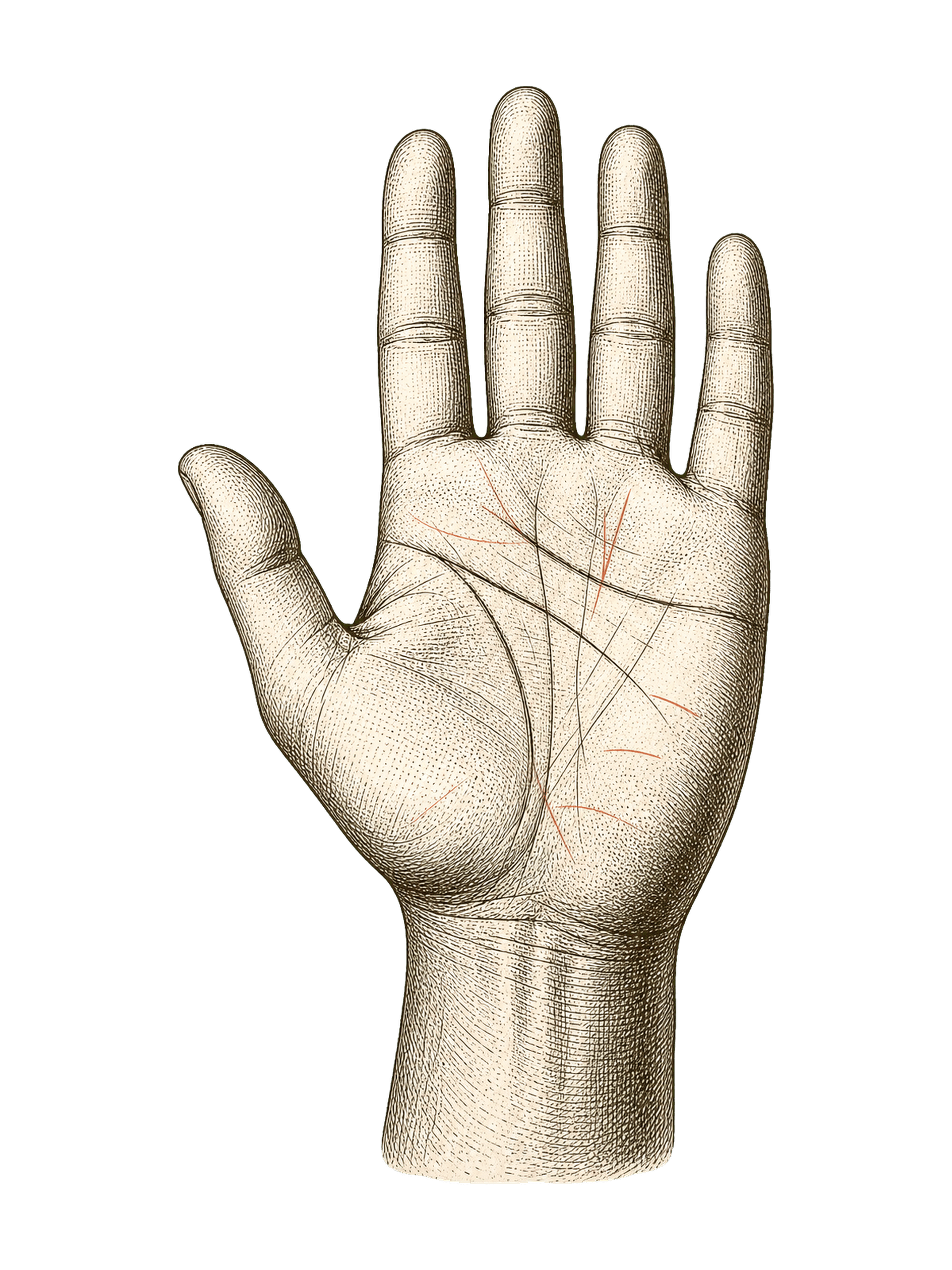
Both palms, please: your left on the left, your right on the right.
Add a photo

Add a photo
Required · 18 or older
Photo privacy · Refund terms ·Details
- Your photos are sent to our analysis provider to write your reading. This browser may temporarily keep pending photos for sign-in or recovery. Photos sent from your phone are kept temporarily for hand-off. See our privacy policy for details.
- When you press Read my palms, both photos go to our analysis provider for a clarity check before payment. This checks the photos, not the validity of a reading.
- Doesn't sound like you? Email us within 7 days of your first reading for a full refund, if you haven't used a second. If a photo can't be read, that reading is returned.
- Next: your reading uses one of your readings, or a short checkout if you have none.
Photo tips
 Photo tips
Keep your palm flat, fingers slightly apart and lines in focus. Use bright, even light, and photograph each palm the same way.
 ✓ Like this
 ✕ Too dark
 ✕ Fingers cut off
Turn a vague offer into one manageable choice
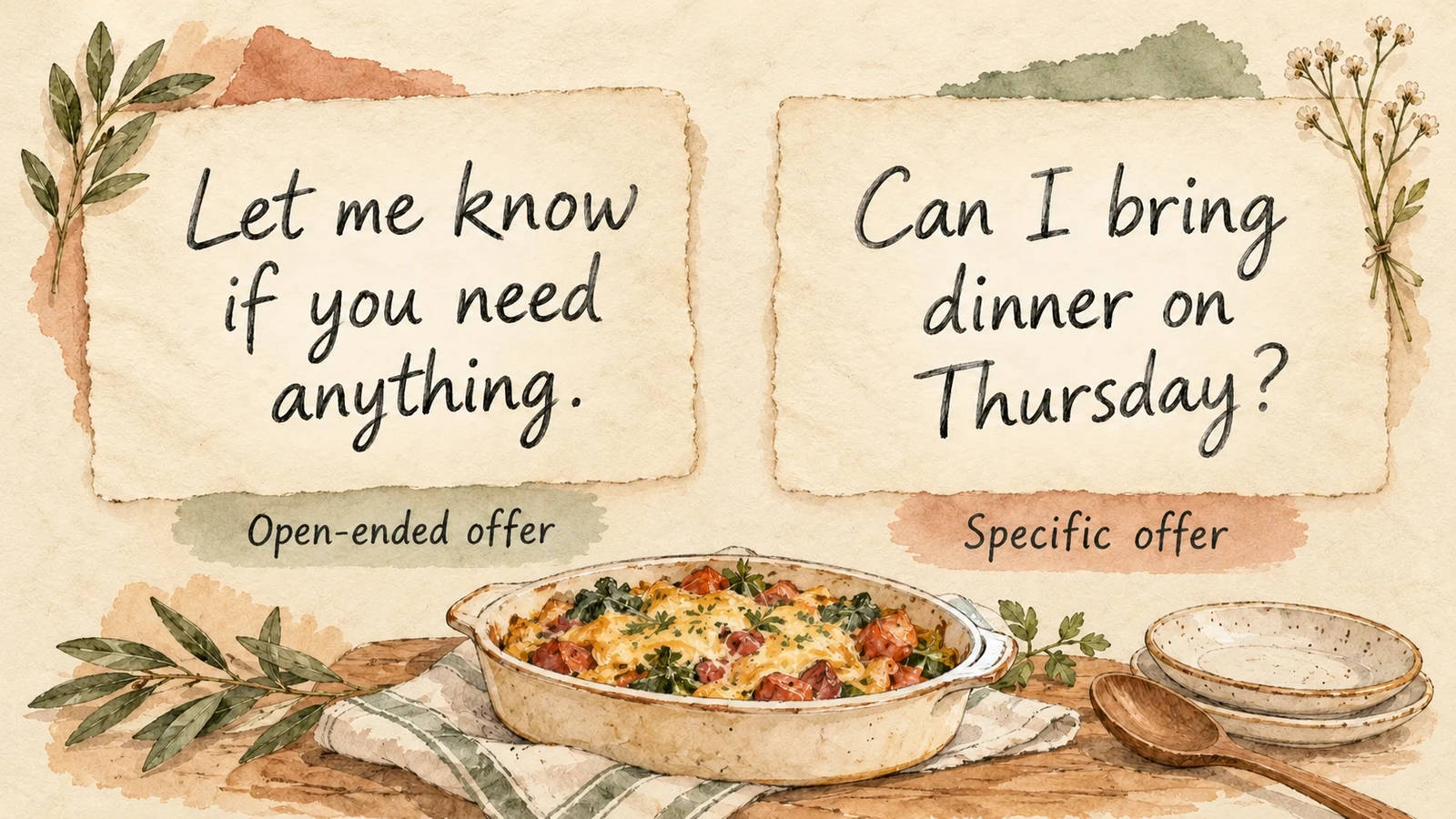
Offer a task, a time and a way to decline. That lets your friend decide about something concrete rather than coordinate a whole support plan. Cruse Bereavement Support recommends specific suggestions instead of leaving the bereaved person to work out what to ask for.
| Instead of leaving the whole decision open | Offer something you can genuinely do |
|---|---|
| “Tell me if you need anything.” | “I'm shopping tomorrow. Can I collect a few essentials for you?” |
| “We should get together.” | “Would a short walk on Sunday be welcome?” |
| “I can help with everything.” | “I can take your dog out on Tuesday evening if you want.” |
| “I'll organize the group.” | “Would you like me to coordinate food offers, or would that feel intrusive?” |
Ask before arriving, arranging deliveries or taking responsibility for someone else's children or animals. A kind intention does not tell you the household's routines, access needs, dietary requirements or appetite for visitors. Check that the offer is welcome before making arrangements.
If the answer is no, accept it: “Of course. I'll leave that with you.” Do not make them explain why your suggestion is not right.
Listen to the story they want to tell
Follow your friend's lead about the person who died. You can ask whether they want to share a memory, but do not press for the circumstances of the death. Silence, ordinary conversation and repeated stories can all be part of being together. You do not need to steer the visit toward a breakthrough.
Marie Curie's bereavement guidance advises listening without interruption and continuing contact after the funeral. It also cautions against language that dismisses the loss, such as assuming someone is in a better place. Ask about your friend's preferences rather than treating any one phrase as universally comforting.
Try “Would you like to tell me about her?” If they say not today, you can reply, “That's okay. We can talk about something else.” If they laugh at a memory and then cry, you do not have to choose which feeling is the “real” one.
For more on making room in a conversation, see how to be a better listener.
Keep your promises small enough to keep
Promise a specific action rather than unlimited availability. If you say you will call, call; if you cannot do what you offered, tell your friend promptly and avoid asking them to organize your replacement. Reliable modest contact is a more honest commitment than offering to be available every hour when you cannot be.
You might say, “I can talk after work tonight. If I miss your call during the day, I will reply when I finish.” If you are far away, offer something that works at a distance: a call at an agreed time, helping find information they asked for, or coordinating a task with their permission. These examples of friendship boundaries can help you describe your availability clearly.
Keep private information private. Before updating a friendship group, ask what your friend wants shared and with whom. A request for support is not permission to publish the circumstances of a death or forward personal messages.
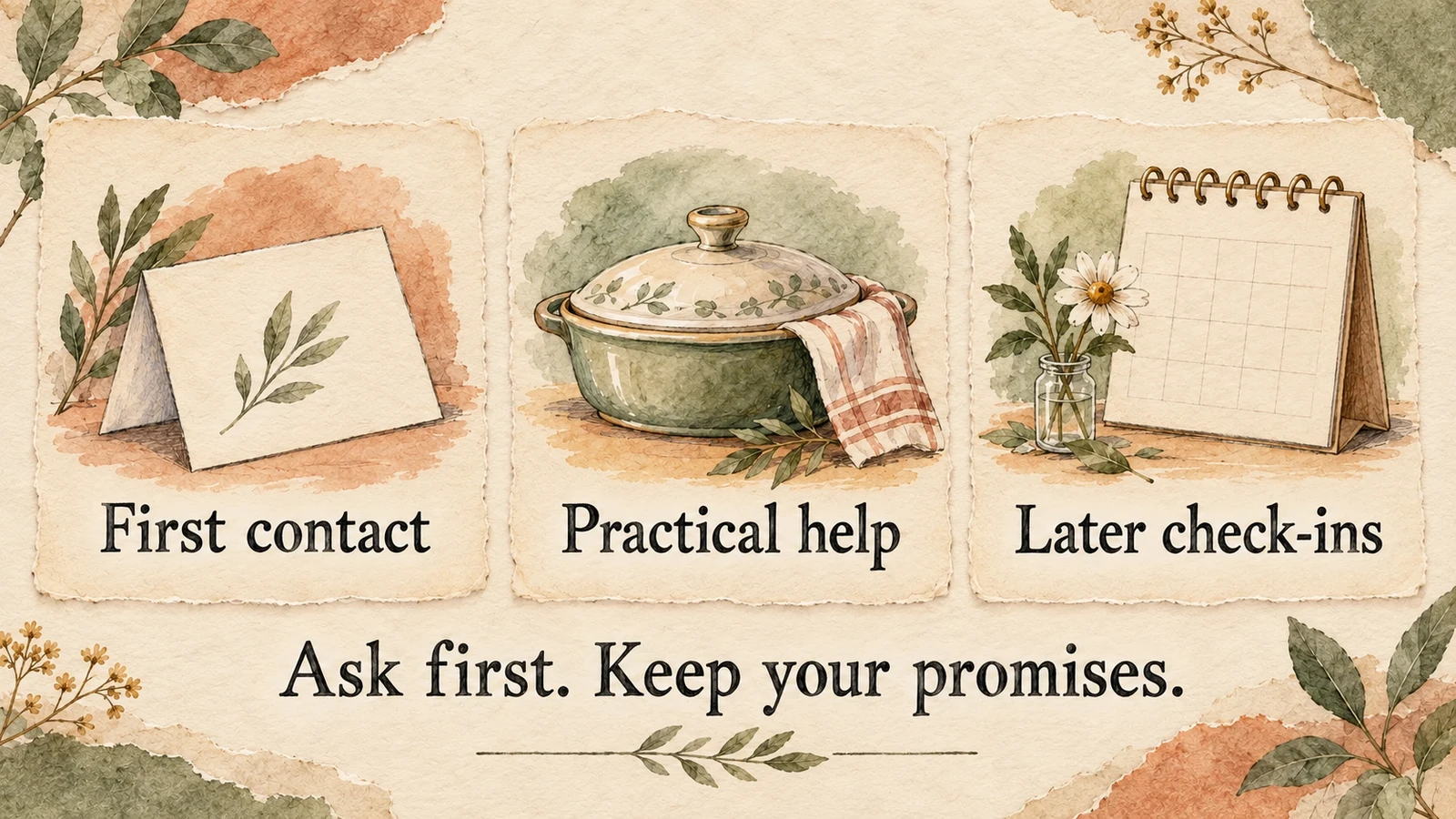
Stay in touch when the immediate arrangements are over
Make later contact about your friend, not about whether they are “better yet.” Ask what contact feels useful now and remember dates they tell you matter. Cruse highlights anniversaries and other significant days as times when continued support can be welcome. That is an invitation to be attentive, not a calendar for how grief should progress.
A later message could be:
I remembered that this weekend is your mum's birthday. Would you like company, or would you rather have a quiet day? No pressure to decide now.
Avoid assuming that religious holidays, family rituals or public memorials suit them. Ask what the date means to them and follow their preferences. If they do not want a reminder, respect that too.
When ordinary friendship resumes, keep invitations open without making attendance a test. “We're having a quiet lunch. You are welcome, and it's okay to decide on the day.” Only offer that flexibility if the plan really allows it.
Respond to silence without making it about rejection
A missing reply does not tell you whether your friend appreciated the message, wants company or has the capacity to answer. Avoid repeated requests for proof that you have helped. You can send a later, gentle message that does not demand a response, while respecting any clear request for space.
If you are unsure about frequency, ask when you next speak: “Would you like me to keep checking in, or would you prefer to contact me?” Their answer may change. You are agreeing on contact, not defining a rule for every bereaved person.
If your friend asks for more support than you can provide, help them find an appropriate bereavement service if they want that. The support organizations linked here offer more detailed guidance; friendship does not require you to become their sole source of help.
Repair a clumsy comment and continue caring
If something you say lands badly, acknowledge the particular mistake without asking your friend to absolve you. “I tried to make it sound positive, and that dismissed how painful it is. I'm sorry.” Then listen to what they want now. You do not need to disappear because you could not find perfect words.
For contact across distance, see maintaining long-distance friendships. For messages outside bereavement, use checking in on a friend.
PalmMingle's interpretive palm-reading guide belongs to optional entertainment and self-reflection. It cannot explain a death or tell you how someone should grieve; let care, consent and the person's stated needs guide your support.
Palmistry is an interpretive tradition, not a diagnostic tool. PalmMingle frames palm readings as entertainment and self-reflection, not prediction.