

After a friendship breakup, respect the contact boundary, get support elsewhere and make a plan for the part of daily life the friendship used to fill. You can acknowledge that the loss hurts without chasing an explanation the other person is unwilling to give. Separate practical unfinished business from the wish to make them understand.
If you need a first reply, try: “I'm sad to hear that, but I understand you want to step away. I will respect that. We still need to arrange the return of your things; would leaving them with reception work?” Leave out the logistical sentence if nothing needs arranging.
Name what happened without filling in every blank
Distinguish what the other person actually said from what you are afraid it means. “They said they do not want contact” is a fact you can act on. “Nobody will ever want to be close to me” is a much larger conclusion that the message does not establish. You do not have to solve their private motives to choose your next action.
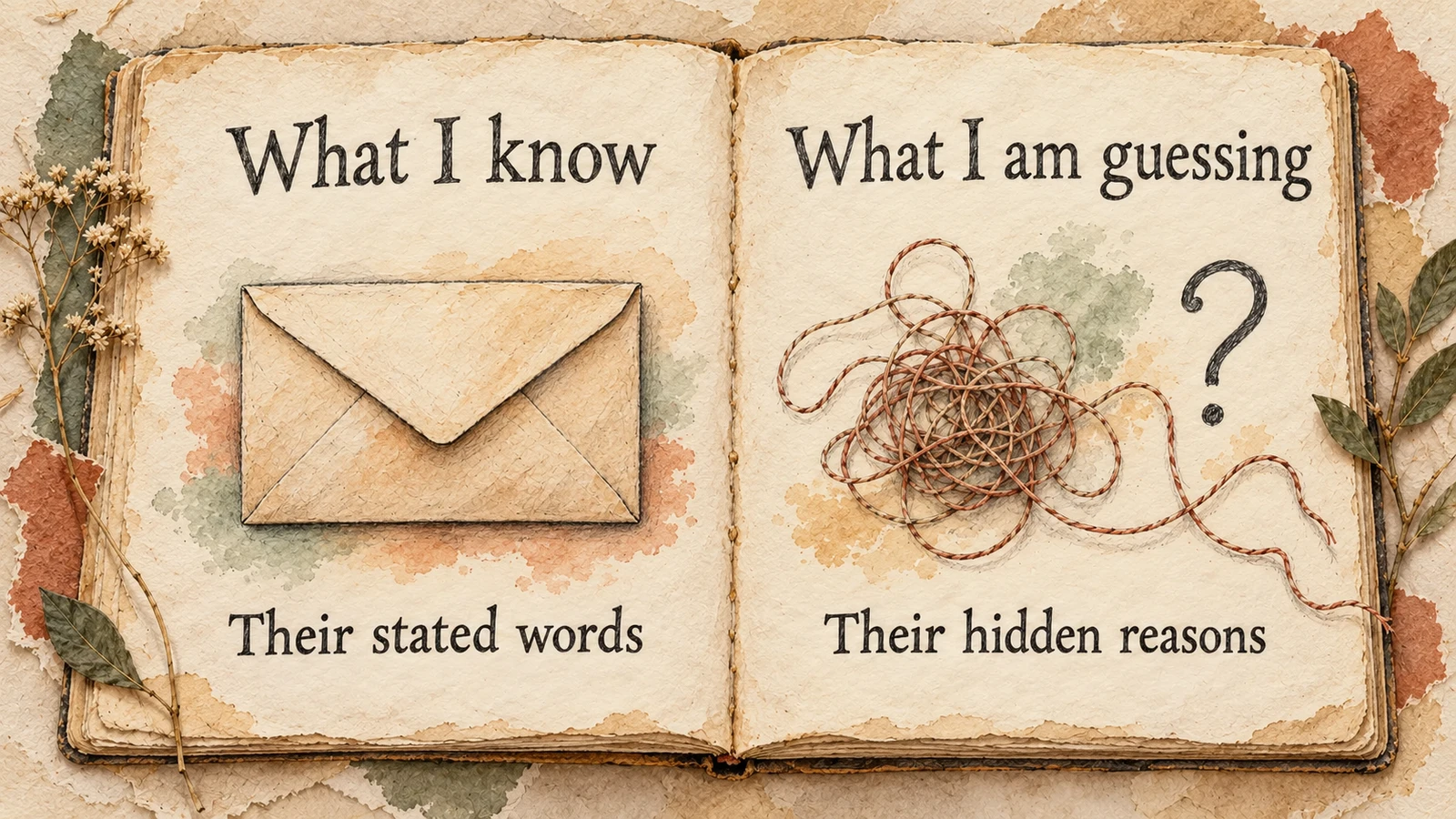
Write two short lists:
| What you know | What remains unknown |
|---|---|
| The words they used | Every thought behind their decision |
| Whether they requested no contact | Whether they will feel differently later |
| Any specific criticism they made | Whether every criticism is fair |
| The plans or belongings still shared | What other people privately think |
You can take a specific criticism seriously without accepting every conclusion about your character. If you know you caused harm, consider what accountability requires. A sincere apology does not entitle you to renewed access or a reply.
Want to see yours?
Scan your palm for a full interpretive reading.
Place your palms here
Both palms, please: your left on the left, your right on the right.
Add a photo

Add a photo
Required · 18 or older
Photo privacy · Refund terms ·Details
- Your photos are sent to our analysis provider to write your reading. This browser may temporarily keep pending photos for sign-in or recovery. Photos sent from your phone are kept temporarily for hand-off. See our privacy policy for details.
- When you press Read my palms, both photos go to our analysis provider for a clarity check before payment. This checks the photos, not the validity of a reading.
- Doesn't sound like you? Email us within 7 days of your first reading for a full refund, if you haven't used a second. If a photo can't be read, that reading is returned.
- Next: your reading uses one of your readings, or a short checkout if you have none.
Photo tips
 Photo tips
Keep your palm flat, fingers slightly apart and lines in focus. Use bright, even light, and photograph each palm the same way.
 ✓ Like this
 ✕ Too dark
 ✕ Fingers cut off
Choose whether a reply has a useful job
Before sending another message, identify what it is meant to do. A reply can acknowledge a decision, answer a practical question or make an apology. It cannot guarantee closure, forgiveness or a change of mind. If you cannot name a purpose beyond easing the urge to contact them, put the message aside before deciding whether to send it.
If they asked for no contact: respect that. Do not use other accounts, surprise visits or mutual friends to deliver an emotional message.
If the ending is ambiguous: a single clear question may help, provided contact has not been refused: “Are you asking for a break, or are you saying you do not want to continue our friendship?”
If they have already answered: rereading the same question in different words is unlikely to supply the missing certainty. You can decide how you will live with the answer you have.
If you are the person choosing to leave, the guide to ending a friendship addresses that different task.
Let the loss be specific
Identify what you miss: the person, the routine, the shared history, the feeling of being known, or access to a wider group. These losses may need different responses. Finding another Saturday activity does not replace a particular friend, but it can help you decide what to do with a newly empty part of the week.
The Centre for Innovation in Campus Mental Health acknowledges that abrupt friendship endings can be confusing and painful, and suggests turning to other support. Its guidance does not set a recovery deadline. You do not need to be “over it” by the time someone else considers reasonable.
Try completing this sentence: “The hardest moment is ___ because we used to ___.” If the answer is Sunday evening because you always called, arrange a different kind of contact or activity for that time. If the answer is having nobody to tell important news, ask another trusted person whether they have space to listen.
Replace the missing routine without replacing the person
Choose a small plan that meets one present need rather than trying to build an entire new social circle immediately. A walk, class, ordinary meal or conversation can give the empty time a shape. You can still miss your former friend while doing something worthwhile with the hour you once spent together.
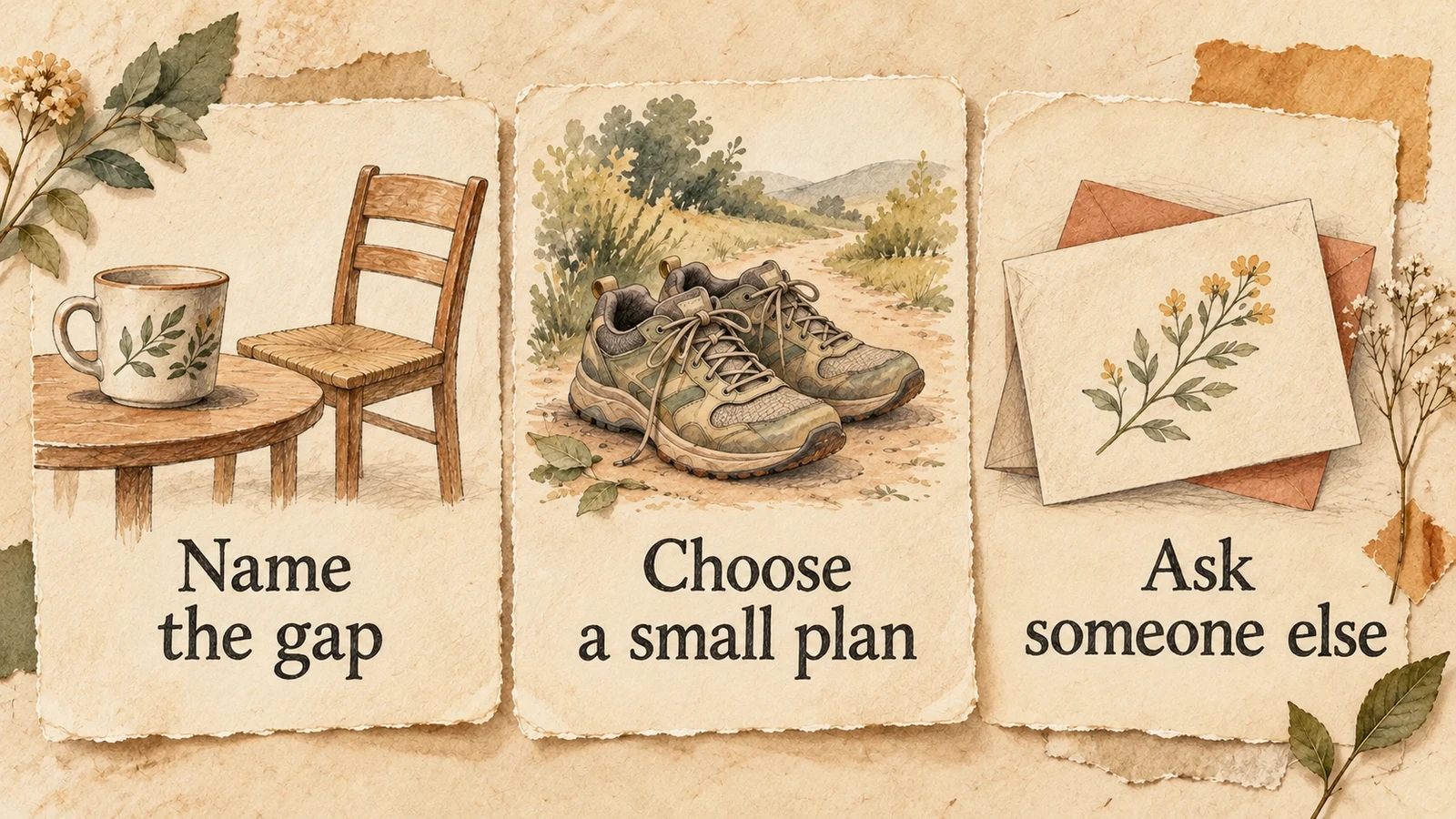
For example, if you used to attend a weekly class together, consider whether you want to keep going alone, invite someone else or try a different session. The right choice depends on whether the place still matters to you and whether sharing it feels manageable. Do not abandon every enjoyable activity solely because it has a memory attached.
For a low-pressure invitation, use these hangout message examples. Keep the new person out of a comparison they did not agree to enter.
Keep mutual friends out of the messenger role
Ask mutual friends for the support you need without asking them to report on the other person. You might want company at an event, notice about the guest list, or a conversation that does not involve the breakup. Those are clearer requests than asking whether everyone thinks you were right.
Try:
I know you are still friends with both of us. I'm not asking you to choose. For now, please don't pass on updates about them or carry messages between us.
Before attending a shared event, ask the host what you need to know without demanding that someone be excluded. Decide whether you can be civil, arrive with support, stay briefly or decline. You are choosing your participation, not controlling the entire group's relationships.
Avoid publishing private conversations to win agreement. You can tell a trusted person what happened while still considering the privacy of people who are not there to respond.
Set social-media contact to a level you can live with
Choose the contact controls that fit your situation: muting updates, leaving a chat, removing a connection or blocking contact. You do not have to make a public announcement or treat the choice as a permanent statement of moral judgment. Consider what helps you stop turning each new post into evidence about the breakup.
If you share an active responsibility, keep a suitable channel for that task or agree on another arrangement. Use it for the practical matter, not as an opening to restart personal contact.
When you want to look at their profile, ask what you expect to learn. A photograph cannot reliably tell you whether they miss you, regret the decision or were ever sincere. It can be a post without being an answer to your question.
Carry forward a lesson, not a permanent verdict
Look for one thing you want to do differently in future friendships: address a problem sooner, choose people who make room for you, apologize more clearly, or stop expecting one person to meet every need. A lesson should give you an action. “I can never trust anyone” leaves you with a rule too broad for the evidence.
If there is an apology you need to make, see apologizing with repair. For uncertainty about a gradual loss rather than an explicit ending, read why friends drift apart. If the distress feels unmanageable or interferes with daily life, consider support from a qualified professional.
PalmMingle describes palm reading as interpretation and reflection. It cannot reveal your former friend's motives or forecast a reunion. Let your next step depend on what you know and what you need now.
Palmistry is an interpretive tradition, not a diagnostic tool. PalmMingle frames palm readings as entertainment and self-reflection, not prediction.