

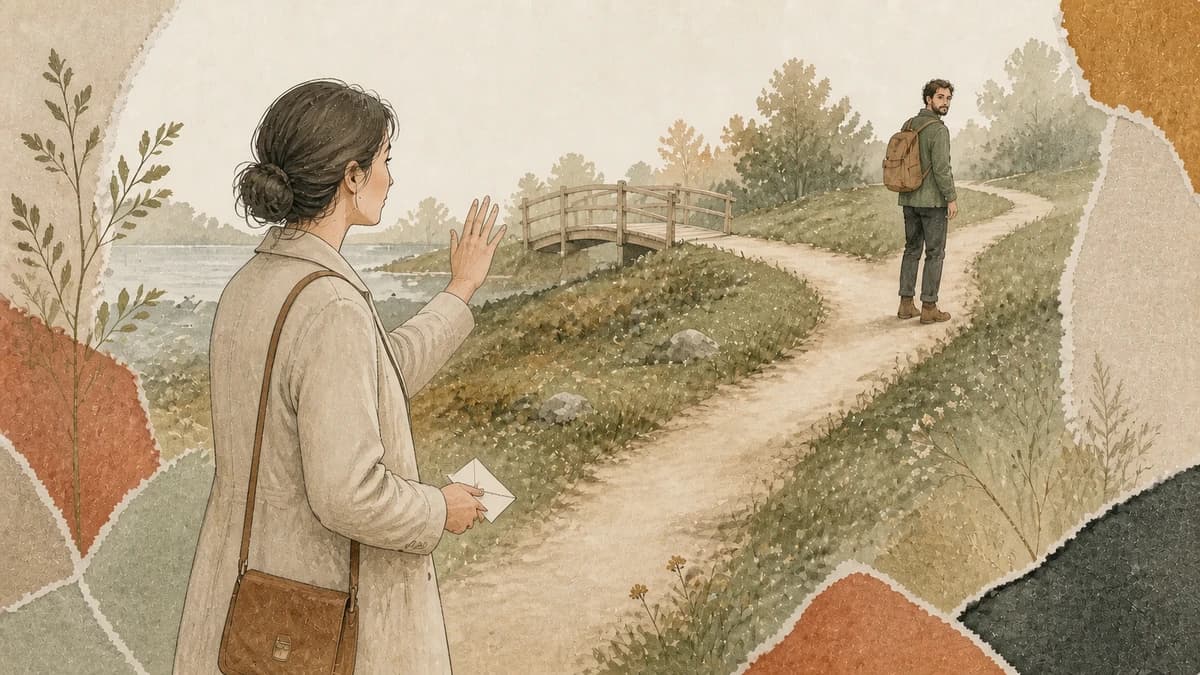
Friends can drift apart as routines, locations, responsibilities or priorities change. Sometimes there is unresolved hurt; sometimes there is less opportunity to spend time together. Reduced contact alone does not tell you which explanation applies.

"Busy" is not automatically a lie. A fading friendship is not automatically healthy growth, a personal failure or a deliberate rejection. You may need a conversation before you know more.
If you want to reopen contact, try a low-pressure message to an old friend.
If contact feels one-sided, compare initiative, attention and help in a friendship.
For a newer connection, read what friendship-hour estimates actually measure.
Choose an invitation or a clarity question
When a friendship fades, the next useful message depends on what you need to find out. Missing opportunities to meet and worrying about an unresolved event are different questions. You can choose a small next step without claiming to know the other person's motives.
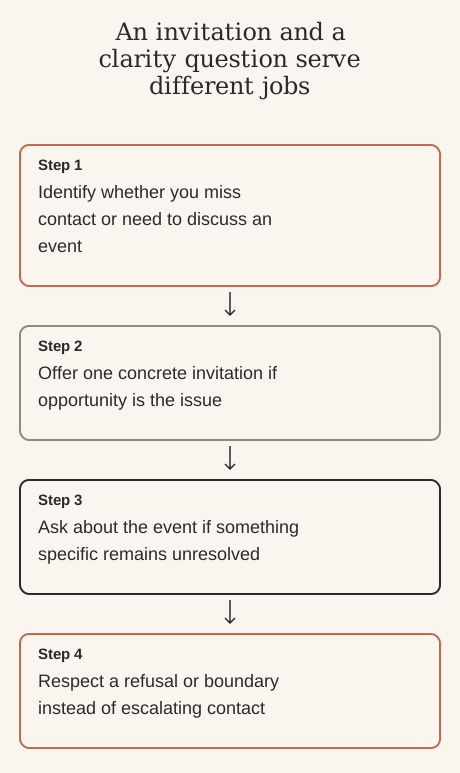
Choose between a new invitation and a question about a changed pattern of contact.
- Identify whether you miss contact or need to discuss an event.
- Offer one concrete invitation if opportunity is the issue.
- Ask about the event if something specific remains unresolved.
- Respect a refusal or boundary instead of escalating contact.
If nothing specific happened, “Would you like a walk next weekend?” may fit better than a long account of what their silence means. If contact changed after an argument, “I wondered whether our last conversation left something unresolved” is more direct than pretending the issue is scheduling. These are suggested openings, not a guarantee of reunion. You can also decide that you do not want renewed contact. Distinguishing the question helps you avoid asking a casual invitation to carry an unspoken demand for reassurance.
For a closer look, discuss differing contact preferences; separate conflict from reduced opportunity; read the relationship-research context.

Want to see yours?
Scan your palm for a full interpretive reading.

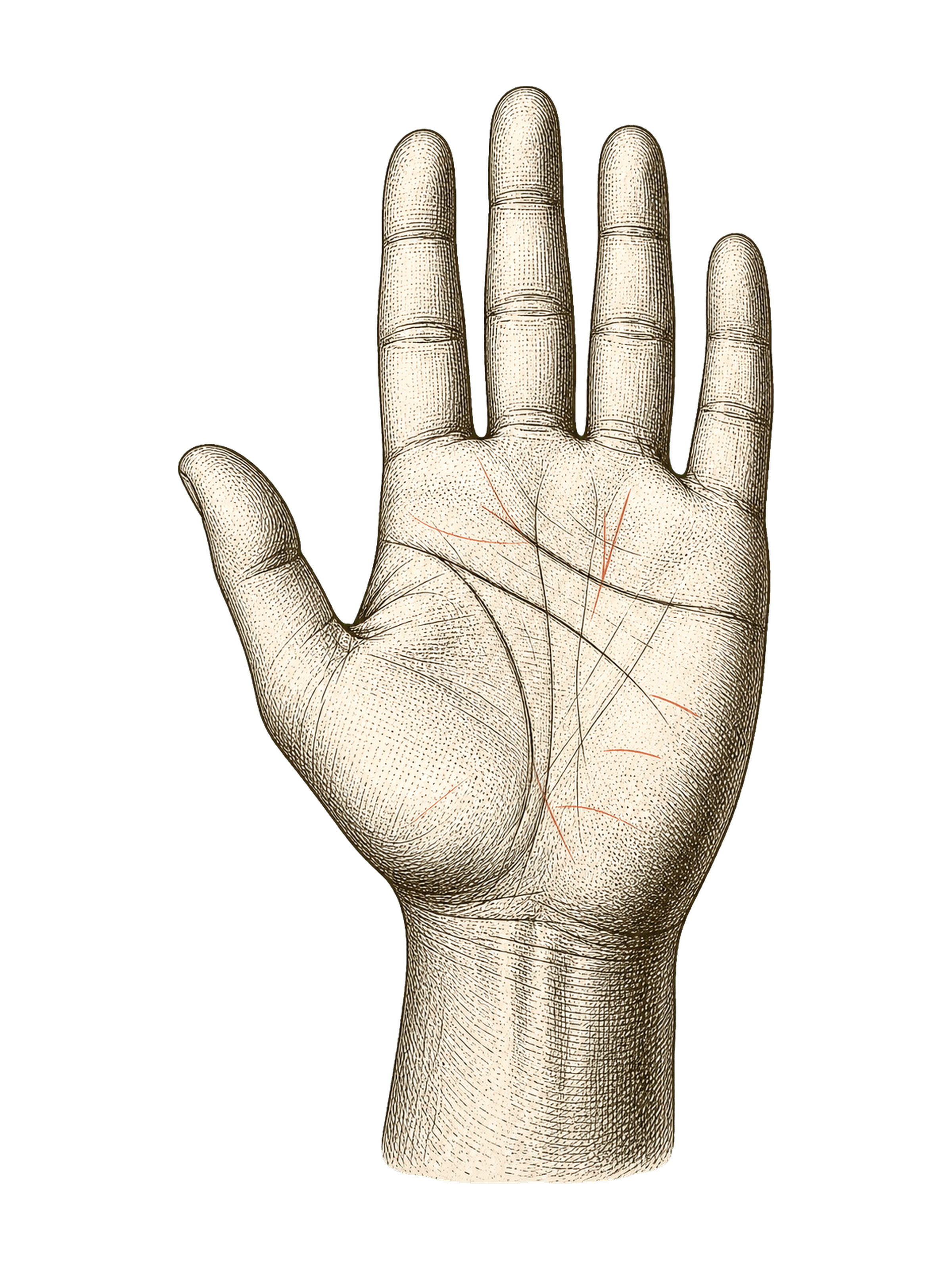
Place your palms here
Both palms, please: your left on the left, your right on the right.
Tap to upload

Tap to upload
Required · 18 or older
Photo privacy · Refund terms ·Details
- Your photos are sent to our analysis provider to write your reading. This browser may temporarily keep pending photos for sign-in or recovery. Photos sent from your phone are kept temporarily for hand-off. See our privacy policy for details.
- When you press Read my palms, both photos go to our analysis provider for a clarity check before payment. This checks the photos, not the validity of a reading.
- Doesn't sound like you? Email us within 7 days of your first reading for a full refund, if you haven't used a second. If a photo can't be read, your credit is returned.
- Next: your reading uses one of your readings, or a short checkout if you have none.
Photo tips
 Photo tips
Keep your palm flat, fingers slightly apart and lines in focus. Use bright, even light, and photograph each palm the same way.
 ✓ Like this
 ✕ Too dark
 ✕ Fingers cut off
What one study can tell us—and what it cannot
Roberts and Dunbar's 2015 study, Managing Relationship Decay, followed personal networks through the transition from school to university or work. The analysis used a small sample of participants who completed all three waves over 18 months.
The study linked greater effort in maintaining friendships with less decline in friendship quality. Its specific sample and life transition matter: it does not establish why every adult friendship fades, a universal contact schedule or a fixed expiry date.
It also does not mean that gaining one friend requires dismissing another. A research model of limited time is not an instruction to rank people.
Separate opportunity from willingness
Before deciding what the silence means, consider what has changed.
| What you notice | One possibility to ask about | What you do not yet know |
|---|---|---|
| You no longer meet incidentally | A shared routine has ended | Whether they want less friendship |
| Invitations often clash | Time, travel, care or work constraints | Whether another format would work |
| Conversations feel guarded | Unspoken hurt or changed comfort | The reason for the change |
| Only one person initiates | Different habits, capacity or interest | Whether a direct conversation could clarify it |
These are possibilities, not a diagnosis of your friendship. Several can be true at once.
Try an invitation that is easy to answer
Instead of "We should catch up sometime", offer one concrete, low-pressure option: "Would you like a short walk next Saturday? If that is a difficult week, no problem."
If travel or time is the obstacle, ask whether a shorter call or a different day would suit. Let the other person answer rather than treating a declined invitation as proof of indifference.
One invitation will not settle every uncertainty. Repeatedly pushing after a clear refusal is not the same as maintaining a connection.
If there may be something unresolved
Name a specific observation and leave room for correction. For example: "We have spoken less since that conversation. I wondered whether I upset you, or whether something else has been going on."
This is a suggested opening, not a script that guarantees honesty or reconciliation. Avoid diagnosing their motives or using a personality label to force an answer. Our attachment-in-friendship guide explains why labels need care.
You can apologise for something you did without accepting responsibility for everything that changed.
When the friendship stays different
A connection may become less frequent, need a clearer boundary or end. You can acknowledge that without declaring the whole history false.
It is also reasonable to feel sad about a friendship you do not want to restore. There is no requirement to turn loss into a lesson about being more evolved than the other person.
If contact is unsafe or involves harassment, prioritise your safety and support; this is not a prompt to keep pursuing the relationship.
Common questions
Should I send a closure message?
Consider the relationship and what you want to communicate. A clear boundary may be useful; a formal ending is not mandatory for every casual connection. Do not send a message solely to demand a particular response.
Can a friendship become close again?
It may, if both people want that and find a workable way to reconnect. Nostalgia alone cannot guarantee it.
Can a palm reading explain why someone pulled away?
No. PalmMingle's interpretive reading cannot establish another person's motives or predict the friendship's future. See our evidence limits.
Make room for a question before filling the silence with a verdict.
Palmistry is an interpretive tradition, not a diagnostic tool. PalmMingle frames palm readings as entertainment and self-reflection, not prediction.