


Gottman's four horsemen can help name difficult conflict behaviours. They cannot tell you that a friendship is destined to end.

The distinction matters when you are staring at an unanswered message. A framework should make your question clearer, not supply an accusation before the other person has spoken.
For a different research question, the Harvard adult-development article discusses relationship quality and wellbeing without turning conflict language into a health forecast.
If the difficulty is a long silence rather than ongoing conflict, consider reaching out after a long gap.
Rewrite a conflict sentence without predicting the ending
The four-horsemen vocabulary can help you notice the form of a conflict sentence. It does not establish why your friendship changed or whether it will end. Try revising one statement about an actual event instead of scoring the entire relationship.
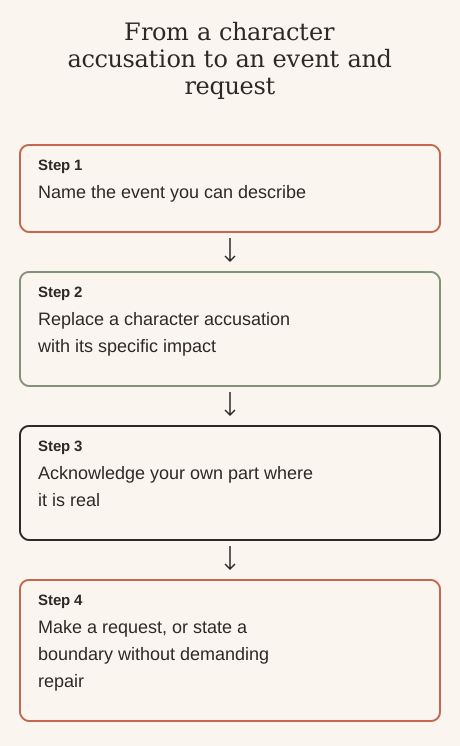
Describe one conflict behaviour and try a specific request rather than scoring a friendship.
- Name the event you can describe.
- Replace a character accusation with its specific impact.
- Acknowledge your own part where it is real.
- Make a request, or state a boundary without demanding repair.
For example, replace “You are always selfish” with “When the plan changed without a message, I waited at the wrong place. Next time I need us to confirm.” That is an original example of a more specific request, not a finding from a friendship trial. The other person may still disagree, decline or want less contact. A gentler sentence is not an obligation to reconcile. If a conversation involves threats or repeated humiliation, prioritising safety does not depend on getting the framework right.
For a closer look, consider friendship drift without assuming conflict; avoid diagnosing a friend’s contact style; check your capacity for a hard conversation.
Want to see yours?
Scan your palm for a full interpretive reading.

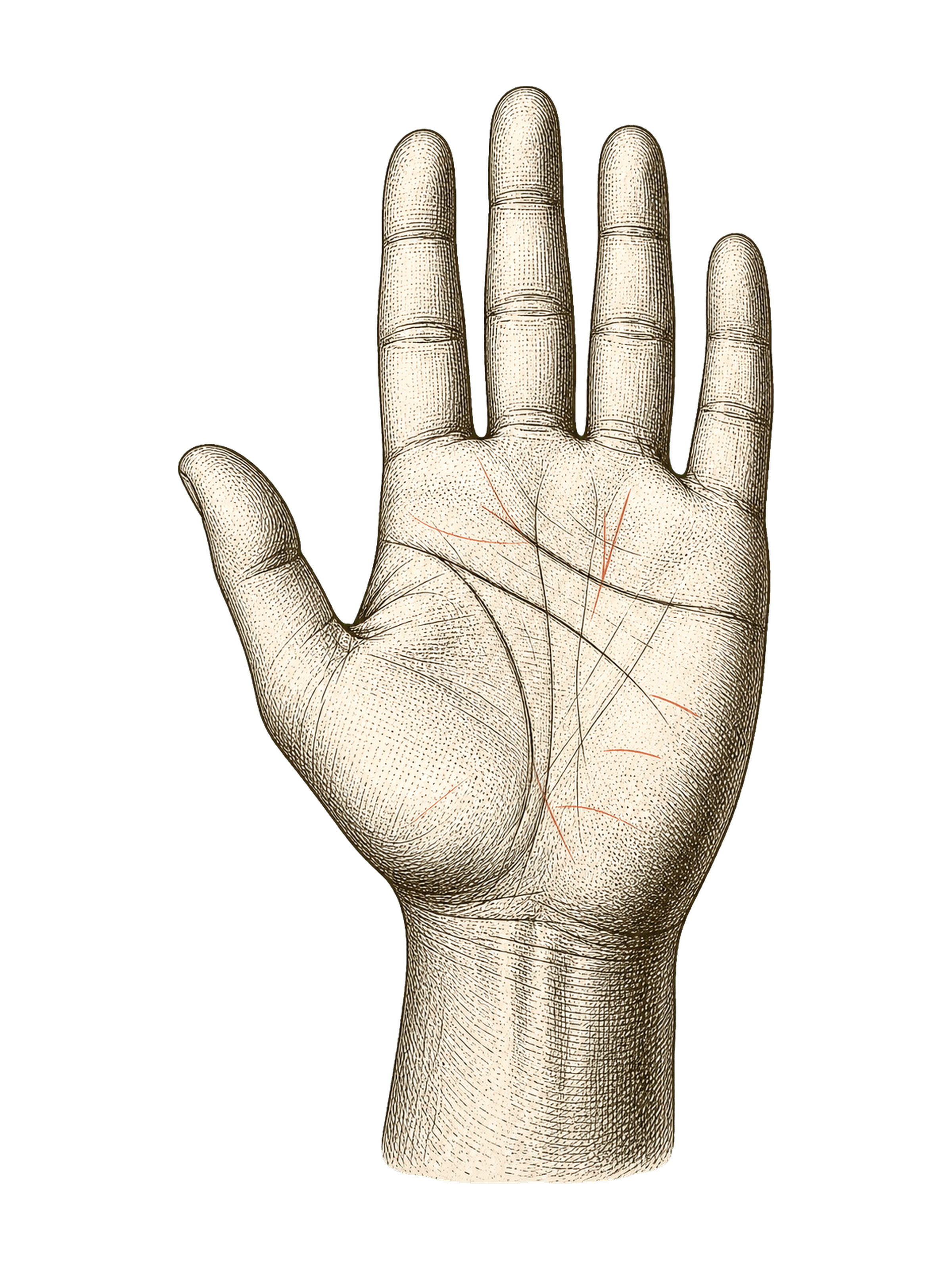
Place your palms here
Both palms, please: your left on the left, your right on the right.
Tap to upload

Tap to upload
Required · 18 or older
Photo privacy · Refund terms ·Details
- Your photos are sent to our analysis provider to write your reading. This browser may temporarily keep pending photos for sign-in or recovery. Photos sent from your phone are kept temporarily for hand-off. See our privacy policy for details.
- When you press Read my palms, both photos go to our analysis provider for a clarity check before payment. This checks the photos, not the validity of a reading.
- Doesn't sound like you? Email us within 7 days of your first reading for a full refund, if you haven't used a second. If a photo can't be read, your credit is returned.
- Next: your reading uses one of your readings, or a short checkout if you have none.
Photo tips
 Photo tips
Keep your palm flat, fingers slightly apart and lines in focus. Use bright, even light, and photograph each palm the same way.
 ✓ Like this
 ✕ Too dark
 ✕ Fingers cut off
The framework, briefly
The Gottman Institute's account for couples describes:
- Criticism: attacking character rather than a specific behaviour.
- Contempt: communicating superiority or mockery.
- Defensiveness: protecting yourself through blame instead of acknowledging your part.
- Stonewalling: disengaging during a conflict discussion.
It proposes gentler openings, respect, responsibility and a calming break. Those are couples-focused ideas, not a validated friendship-breakup score. Look for the actual conflict behaviour rather than assigning a label to a delayed reply.
An invented planning example follows.
Start with the part neither of you knows
Maya has been waiting outside a cinema. Rowan is at a café around the corner. Each thought the other had agreed to the same meeting place.
Maya's first draft is: “You never make an effort.” Rowan's is: “You're impossible to organise anything with.”
Neither draft identifies where the other person is standing.
Before sending either, Maya could ask: “I'm outside the cinema. Did you think we were meeting somewhere else?” Rowan could answer with the place rather than a judgement about Maya.
That question might reveal a misunderstanding. It might not: perhaps one person changed the plan without saying so. The point is to find out which event you are responding to.
You do not need a palm reading, personality label or relationship framework to check the address.
Decide what you are asking for now
Once the immediate confusion is clear, the friends still have choices. Meet at one place, reschedule, or go home. None requires settling the whole friendship on the pavement.
Later, Maya might say: “Next time, could we put the place and time in one message?” Rowan might have a different practical suggestion. They can agree, decline or explain a constraint.
This is a proposed way to make one plan clearer, not a promise of emotional repair. It would not solve every reason someone repeatedly ignores an agreement.
If the pattern keeps happening, describe the actual repetitions: which plans changed, what was communicated, and what you are willing to organise again. Do not turn a missed meeting into a conclusion about someone's entire character.
Leave room for a different answer
A friendship can change without one person being the villain. Someone may have less time, want less contact or be unable to offer the kind of relationship you want.
Our separate guide to why friends drift apart considers that question. Reduced contact is not proof of a concealed argument.
You can ask for clarity without requiring continued friendship. You can also stop negotiating when contact involves threats, control or repeated humiliation. You do not owe someone another meeting merely to demonstrate that you communicated well.
Do not let another symbol decide
Four paper horses on a table are a useful illustration of labels. The people at the table still have to decide what actually happened and what they want to do.
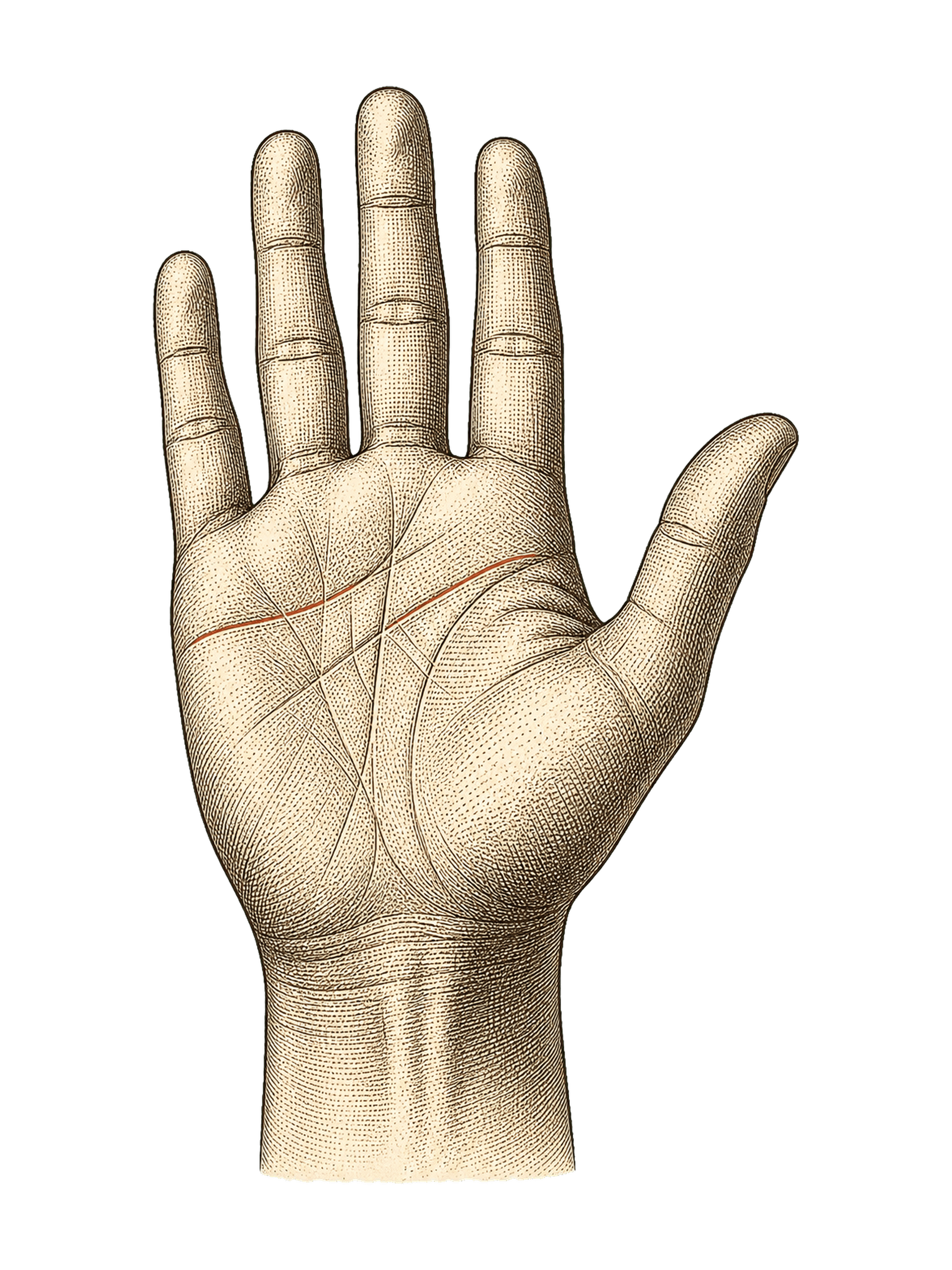
The same limit applies to a broken heart-line interpretation: a crease cannot forecast whether a friendship survives.
PalmMingle's AI palm reading is optional interpretation, not a relationship assessment. Keep a symbol if it helps you frame a question; discard it if it encourages certainty you do not have.
Is an apology enough to restore a friendship?
Not necessarily. The other person may need something different or may not want to continue. An apology does not purchase access.
Does every disagreement need an immediate discussion?
No. You can state when you are available, or decide not to resume an unsafe conversation.
What is a useful first question?
Ask about the event you can describe. In the cinema example, that is where you agreed to meet—not which kind of person your friend is.
Palmistry is an interpretive tradition, not a diagnostic tool. PalmMingle frames palm readings as entertainment and self-reflection, not prediction.