
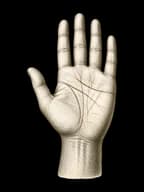
PalmMingle offers an AI-generated palmistry reading from a palm image. The reason to try it is curiosity about an interpretive tradition—not a promise that your hand reveals an objective personality profile.
A reading can give you something to consider, question or disagree with. It does not earn the final word on your identity. You do not need one before you deserve friendship, affection or a conversation.
Decide what you want from a reading before uploading
PalmMingle is a fit if you want an optional AI-assisted palmistry interpretation and room to ask your own questions. It is a poor fit if you need proof about personality, a diagnosis or a relationship forecast. Make that distinction before deciding whether to provide photos or pay.
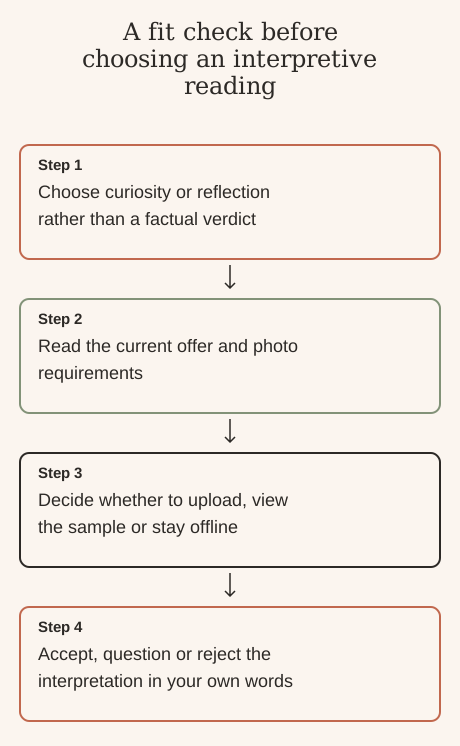
Compare the sample, reading format and purchase terms before choosing whether to upload.
- Choose curiosity or reflection rather than a factual verdict.
- Read the current offer and photo requirements.
- Decide whether to upload, view the sample or stay offline.
- Accept, question or reject the interpretation in your own words.
Suppose you want a playful prompt for a journal. You can inspect the labelled sample reading, read current pricing and decide whether the format interests you. If you want to know whether a friend is trustworthy, the product cannot supply that answer. If you simply want a conversation starter, you can use a blank notebook without buying anything. Choosing not to proceed is a complete decision; a reading is not a prerequisite for knowing yourself or connecting with someone else.
For a closer look, read the limits of an accuracy claim; compare the published app formats; learn the vocabulary without uploading.

Want to see yours?
Scan your palm for a full interpretive reading.
Place your palms here
Both palms, please: your left on the left, your right on the right.
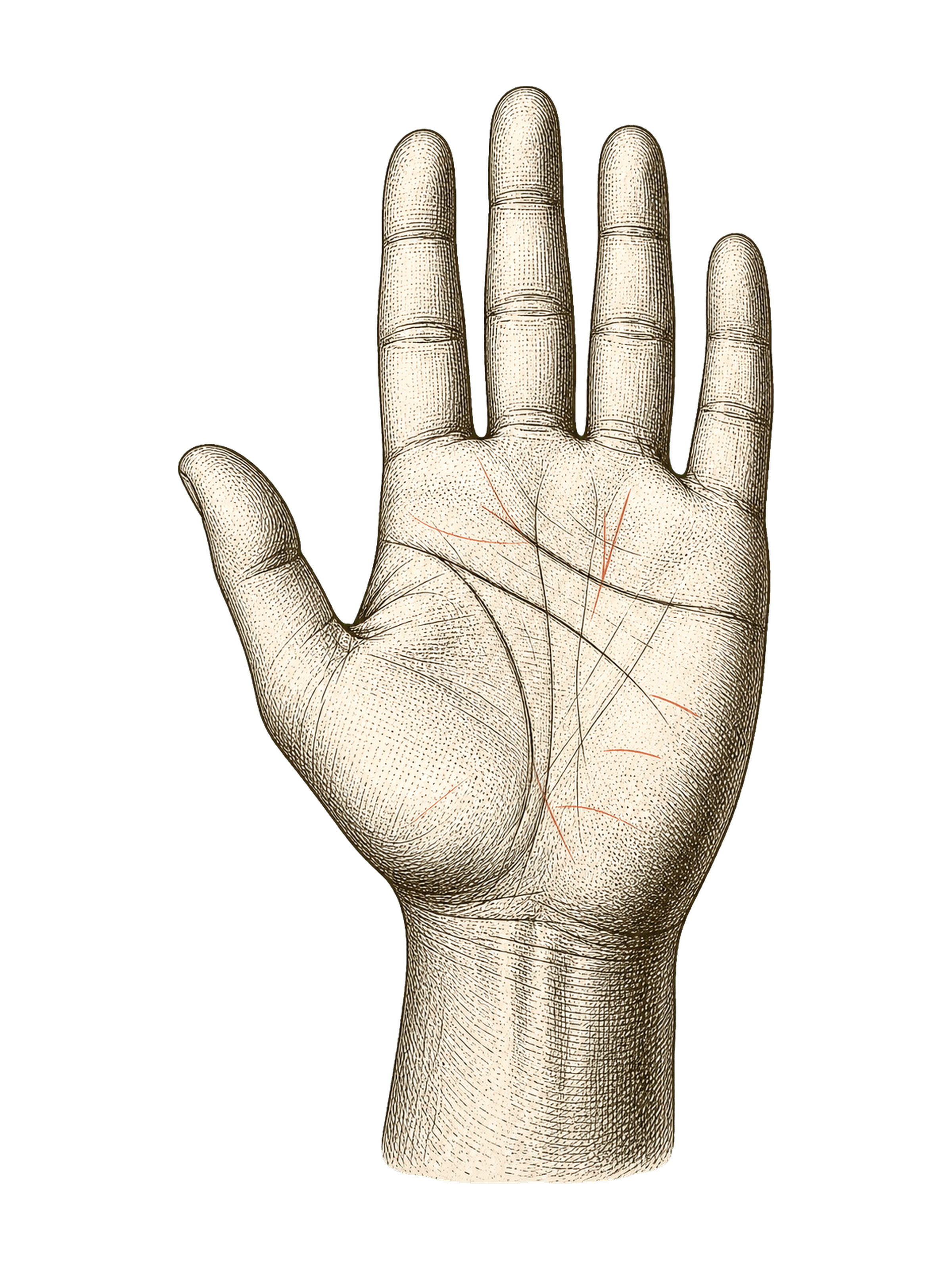
Tap to upload

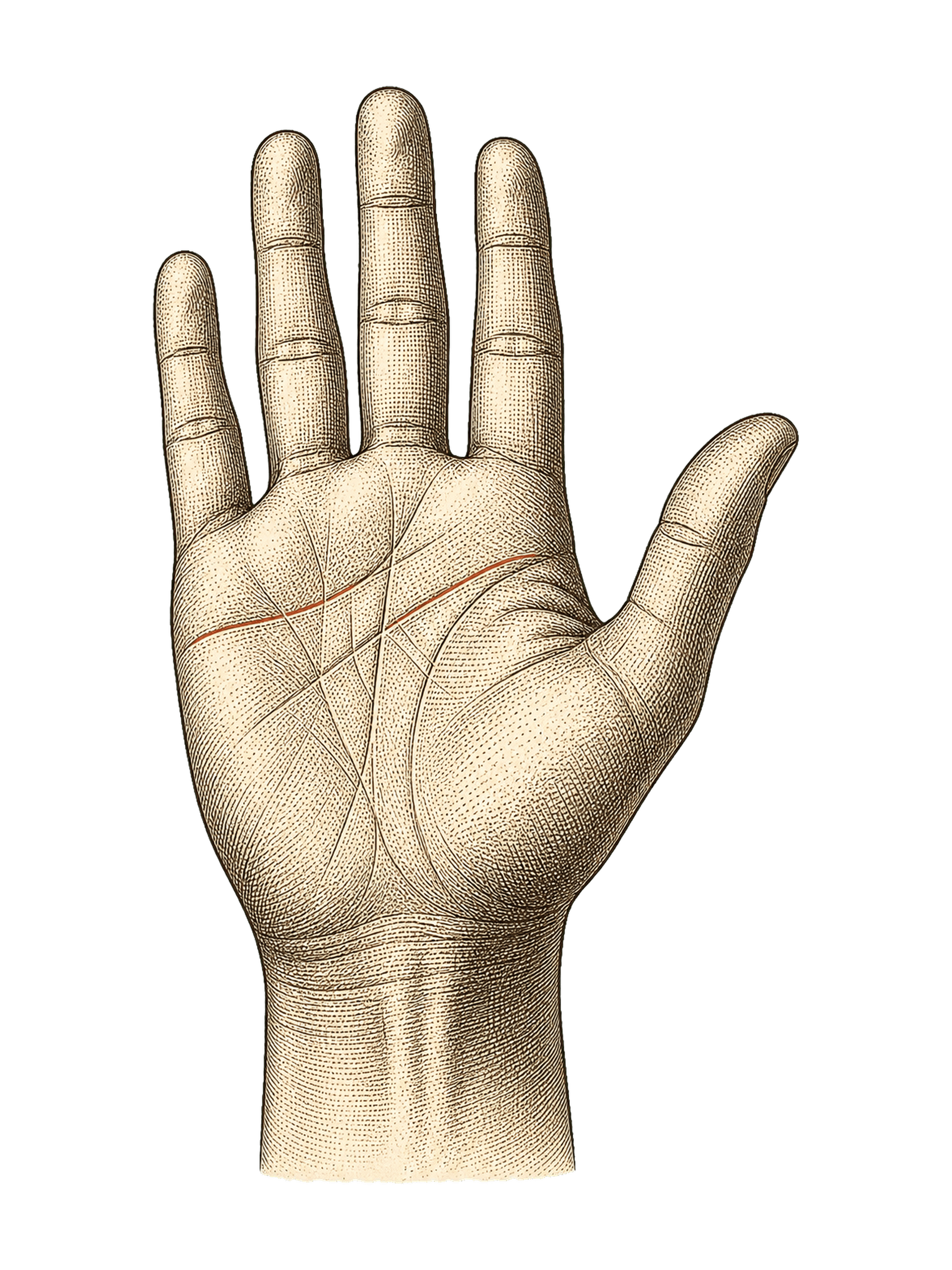
Tap to upload
Required · 18 or older
Photo privacy · Refund terms ·Details
- Your photos are sent to our analysis provider to write your reading. This browser may temporarily keep pending photos for sign-in or recovery. Photos sent from your phone are kept temporarily for hand-off. See our privacy policy for details.
- When you press Read my palms, both photos go to our analysis provider for a clarity check before payment. This checks the photos, not the validity of a reading.
- Doesn't sound like you? Email us within 7 days of your first reading for a full refund, if you haven't used a second. If a photo can't be read, your credit is returned.
- Next: your reading uses one of your readings, or a short checkout if you have none.
Photo tips
 Photo tips
Keep your palm flat, fingers slightly apart and lines in focus. Use bright, even light, and photograph each palm the same way.
 ✓ Like this
 ✕ Too dark
 ✕ Fingers cut off
What you can actually do
As checked on 16 October 2026, the public offer is three palm readings for $9.99 paid once, with saved readings and Mina follow-up questions. The flow asks for both palm photos; sign-in and a reading credit are required before generation. This is not a free personalised reading or a subscription. Our free-versus-paid reading checklist helps you compare the stated additions before buying.
The output is a palmistry interpretation. It is not a clinical assessment, a validated compatibility result or a guarantee of any relationship outcome. AI-generated descriptions can also be mistaken.
Start at PalmMingle's reading overview if that kind of exploration appeals to you. If it does not, nothing in this article depends on uploading a hand.
Why a symbol can start a question
Suppose an interpretation mentions independence. You might ask: “When did I last prefer doing something alone, and when did I actually want help?”
The useful part is the example you supply. You may discover that the word fits one situation but not another. You may decide it does not fit at all.
This is an optional reflection exercise, not evidence that palmistry detected a trait. The same question could come from a book, a conversation or a blank notebook.
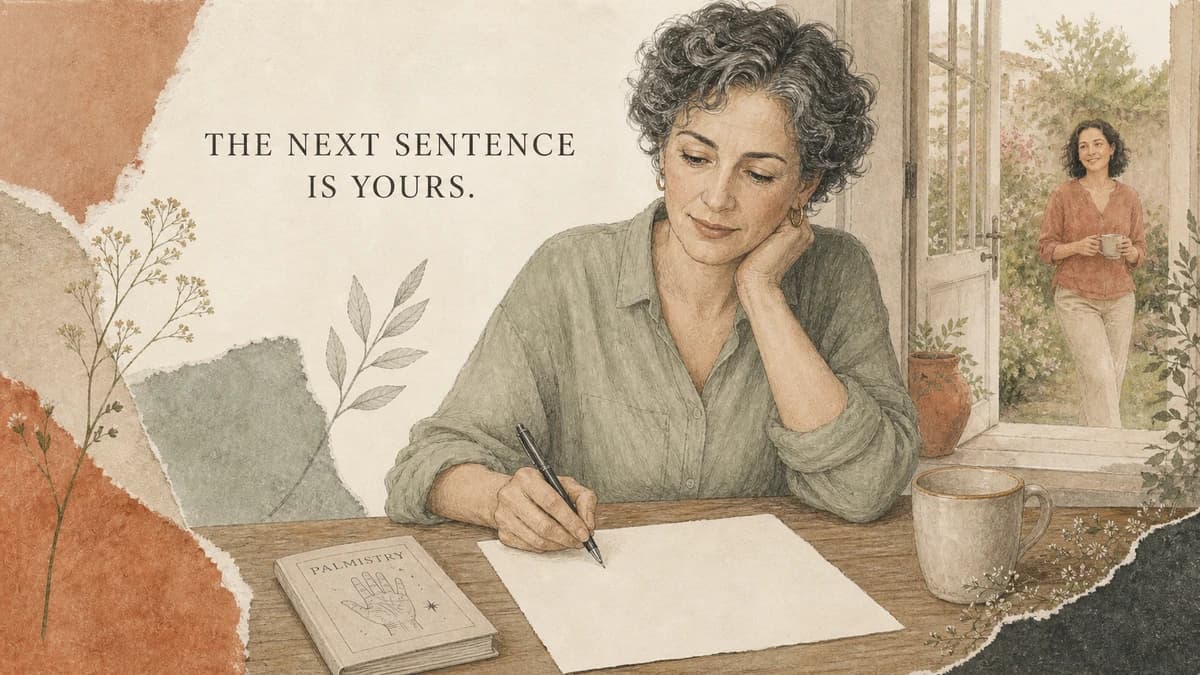
The image to keep in mind is a person closing a palmistry booklet and beginning a letter. The booklet supplied a starting point. The person chooses what to say next.
A reading is not more truthful because you did not write it
An externally generated description can feel surprising. That does not make it more accurate than your own account.
A hand image does not bypass your ego, expose concealed flaws or eliminate uncertainty. Nor does disagreement prove that an uncomfortable reading has necessarily found something true. You are allowed to reject an interpretation without defending yourself to it.
Our guide to whether palm reading is real separates a real cultural practice, a meaningful personal experience and evidence for factual claims.
Use it with another person only by agreement
If you want to discuss a reading with a friend, ask first. Do not upload their image or turn a playful interpretation into a label they have to accept.
If you choose to send your own reading instead, check what the selected card and link disclose before sharing.
You could offer: “This description made me think about how I ask for help. Does that sound like a conversation you would enjoy?”
You could also say: “I didn't recognise myself in this. What would you have written instead?”
These are suggested openings, not customer stories or evidence that the app improves communication. The other person can change the subject or decline. Their own description of their experience should not be overruled by a palm interpretation.
What not to decide from a palm
Do not use a reading to decide whether someone is safe, trustworthy, medically well or destined to be your partner. Do not use it to calculate lifespan, financial prospects or the date of an event.
For questions about relationships, actual behaviour and direct communication are more relevant than a line. For symptoms or health worries, seek appropriate professional advice rather than an interpretation of a crease.
The beginner's guide explains the vocabulary without asking you to treat it as established fact. The privacy questions guide offers things to check before sharing an image.
Is PalmMingle a proven better matching system?
This article makes no such claim. It describes the current reading experience, not a demonstrated advantage in finding friends or partners.
Can I ignore a reading?
Yes. A symbolic interpretation is not an obligation or a finding you are obliged to accept.
What should I take away?
If a question interests you, explore it in your own words. If it does not, leave it. PalmMingle can be a starting point for imaginative reflection; the next sentence remains yours.
Palmistry is an interpretive tradition, not a diagnostic tool. PalmMingle frames palm readings as entertainment and self-reflection, not prediction.