

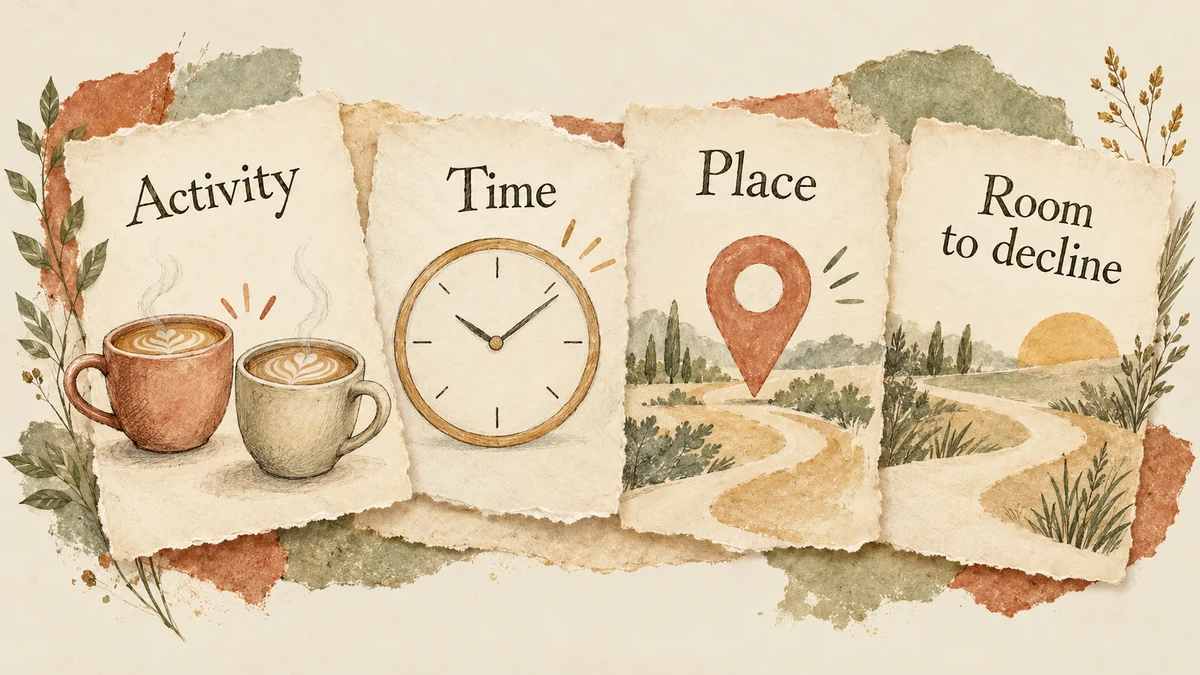
To ask someone to hang out, name an activity, suggest a time and make it clear that they can decline. Refer to something you share if that helps the invitation feel natural. You do not need a clever opening or a long explanation of why you want to see them.
For example:
I’ve enjoyed talking after class. Want to grab coffee across the road after Thursday’s session?
This gives them enough information to answer. We should hang out sometime can express interest, but it leaves both people guessing about the actual plan.
Include the information that makes a yes usable
A clear invitation tells the other person what you are suggesting, roughly when, and whether anyone else is coming. Add practical details when they affect the decision: cost, duration, location or access. You can be relaxed in tone while still making the arrangement understandable. Specificity is a courtesy, not pressure to accept.
Before sending, check:
- Is the activity something you have a reason to think they might enjoy?
- Is the plan public and comfortable for the stage of the friendship?
- Does the invitation reveal a cost or commitment before they agree?
- Can they say no without being asked to justify themselves?
If you do not yet know their access needs or preferences, ask about the plan rather than assuming. Would that venue work for you, or should we choose somewhere else? leaves room for information without demanding a personal explanation.
Want to see yours?
Scan your palm for a full interpretive reading.


Place your palms here
Both palms, please: your left on the left, your right on the right.
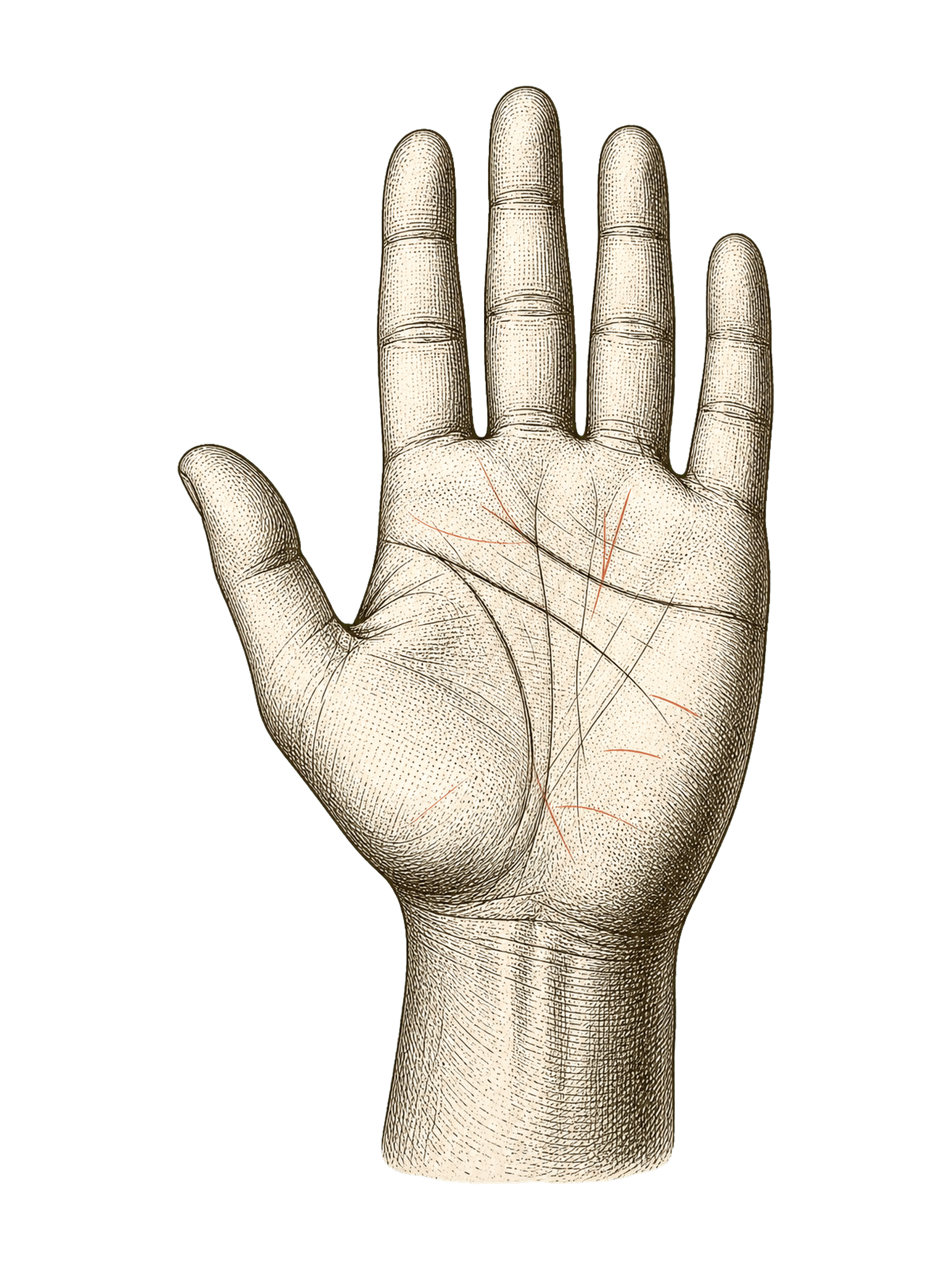
Add a photo

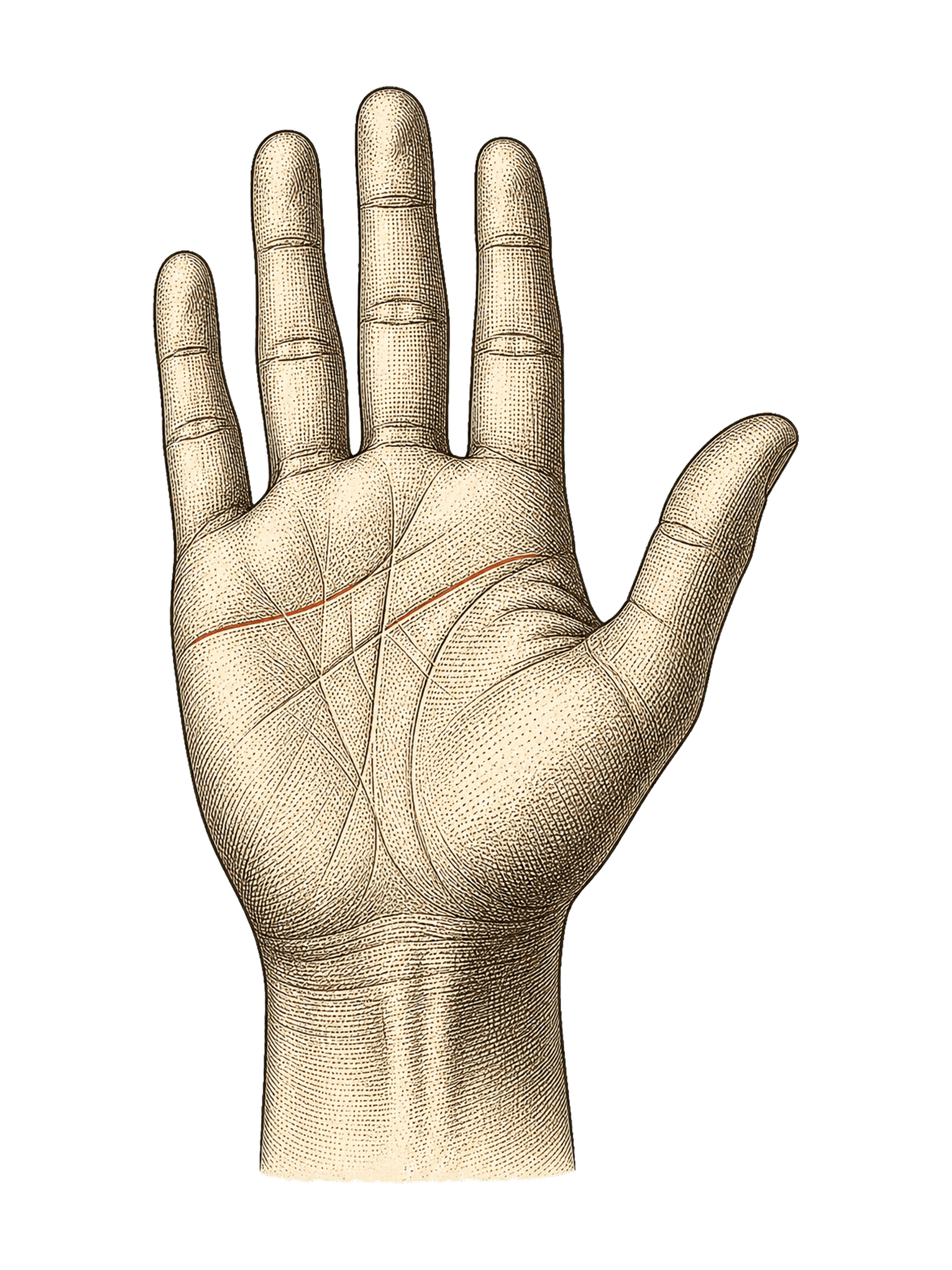
Add a photo
Required · 18 or older
Photo privacy · Refund terms ·Details
- Your photos are sent to our analysis provider to write your reading. This browser may temporarily keep pending photos for sign-in or recovery. Photos sent from your phone are kept temporarily for hand-off. See our privacy policy for details.
- When you press Read my palms, both photos go to our analysis provider for a clarity check before payment. This checks the photos, not the validity of a reading.
- Doesn't sound like you? Email us within 7 days of your first reading for a full refund, if you haven't used a second. If a photo can't be read, that reading is returned.
- Next: your reading uses one of your readings, or a short checkout if you have none.
Photo tips
 Photo tips
Keep your palm flat, fingers slightly apart and lines in focus. Use bright, even light, and photograph each palm the same way.
 ✓ Like this
 ✕ Too dark
 ✕ Fingers cut off
Twelve texts for different situations
Choose the example that matches your actual connection, then replace the details with something you mean. An invitation should sound like you and describe a plan you would genuinely like to keep. Avoid pretending you are already going to an event if you are inventing it solely to make your request seem casual.
After a class or regular activity
- I’ve enjoyed chatting after class. Want to get a drink nearby after the next session?
- Are you going to the group on Saturday? I was thinking of getting lunch afterwards if you’d like to join.
After talking about a shared interest
- You mentioned the new exhibition. Would you like to go together on Sunday afternoon?
- That recipe you described sounded great. Fancy trying the market you recommended this weekend?
When you want a clearly platonic plan
- I’d like to get to know you as a friend. Would you be up for coffee after work on Tuesday?
- A few friends and I are going to the board-game afternoon. Would you like to come along?
When money or time is limited
- Want to take a short walk at the park on Sunday? I’m keeping things low-cost this week.
- I have a lunch break free on Wednesday. Would you like to meet for a quick catch-up?
When it has been a while
- I thought of you when I passed our old café. Would you like to catch up there next week?
- I’d enjoy seeing you again. Are you free for a call or coffee sometime next weekend?
When you can offer a small choice
- Would you prefer a walk on Saturday or coffee on Sunday? No problem if neither works.
- I’m free Thursday evening and Sunday afternoon. Would either suit you for a catch-up?
The choice in the last examples is an invitation to find a workable time, not a demand to pick one. If a friend says neither works, accept that rather than presenting an endless list of alternatives.
Say friendship when ambiguity matters
If you want a platonic meeting and think the invitation could be understood as a date, say what you mean. A public setting or group plan can provide context, but no activity automatically communicates your intention. Clear language gives the other person information; it does not guarantee how they will feel about the invitation.
You can say as friends without apologising for it. If you actually want a date, do not disguise it as friendship to obtain time alone. If they ask what you mean, answer directly and let them decide whether that is a plan they want.
What to do with yes, maybe, no or silence
Let the response determine your next step. Confirm details after a yes; consider a counteroffer; leave a vague answer room to remain unconfirmed; and accept a no. A useful invitation creates a choice. It is not a sequence designed to make refusal too awkward for the other person to sustain.
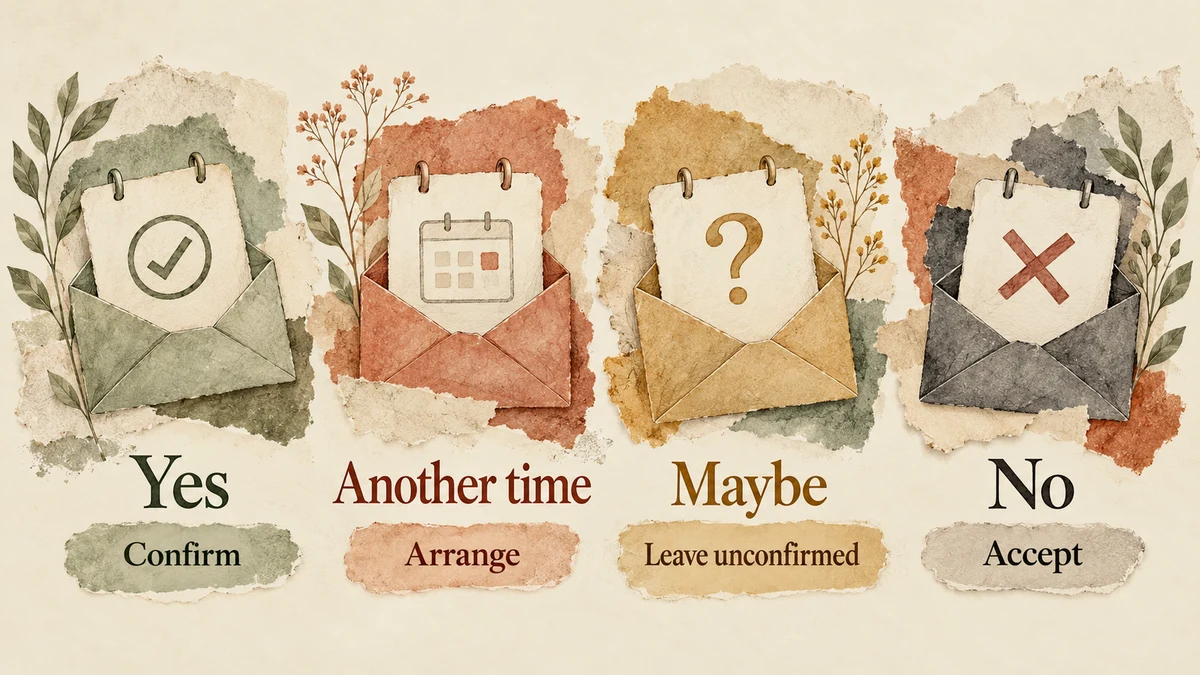
| Reply | A reasonable response |
|---|---|
| Yes | Great—shall we meet outside the café at that time? |
| I can’t then, but Friday works | Friday could work. What time suits you? |
| Maybe; I’ll let you know | Sounds good. I’ll make my plans tomorrow, so let me know before then if you want to join. |
| No thanks | No worries. Good to see you at the group. |
| No reply | Leave the plan unconfirmed. If a practical deadline matters, one brief clarification can close it. |
Do not reserve an expensive ticket or assume someone will attend because they seemed enthusiastic in an earlier conversation. Get an actual agreement before making a commitment on their behalf.
Make the invitation without a verdict about yourself
An invitation can feel exposing, particularly after a good conversation you have replayed too critically. Research on the liking gap found that people can underestimate how much conversation partners liked them. That finding cannot tell you whether this person wants to meet. Asking respectfully gives them a chance to answer.
If you are reaching across a longer gap, reconnecting with an old friend covers messages after ordinary distance or unresolved hurt. Once you meet, questions for friends offer ways to continue a conversation without forcing disclosure.
If arranging everything starts to feel one-sided, friendship reciprocity can help you make a specific request about initiative.
PalmMingle’s symbolic palm readings can be a reflection activity if you enjoy them. They cannot predict a yes or establish compatibility. Send a plan you mean, allow a free answer, and keep your own day moving.
Palmistry is an interpretive tradition, not a diagnostic tool. PalmMingle frames palm readings as entertainment and self-reflection, not prediction.