

Friendship jealousy is the discomfort or fear of losing your place in a friendship to someone else. When it appears, separate what you observed from what you fear, decide whether there is an actual pattern to discuss, and ask for connection without demanding exclusivity. A friend having other friends is not, by itself, evidence that you are being replaced.
You can take the feeling seriously without following every urge it produces. Checking their activity, criticising the new friend or withdrawing to make them chase you does not give you a clear answer about the friendship you want.
Is it jealousy, envy or exclusion?
Friendship jealousy concerns a threatened relationship; envy concerns something another person has; exclusion concerns being left out of a particular interaction or arrangement. These experiences can overlap, but they point towards different questions. Naming the situation helps you make a relevant request instead of turning every uncomfortable comparison into a claim about loyalty.
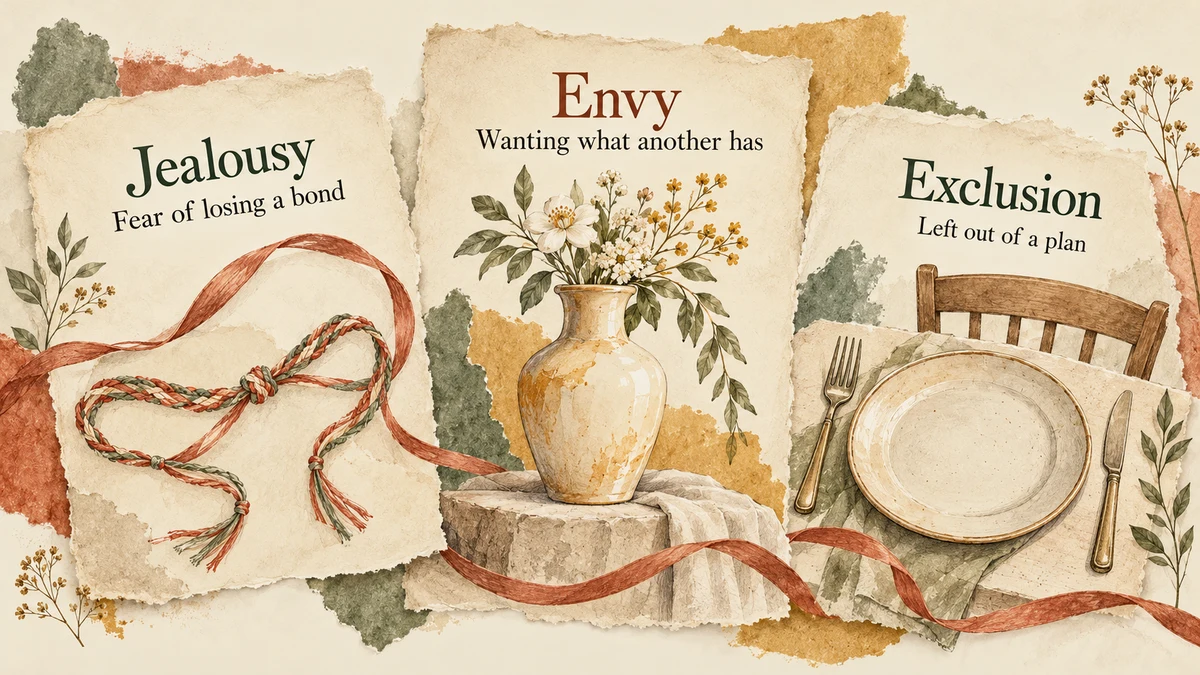
| Experience | What it might sound like | A useful question |
|---|---|---|
| Jealousy | I’m afraid their new friend matters more than I do | What has actually changed between us? |
| Envy | Their social life looks easier than mine | What do I want more of in my own life? |
| Exclusion | We agreed to include me, then the plan happened without me | What happened to that agreement? |
Not every plan needs to include you. But being repeatedly promised a place and then left out is different from seeing a friend enjoy a separate friendship. Discuss the broken agreement, rather than trying to ban the separate relationship.
Want to see yours?
Scan your palm for a full interpretive reading.

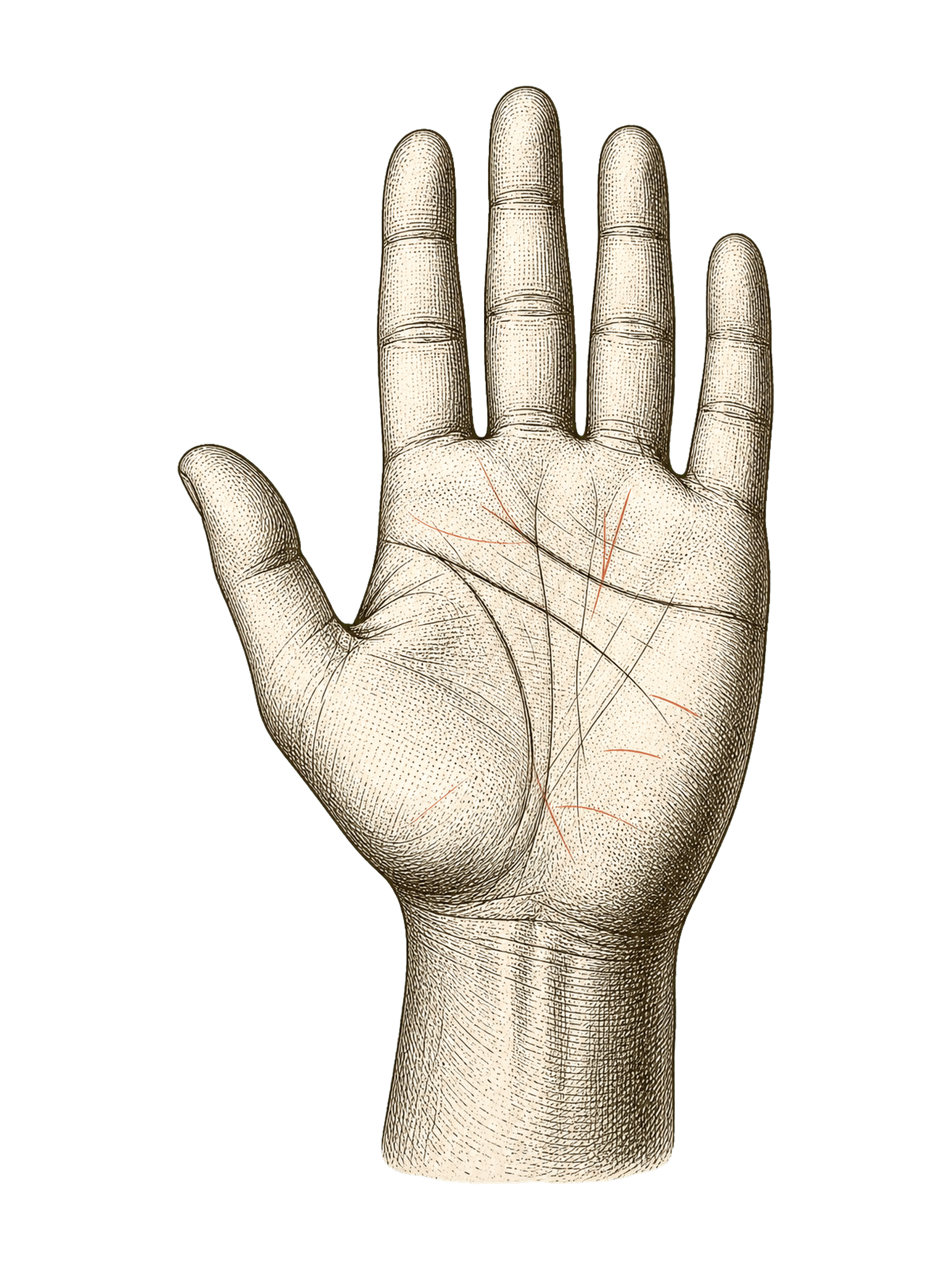
Place your palms here
Both palms, please: your left on the left, your right on the right.
Add a photo

Add a photo
Required · 18 or older
Photo privacy · Refund terms ·Details
- Your photos are sent to our analysis provider to write your reading. This browser may temporarily keep pending photos for sign-in or recovery. Photos sent from your phone are kept temporarily for hand-off. See our privacy policy for details.
- When you press Read my palms, both photos go to our analysis provider for a clarity check before payment. This checks the photos, not the validity of a reading.
- Doesn't sound like you? Email us within 7 days of your first reading for a full refund, if you haven't used a second. If a photo can't be read, that reading is returned.
- Next: your reading uses one of your readings, or a short checkout if you have none.
Photo tips
 Photo tips
Keep your palm flat, fingers slightly apart and lines in focus. Use bright, even light, and photograph each palm the same way.
 ✓ Like this
 ✕ Too dark
 ✕ Fingers cut off
What friendship-jealousy research adds
In Krems and colleagues’ research on friendship jealousy, jealousy was sensitive to third-party threats and cues of replacement. The studies used scenarios, recalled experiences and an online emotional manipulation. They help explain why a friend’s new connection can feel especially charged; they do not establish that your friend intends to replace you.
The researchers discuss friend-guarding behaviour as part of their theory. That is an account of what can motivate people, not permission to monitor, isolate or control a friend. Feeling protective of a bond and acting respectfully towards the person are separate things.
Check the story before making a demand
Write down the event without adding a motive. They went to dinner with someone else is different from They wanted me to see that I no longer matter. Then ask whether there is a pattern in your own relationship: cancelled commitments, less room for conversation, or simply a new person appearing in photographs.
You do not need to gather a dossier. One concrete example is enough to begin a conversation about a change that affects you. A social-media image cannot tell you how the entire evening went or what anyone thinks about you.
If you are upset, give yourself enough time to decide what you want to ask for. Draft the message without sending it immediately. Replace claims about their motives with the part you can honestly describe: missing time together, feeling uncertain or wanting clarity about a plan.
Ask for connection without asking for ownership
A useful request gives your friend a way to respond while preserving their other relationships. Ask for a plan, attention or clarification. Avoid asking them to prove you are their favourite, stop seeing someone else or invite you everywhere. Those demands make your relief depend on restricting their life rather than understanding the bond between you.
When you miss time together:
I’ve missed spending time with you. Would you like to plan an evening together next week?
When an agreed plan changed:
I thought I was included in Saturday’s plan, so I felt hurt when it happened without me. Did I misunderstand, or did something change?
When you want reassurance but do not want to control them:
I’ve been feeling unsure about where we stand. I’m not asking you to stop seeing anyone. I’d like to know whether you still want to make time for our friendship.

Make room for an answer you did not choose
Your friend might reassure you, describe a busy period, acknowledge a hurt or say that the friendship has changed. Listen for what they are willing to do, not just the words that offer immediate relief. You can decide whether the relationship available to you is one you want to keep participating in.
If they offer a realistic plan and follow through, allow that evidence to matter. If they repeatedly dismiss your feelings or break agreements, address that behaviour. Friendship reciprocity offers a way to discuss participation, while why friends drift apart separates changes in circumstances from assumptions about rejection.
You also get to develop other connections and interests. This is not a tactic to make someone jealous in return. It gives your own life room to grow, whether this friendship becomes closer, stays different or ends.
Our guide to attachment styles in friendship also distinguishes a conversation about closeness from diagnosing yourself or someone else.
PalmMingle’s symbolic palm readings can be an optional prompt for reflecting on what connection means to you. They cannot reveal a friend’s loyalty or predict replacement. The useful question is what you can ask, observe and choose without taking away anyone else’s freedom.
Palmistry is an interpretive tradition, not a diagnostic tool. PalmMingle frames palm readings as entertainment and self-reflection, not prediction.