

With flaky friends, make plans explicit, agree when they need to be confirmed and stop reserving time or money for arrangements that remain uncertain. If cancellations become a pattern, describe the impact and ask what kind of plan they can realistically keep. You can protect your time without deciding that you know why they cancel.
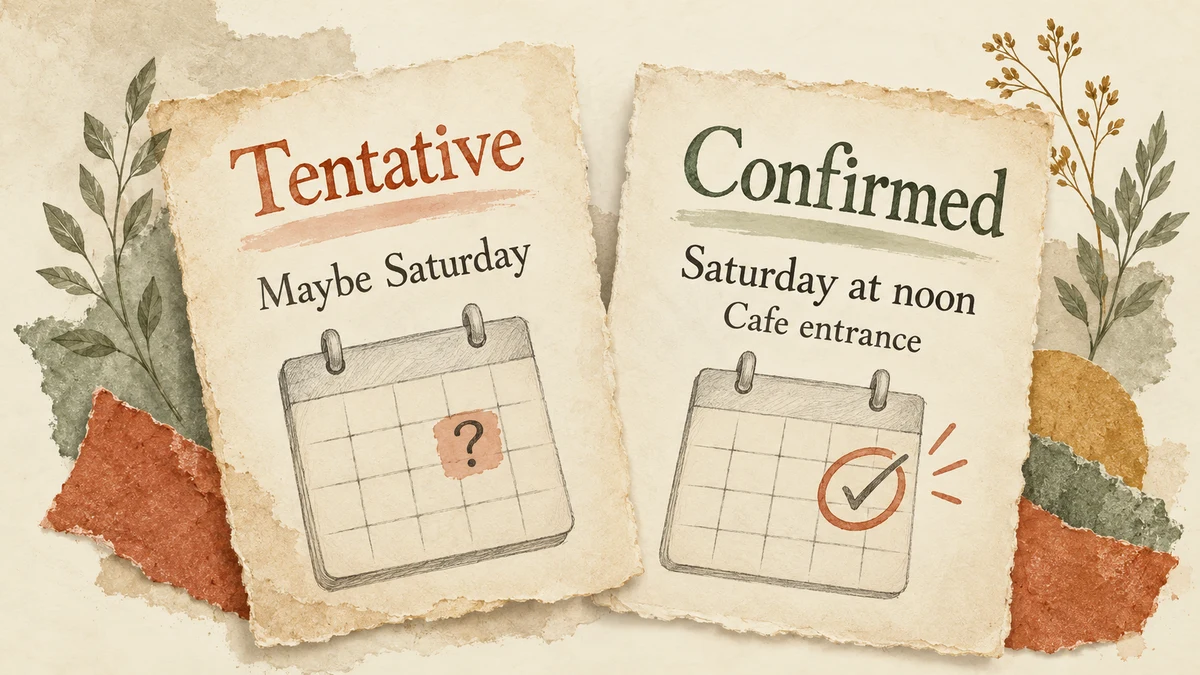
Start by separating a tentative idea from an agreement. Maybe Saturday is not the same as Saturday at the café at noon. If you have been treating one as the other, clarify the plan before treating its collapse as a broken promise.
Decide whether the plan is tentative or confirmed
A confirmed plan needs enough agreement for both people to know what they are committing to. A tentative plan still contains a question. Label that uncertainty openly and decide when you need an answer. You do not have to keep checking your phone indefinitely because someone might become available later.
You could say:
I’d like to see you Saturday. Shall we confirm by Friday evening? If it’s still uncertain then, I’ll make another plan.
Choose a confirmation time that fits the arrangement. A casual walk needs less advance commitment than a ticketed event or a long journey. Explain the practical reason when it helps: you need to book transport, arrange childcare or decide whether to accept another invitation.
Do not announce a deadline as a trap. The point is to make the agreement clear enough that both people know what will happen if it remains unconfirmed.

Want to see yours?
Scan your palm for a full interpretive reading.


Place your palms here
Both palms, please: your left on the left, your right on the right.
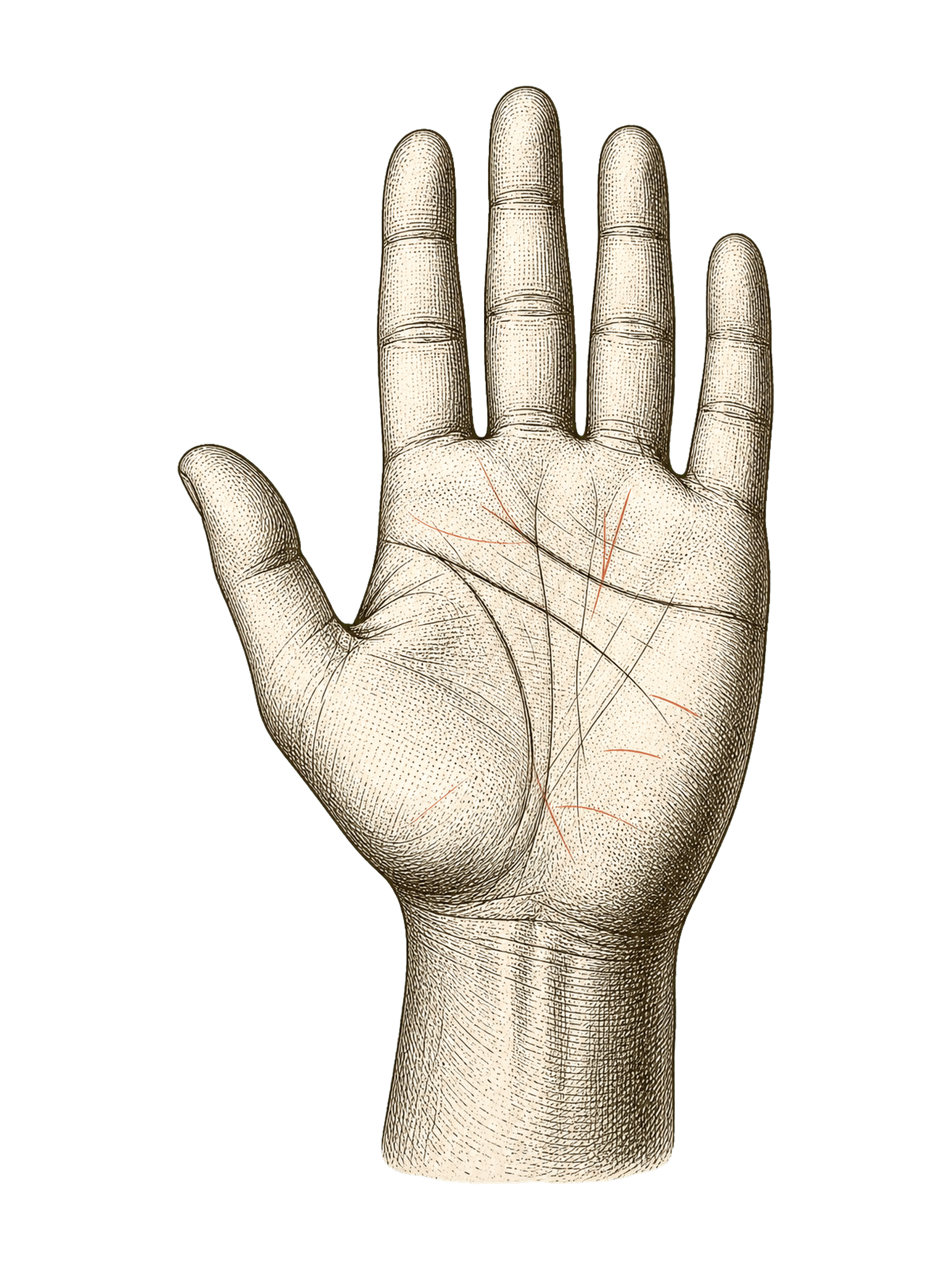
Add a photo

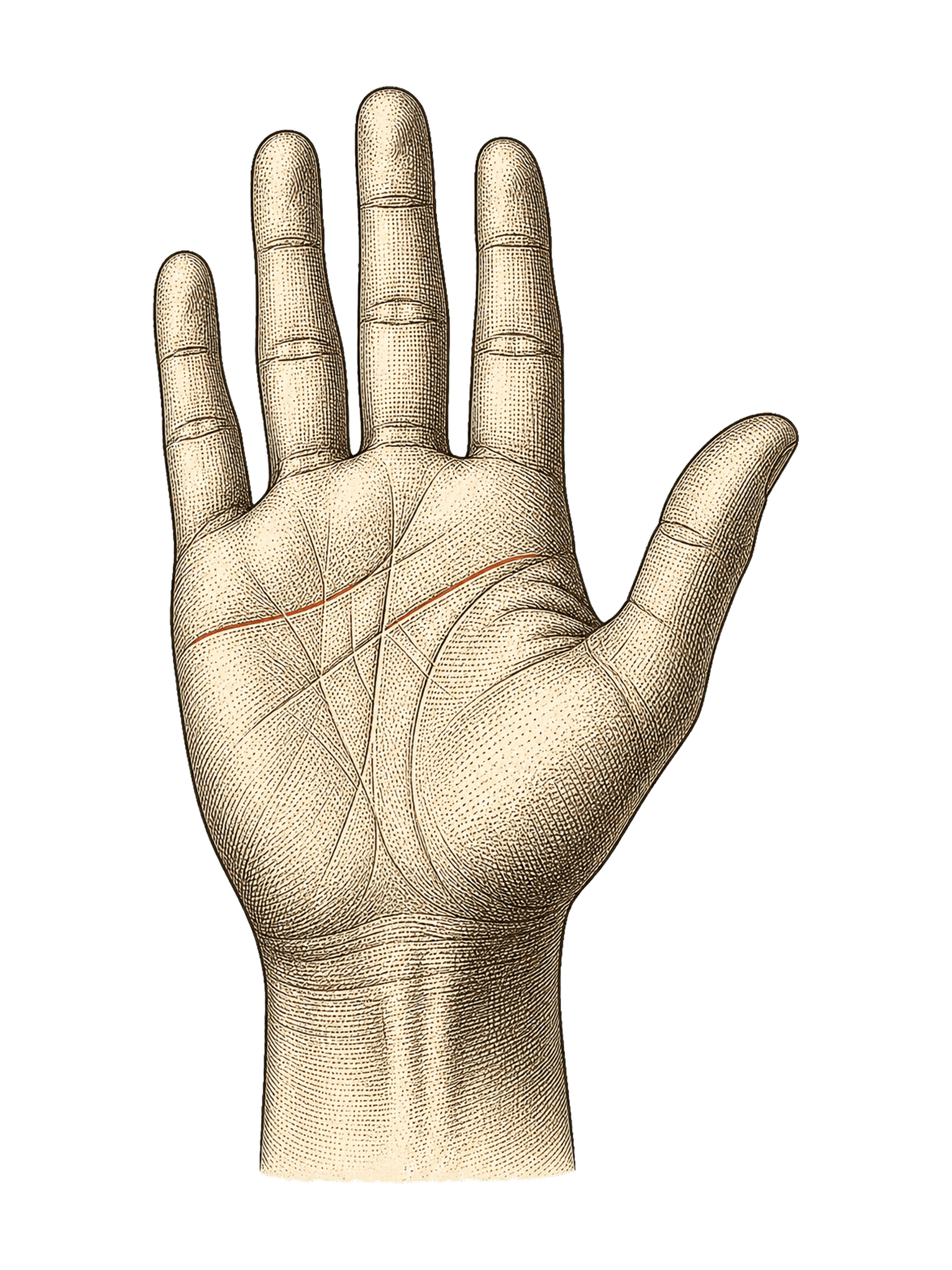
Add a photo
Required · 18 or older
Photo privacy · Refund terms ·Details
- Your photos are sent to our analysis provider to write your reading. This browser may temporarily keep pending photos for sign-in or recovery. Photos sent from your phone are kept temporarily for hand-off. See our privacy policy for details.
- When you press Read my palms, both photos go to our analysis provider for a clarity check before payment. This checks the photos, not the validity of a reading.
- Doesn't sound like you? Email us within 7 days of your first reading for a full refund, if you haven't used a second. If a photo can't be read, that reading is returned.
- Next: your reading uses one of your readings, or a short checkout if you have none.
Photo tips
 Photo tips
Keep your palm flat, fingers slightly apart and lines in focus. Use bright, even light, and photograph each palm the same way.
 ✓ Like this
 ✕ Too dark
 ✕ Fingers cut off
Match your response to the pattern
One cancellation and repeated no-shows do not require the same response. Consider the notice given, the practical cost, whether the person acknowledges it and whether they offer a workable repair. You do not need to rank the legitimacy of every reason to decide what arrangement you are willing to make next.
| What happened | A proportionate next step |
|---|---|
| A rare cancellation with notice | Acknowledge it and arrange another time if you both want to |
| Repeated last-minute cancellations | Name the pattern and stop reserving high-cost plans |
| Enthusiasm without confirmation | Treat the idea as tentative until there is an agreement |
| A no-show without a message | Explain that you were left waiting and what you will do differently next time |
| An unpredictable schedule they have explained | Consider flexible plans that still work for you |
An emergency can be real and your inconvenience can also be real. You can be compassionate without agreeing to an arrangement that repeatedly leaves you stranded.
Have the conversation about impact, not character
Describe a recent example and what it cost you. Ask what kind of plan is realistic rather than asking the person to defend whether they are a good friend. This gives you information you can use. You are flaky names a character judgement; I waited at the restaurant without knowing you weren’t coming names an event.
Our last few plans changed at the last minute. I’ve been keeping the time free, so that has been difficult. Do you want to keep making one-to-one plans, or would something more flexible work better?
Mayo Clinic’s guidance on assertive communication supports direct, respectful language and specific requests. It does not provide a way to make someone reliable. Your conversation can clarify the arrangement; their follow-through supplies the next piece of information.
If you need them to take the initiative, say that plainly:
I’d still enjoy seeing you. Please suggest the next time when you know you can make it.
Then leave that next invitation with them. Do not repeatedly take the task back while hoping they will notice you wanted help with it.
Lower the cost of uncertainty
Lower the cost of uncertain plans by choosing something that remains worthwhile if the other person cannot attend. You might invite them to an event you already want to visit or meet near your home rather than travelling far. Make clear whether the invitation is flexible or whether someone is genuinely counting on their attendance.
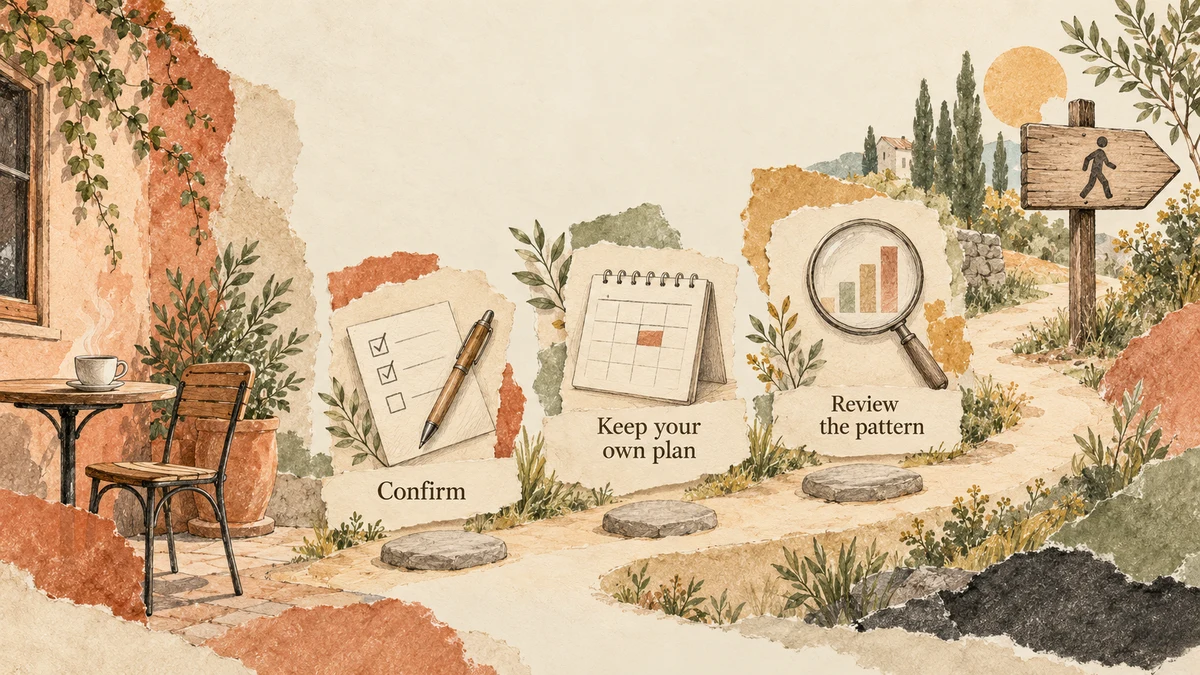
For tickets or other non-refundable costs, agree on payment and cancellation before booking. Do not buy something for a friend without confirmation and then assume they owe you. If you already incurred a cost under an agreement, discuss that specific agreement rather than quietly adding it to a running account of resentment.
Do not invite someone to a group event as a concealed punishment or arrange for other friends to confront them. A lower-cost plan should reduce practical strain, not become a social test.
Care and availability are different questions
A friend may care about you while being unable or unwilling to offer the kind of reliability you need. You do not have to prove that they do not care before changing your plans. Ask what they can offer, observe what happens, and decide whether that form of friendship works for you.
Friendship reciprocity explores participation beyond message counts and matching favours. If this is part of a broader loss of contact, why friends drift apart offers a way to examine changing circumstances without assigning a hidden motive.
You can keep someone as an occasional, spontaneous friend while making dependable plans elsewhere. You can also step back if even a lighter arrangement keeps hurting or inconveniencing you. Neither decision requires diagnosing them.
For a friendship that has been quiet for a while, a low-pressure reconnection message can reopen the conversation without pretending the next plan is already agreed.
If you enjoy PalmMingle’s interpretive palm readings, use them as symbolic reflection, not a test of someone’s reliability. The useful evidence here is the agreement you made, the action that followed and what you choose to reserve next time.
Palmistry is an interpretive tradition, not a diagnostic tool. PalmMingle frames palm readings as entertainment and self-reflection, not prediction.