

The liking gap is the tendency to underestimate how much a conversation partner liked you and enjoyed your company. Researchers found this pattern across several kinds of initial interaction. It is a reason to question an automatic negative verdict after a conversation—not proof that a particular person secretly likes you, wants friendship or intends to meet again.
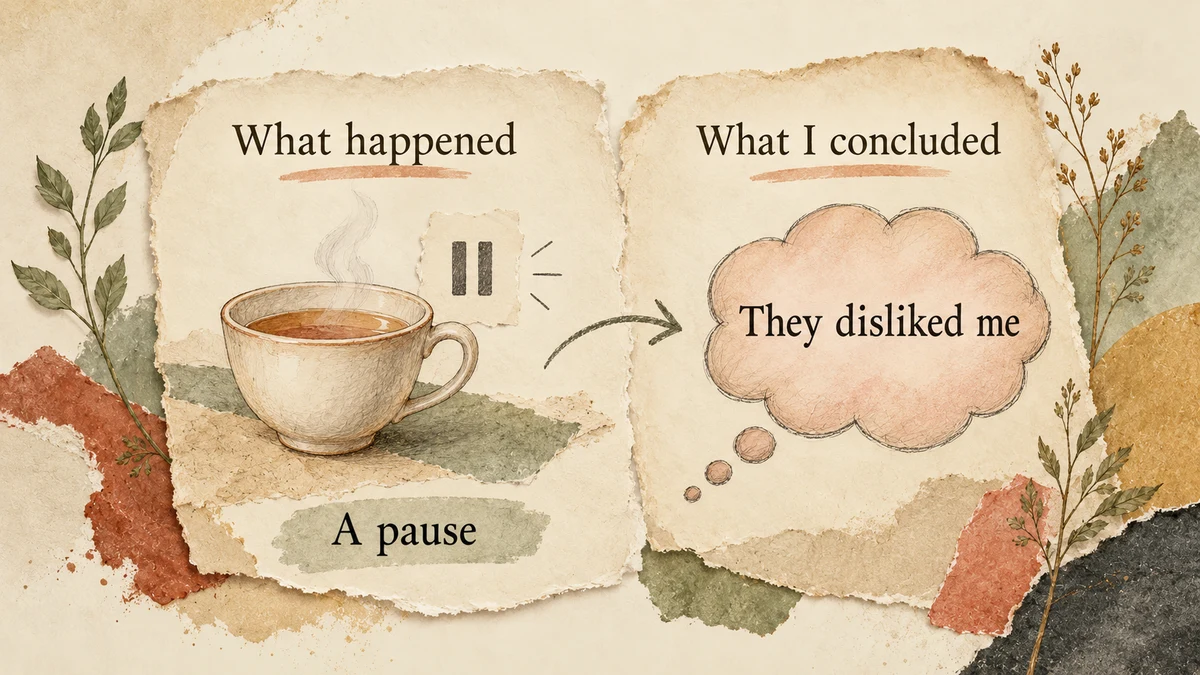
If you have just left a conversation thinking you sounded awkward, separate what happened from what you concluded. A pause is observable. They thought I was boring is an interpretation unless the other person actually said so.
What the liking-gap studies found
In their 2018 paper on the liking gap, Erica Boothby, Gus Cooney, Gillian Sandstrom and Margaret Clark found that participants underestimated how much their conversation partners liked them after initial interactions. The authors reported evidence across conversations of different lengths, a UK professional sample and a study following college roommates over time.
Their account suggests that being critical of your own performance can contribute to the gap. But the finding describes a pattern across studied people. It cannot identify another person’s private thoughts, establish romantic interest or tell you that an explicit refusal means something else.
The practical distinction is small but useful: I may be judging myself harshly leaves room for uncertainty. Science says they liked me replaces one unsupported certainty with another.
Want to see yours?
Scan your palm for a full interpretive reading.
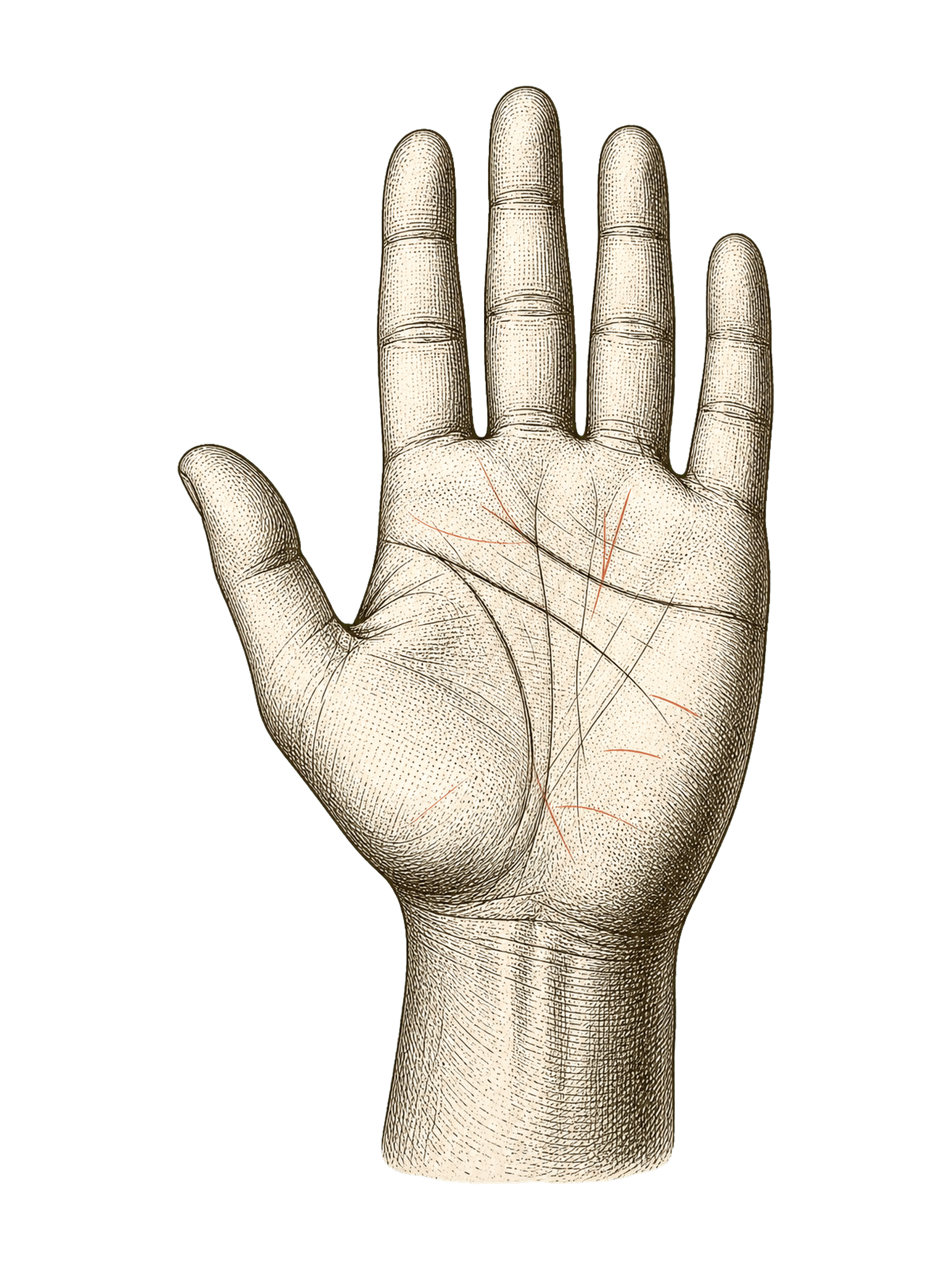
Place your palms here
Both palms, please: your left on the left, your right on the right.
Add a photo

Add a photo
Required · 18 or older
Photo privacy · Refund terms ·Details
- Your photos are sent to our analysis provider to write your reading. This browser may temporarily keep pending photos for sign-in or recovery. Photos sent from your phone are kept temporarily for hand-off. See our privacy policy for details.
- When you press Read my palms, both photos go to our analysis provider for a clarity check before payment. This checks the photos, not the validity of a reading.
- Doesn't sound like you? Email us within 7 days of your first reading for a full refund, if you haven't used a second. If a photo can't be read, that reading is returned.
- Next: your reading uses one of your readings, or a short checkout if you have none.
Photo tips
 Photo tips
Keep your palm flat, fingers slightly apart and lines in focus. Use bright, even light, and photograph each palm the same way.
 ✓ Like this
 ✕ Too dark
 ✕ Fingers cut off
Separate the conversation from your private replay
After an encounter, write down the behaviour you noticed before deciding what it meant. Include evidence that does not fit your worst interpretation. The aim is not to force a positive story; it is to avoid treating a self-critical explanation as the only possible account of an ambiguous event.
| What you noticed | A conclusion you might add | What remains unknown |
|---|---|---|
| There was a pause | They found me dull | Whether they were thinking, distracted or comfortable with silence |
| You stumbled over a word | They thought I was incompetent | Whether they noticed or cared |
| They left at the end of the event | They wanted to escape me | What they had planned afterwards |
| They asked a follow-up question | They definitely want to be friends | Whether they want another meeting |
| They declined your invitation | They secretly want you to try harder | No hidden explanation is needed to respect the no |
Positive cues also have limits. Politeness, smiling and a good conversation are not consent to persistent contact. Look for how the person participates when you make a clear, respectful invitation.
Choose a follow-up that does not require mind-reading
If the conversation was welcome and you have an appropriate way to contact the person, you can send one specific follow-up. Refer to something you actually discussed and offer a next step they can accept or decline. You do not need to resolve exactly how much they liked you before asking whether they want to meet again.
For example:
I enjoyed talking about the exhibition yesterday. I’m going on Saturday afternoon if you’d like to join me.
Or, for someone you see regularly:
It was good chatting after class. Are you coming next week?
These messages ask a manageable question. They do not ask the other person to rate your performance or reassure you that you were not embarrassing. If you want more examples, questions for friends can help you continue a conversation without making it an interrogation.
Read the answer you receive
Let the actual response guide your next action. An accepted invitation gives you a plan to confirm. A counteroffer gives you something to work with. A no, a request for space or continued silence does not need a liking-gap explanation that allows you to keep pursuing contact. Respect the answer even when the reason is unknown.
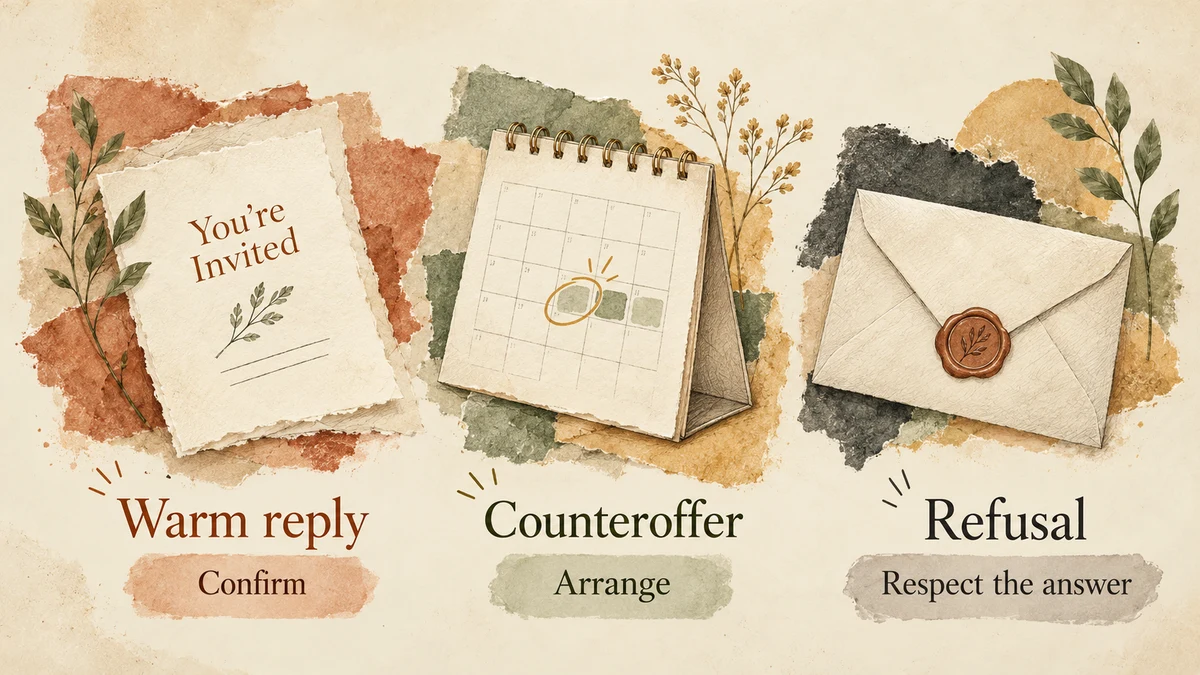
If someone says they are busy without offering another time, you can leave the invitation open once and move on with your plans. If they clearly decline, stop asking about that plan. The research is about inaccurate estimates after conversations; it does not authorise you to reinterpret someone’s choices.
If your concern comes from an actual hurtful comment rather than an ambiguous pause, address the comment. A bias study should not be used to explain away disrespect or persuade you to remain in an interaction you do not want.
Avoid turning every encounter into a performance review
You can take one useful lesson from a conversation without inspecting every sentence. Maybe you interrupted and want to leave more room next time. Maybe the setting was too noisy. Maybe nothing needs fixing. Decide whether there is an action worth taking, then return your attention to the rest of your day.
Try these questions:
- What do I actually know about how the conversation went?
- Have I treated an ambiguous moment as definite rejection?
- Is there a respectful next step, or is this an uncertainty I can leave alone?
If post-conversation worry repeatedly stops you doing things you want to do, consider speaking with a qualified professional about the distress itself. The liking gap is a research finding, not a diagnosis or a treatment plan.
Once a connection continues, friendship reciprocity is a useful way to discuss actual participation rather than trying to infer it from one encounter.
Making a friend takes more than one encounter. You can make room for another conversation without demanding certainty about where it will lead. PalmMingle offers interpretive palm readings for reflection, but a reading cannot reveal someone else’s opinion of you. A direct invitation and their freely given answer are more useful here.
Palmistry is an interpretive tradition, not a diagnostic tool. PalmMingle frames palm readings as entertainment and self-reflection, not prediction.