

To remember names, hear the name clearly, connect it to the person and meeting, then try to recall it before checking. Use it naturally when there is a reason, revisit it later and ask again when it is missing. You do not need an elaborate mental picture, an invented nickname or a trick that avoids admitting you forgot.
The next introduction is a good place to practice. Your aim is to learn the person's chosen name accurately, not deliver a flawless performance of remembering everybody.
Use a hear, connect, recall, check sequence
Learn the name first, give yourself a useful cue, then attempt to retrieve it. Checking after the attempt lets you correct an error instead of rehearsing a guess. You can use this sequence without visual imagery: the sound of the name, where you met and a shared topic can provide the details you revisit.
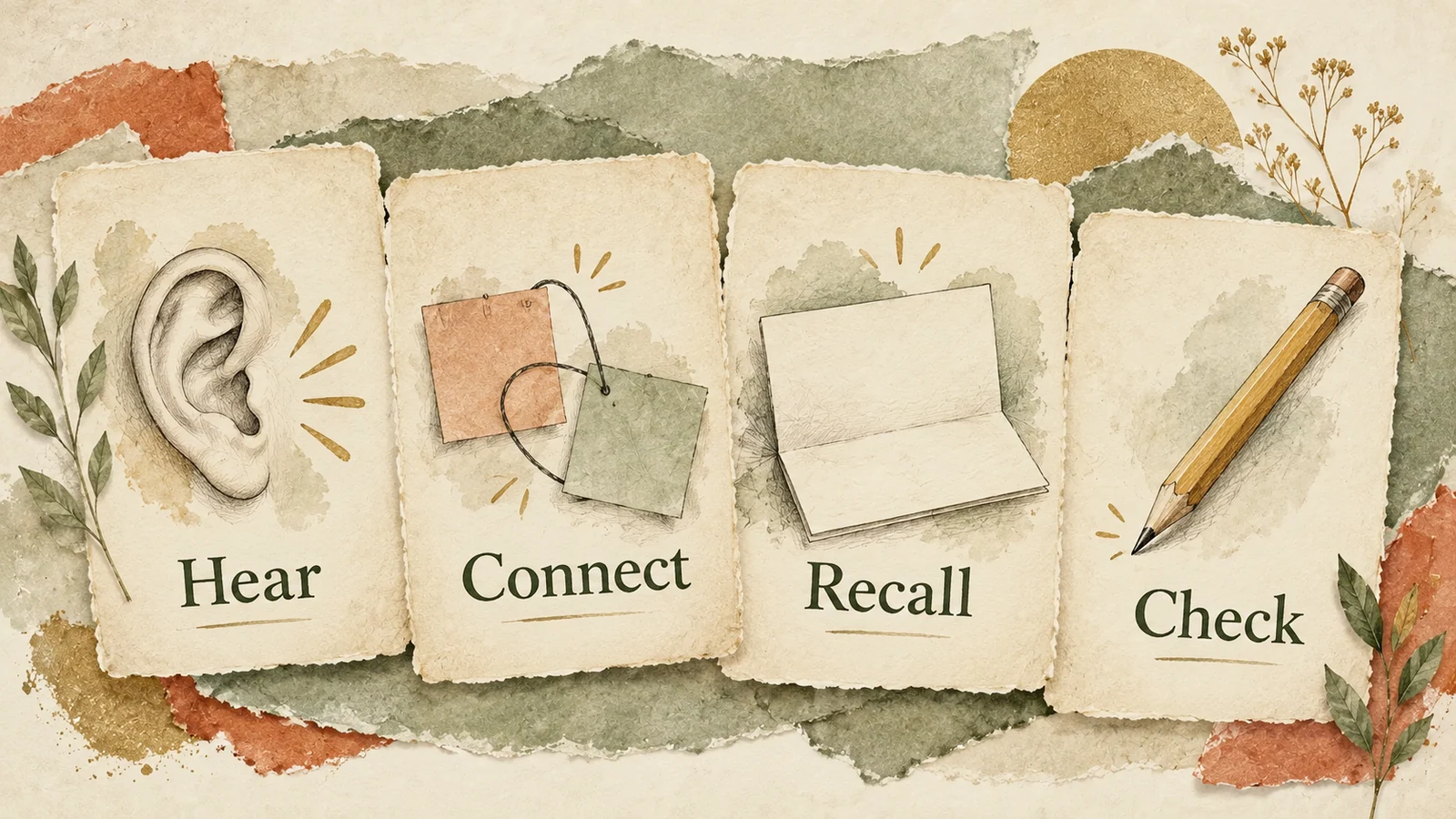
| Step | What to do | Example |
|---|---|---|
| Hear | Attend to the name; ask for a repeat if necessary | “I didn't catch your name. Could you say it again?” |
| Connect | Link it with the person and this meeting | Sam, from the evening pottery class |
| Recall | Try to bring the name to mind without looking | “Who did I discuss the blue glaze with?” |
| Check | Confirm rather than repeatedly guessing | Check an appropriate name tag or ask the person |
In Morris and Fritz's name-learning experiments, introduction games involving retrieval practice produced better name recall than comparison introduction procedures. The experiments involved learning names in groups. They support the value of practicing recall; they did not test the informal sequence or personal schedule suggested here.
Want to see yours?
Scan your palm for a full interpretive reading.

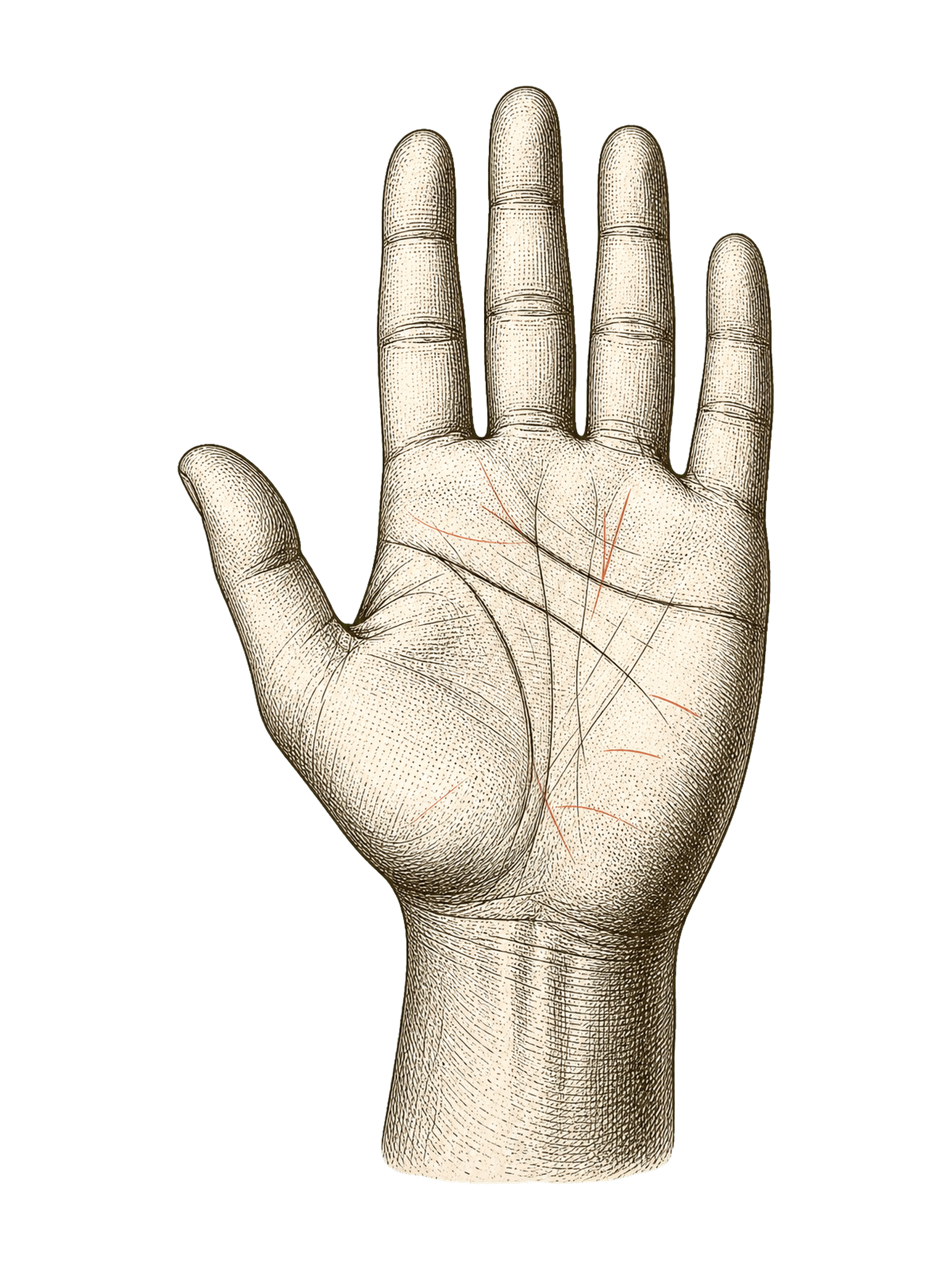
Place your palms here
Both palms, please: your left on the left, your right on the right.
Add a photo

Add a photo
Required · 18 or older
Photo privacy · Refund terms ·Details
- Your photos are sent to our analysis provider to write your reading. This browser may temporarily keep pending photos for sign-in or recovery. Photos sent from your phone are kept temporarily for hand-off. See our privacy policy for details.
- When you press Read my palms, both photos go to our analysis provider for a clarity check before payment. This checks the photos, not the validity of a reading.
- Doesn't sound like you? Email us within 7 days of your first reading for a full refund, if you haven't used a second. If a photo can't be read, that reading is returned.
- Next: your reading uses one of your readings, or a short checkout if you have none.
Photo tips
 Photo tips
Keep your palm flat, fingers slightly apart and lines in focus. Use bright, even light, and photograph each palm the same way.
 ✓ Like this
 ✕ Too dark
 ✕ Fingers cut off
Make sure you have learned the name they use
Ask how the person wants to be addressed, and check pronunciation when you need to. A name you misheard is not a recall problem you can solve by repeating it more confidently. You can ask politely without describing the name as difficult, exotic or something you will never be able to say.
Try: “Could you say your name once more? I want to get it right.” If useful, add: “Have I pronounced that correctly?” Then accept the correction without making the person give a lesson about its origin.
Do not substitute a shorter version because it is easier for you. If they offer a nickname, use it as requested. If a written name and spoken name differ, follow what they tell you rather than insisting on the form you saw on a list.
At a loud event, it may be more practical to move somewhere you can hear or ask them to show you the spelling. Neither requires pretending you understood. The point is an accurate starting association.
Try one worked introduction from beginning to end
A useful practice attempt follows a real interaction rather than a string of names detached from people. Attend to one name, notice an ordinary shared detail and try to retrieve both afterwards. Keep the detail relevant and respectful; there is no need to turn a person's appearance or background into a private joke.
At the class: “I'm Maya.”
You: “Hi, Maya. I'm Ellis. Is this your first glazing session?”
Maya: “My second. I'm trying a blue glaze today.”
Later, before consulting any note, ask yourself who you spoke with about the blue glaze. If “Maya” comes to mind, you have practiced retrieving the name. If it does not, check an appropriate source or ask next time rather than converting uncertainty into a confident mistake.
At the next encounter: “Hi, Maya. How did the glaze turn out?” The name has a natural place in a conversation you both participated in. You do not need to insert it into every sentence.
If the exchange itself is difficult, how to make small talk offers ways to ask about the shared setting and contribute something of your own.
Revisit the name when the person is not in front of you
Create a few ordinary opportunities to recall the name after the introduction and before the next meeting. Try first, then check. There is no universal timetable in this guide: choose moments that fit the contact you actually have, rather than setting a rigid schedule or judging yourself for a missed rehearsal.
You might recall the name when you leave the event, when you later think about the conversation and before returning to the group. If you are learning several names, retrieve them separately with their meeting context rather than repeatedly reading the whole list.
If two people have the same name, use a neutral context distinction in your own memory: Sam from the garden group and Sam from the evening class. Avoid reducing either person to a physical feature or private circumstance.
A face may be familiar while the name remains unavailable. You can acknowledge the connection you do remember: “We talked at the book group about that travel memoir. I'm sorry, your name has slipped my mind.” You have retained something real without pretending to retain everything.
Keep any notes minimal and appropriate
If you use a private note, record only what helps you recognize the shared interaction: the name, where you met and perhaps the topic you discussed. You do not need a dossier of personal details. Keep the note private, avoid sensitive information and respect any rules that apply in the setting where you met.
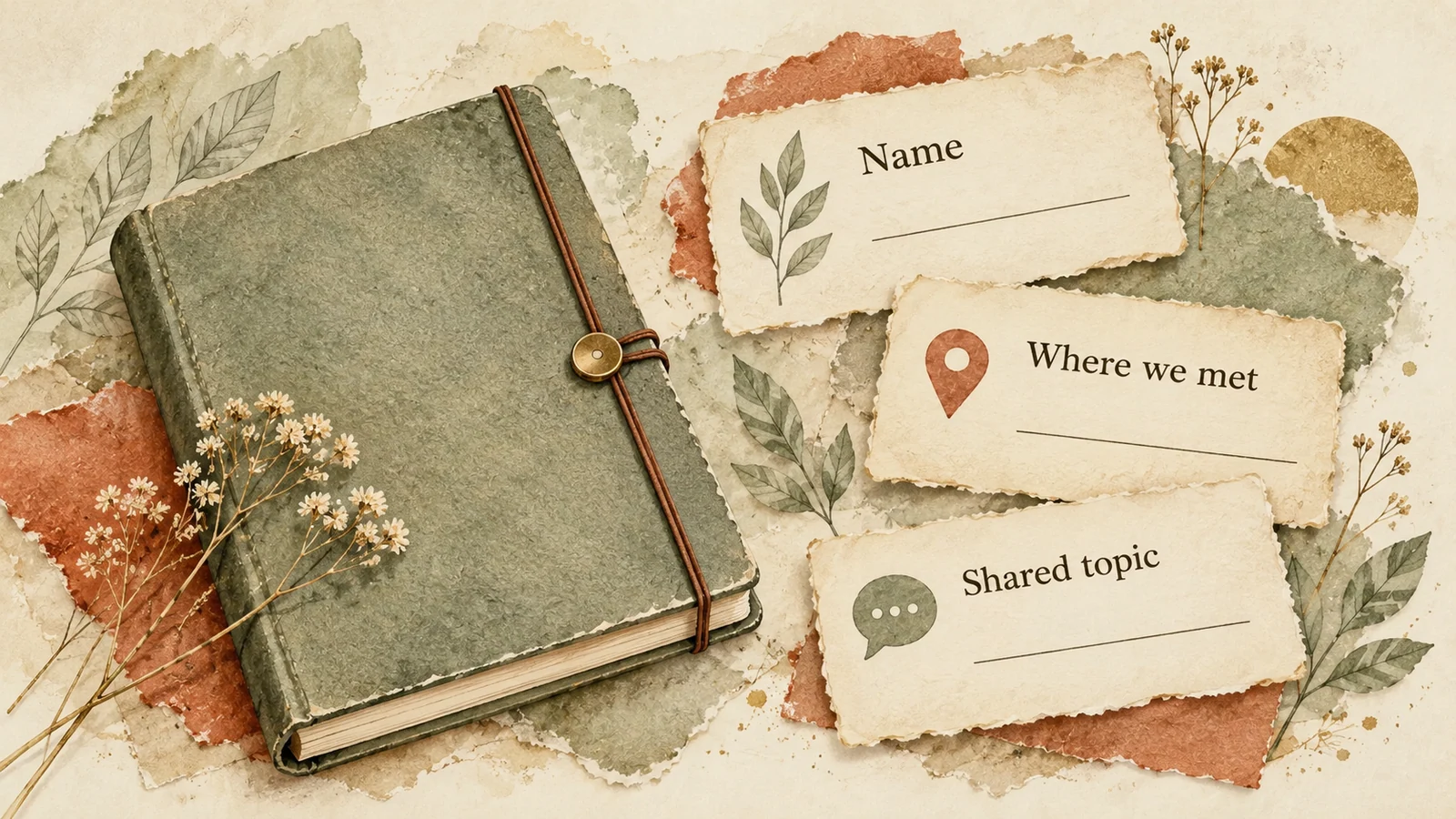
“Maya — evening ceramics — blue glaze” can be enough. Information about health, relationships or money is not necessary for this purpose. Do not photograph someone, record them or search their private accounts as a workaround for asking their name.
For a group you organize, an optional name tag or a brief reintroduction can reduce the need for everybody to remember immediately. Let people choose the name they display and decline a public memory game. A research task showing an effect does not make the same activity comfortable or appropriate for every group.
Ask again without performing embarrassment
When you forget, acknowledge it briefly and ask directly. An elaborate apology can require the other person to comfort you, while a fake introduction can create more confusion. Give your own name too if it may help. Then return to the conversation instead of repeatedly announcing how bad you are with names.
Useful lines include:
- “I'm sorry, your name has slipped my mind. I'm Ellis.”
- “I remember our conversation, but not your name. Would you remind me?”
- “Have I got that right: Maya?”
- “Thanks for correcting me. I'll use that pronunciation.”
If you have used the wrong name, correct it once: “Sorry, Maya, not Maria.” Do not argue that the names are similar or ask the person to agree it was an understandable mistake.
The guide to being a better listener can help you make room for what the person says after the introduction. Remembering a name is useful; continuing to pay attention matters too. When you want to suggest another meeting, make a specific, optional invitation rather than assuming familiarity means they are available.
If you like symbolic reflection, PalmMingle's AI palm reading offers entertainment and self-exploration. It does not assess memory, explain a recall difficulty or tell you what someone prefers to be called. For that last question, ask them.
Palmistry is an interpretive tradition, not a diagnostic tool. PalmMingle frames palm readings as entertainment and self-reflection, not prediction.