

To stop oversharing, check whether the information is yours to share, whether this person has room for it now, and how much detail serves the conversation. Start with a short version and ask before going deeper. If you have already said more than you meant to, you can stop, acknowledge it and change direction without turning the repair into another long explanation.
You do not have to become mysterious to protect your privacy. The useful change is having more choice over what leaves your mouth, your messages and your group chats.
Run three checks before the personal detail
Before a sensitive disclosure, ask: Mine? Now? How much? These questions cover ownership, the other person's availability and the level of detail. They are practical prompts, not a test that can score a conversation. A brief pause gives you a chance to choose rather than continue simply because you have started talking.
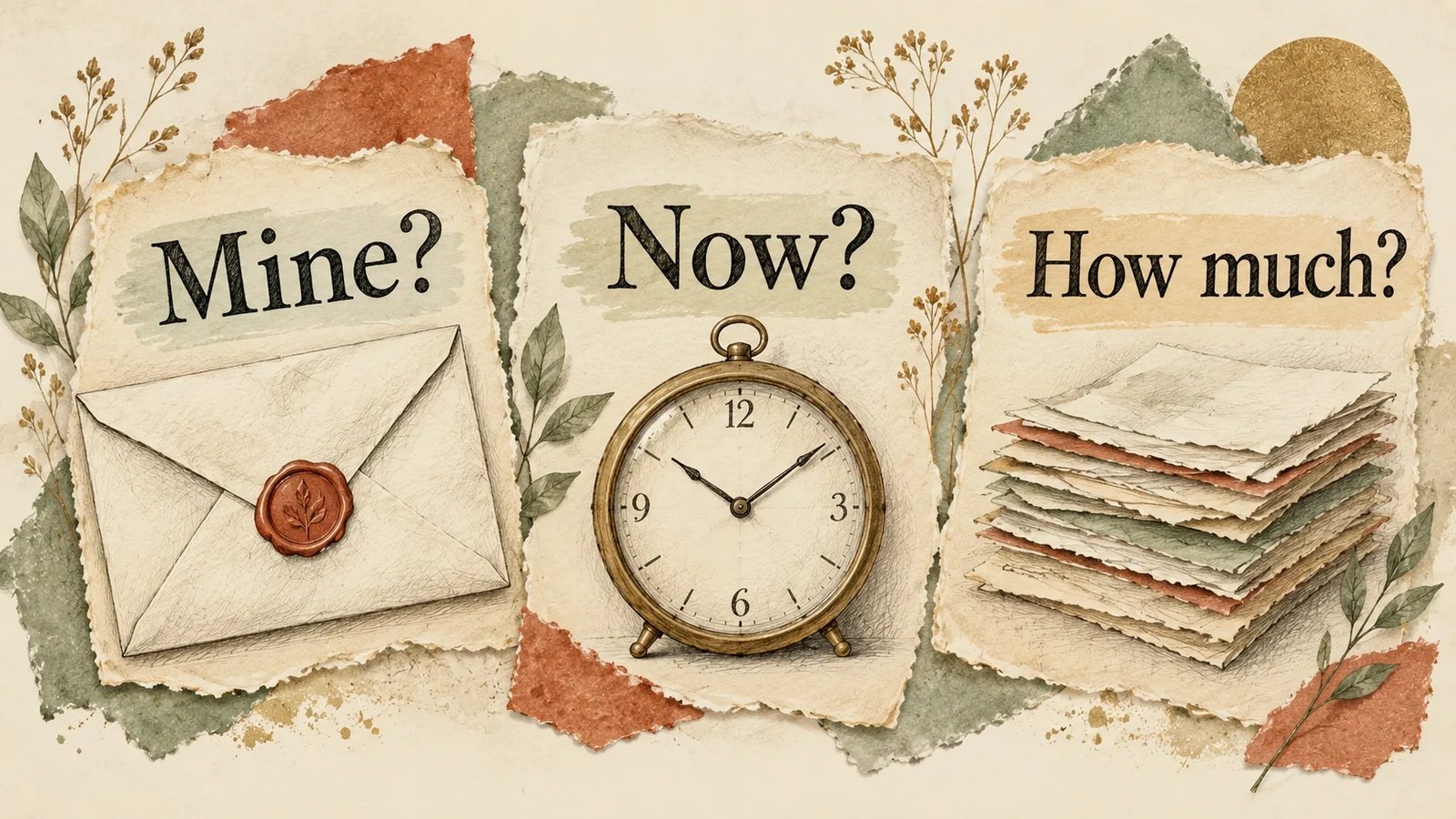
| Check | Ask yourself | A possible next sentence |
|---|---|---|
| Mine? | Does this reveal someone else's private life as well as mine? | “We disagreed about something personal. I can describe my part.” |
| Now? | Is this a suitable setting, and have I checked their availability? | “Have you got room for something a bit personal?” |
| How much? | What does this person need to understand what I am asking? | “The short version is that I am having a difficult week.” |
For example, a friend asking why you seem distracted does not need a complete account of a family argument. You could say: “Something difficult happened at home. I'd appreciate some company, but I don't want to discuss the details.” That is an honest answer with a clear request.
If you do want to talk, offer a choice: “Would you be up for hearing about it, or would another day be better?” Let the answer matter. Asking permission and then continuing through a no is not a check.

Want to see yours?
Scan your palm for a full interpretive reading.


Place your palms here
Both palms, please: your left on the left, your right on the right.
Add a photo

Add a photo
Required · 18 or older
Photo privacy · Refund terms ·Details
- Your photos are sent to our analysis provider to write your reading. This browser may temporarily keep pending photos for sign-in or recovery. Photos sent from your phone are kept temporarily for hand-off. See our privacy policy for details.
- When you press Read my palms, both photos go to our analysis provider for a clarity check before payment. This checks the photos, not the validity of a reading.
- Doesn't sound like you? Email us within 7 days of your first reading for a full refund, if you haven't used a second. If a photo can't be read, that reading is returned.
- Next: your reading uses one of your readings, or a short checkout if you have none.
Photo tips
 Photo tips
Keep your palm flat, fingers slightly apart and lines in focus. Use bright, even light, and photograph each palm the same way.
 ✓ Like this
 ✕ Too dark
 ✕ Fingers cut off
Change the amount of detail, not your whole personality
Choose a level of disclosure that fits this relationship and this moment. A short answer can still be warm; a personal conversation can still have limits. Share more detail after the other person agrees, rather than matching the intimacy of their disclosure because you feel obliged to.
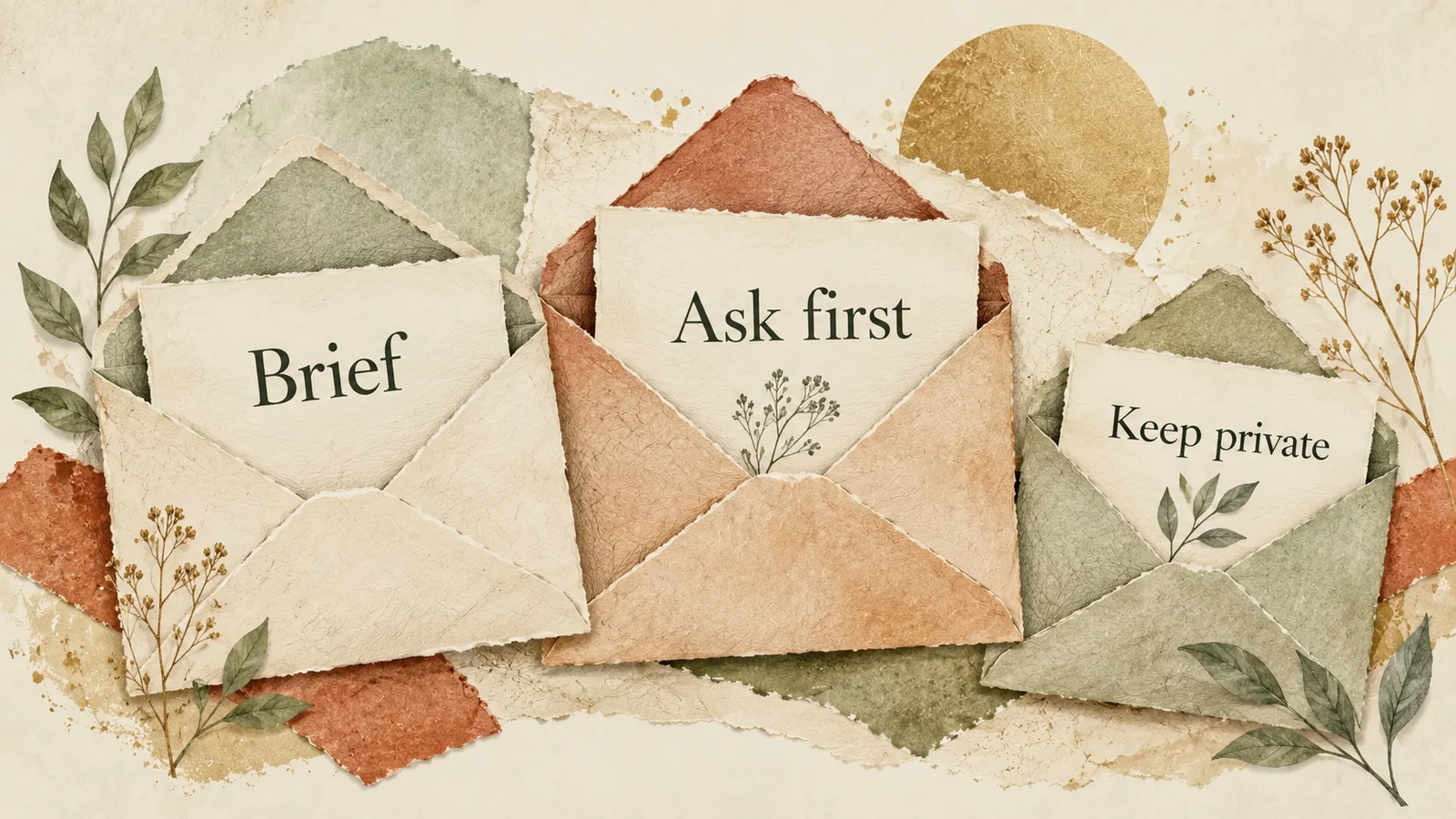
Consider three versions of the same answer to “How has your week been?”
- Brief: “A bit rough at home, so I'm pleased to be out for a walk.”
- Ask first: “There has been a family disagreement. Would you mind hearing a little about it?”
- Keep private: “I'm dealing with something personal, but I'd rather talk about something else today.”
The right version may change with the person, the surroundings and your own wishes. A trusted friend in a private conversation is different from a new acquaintance in a crowded room. Neither setting requires you to reveal anything you do not want to.
The VA's guidance on assertive communication recommends clear, specific and respectful messages about your own thoughts and requests.
You could put that principle to use with a sentence of your own: “I'd like some company without getting into the details.” You do not need an excuse. When you both want a more personal conversation, choose questions that leave room for either person to answer.
Use a stopping line while you are still talking
You can stop a disclosure in the middle. You do not have to finish a story because you have introduced it, and you do not need the listener to rescue you. A short transition can acknowledge the change, state your preference and move the conversation somewhere you are comfortable going.
Try one of these:
- “Actually, I don't want to go into that part.”
- “I'm getting further into the details than I intended. Let me give you the short version.”
- “That involves someone else's business, so I'll leave it there.”
- “I've talked a lot. I'd like to hear how things are with you.”
Here is a fuller exchange:
You: “Then my sister sent this message, and I could show you the whole conversation—actually, no. Those messages are private. What I need help with is deciding how to say I can't host this weekend.”
Friend: “Do you want help with the message?”
You: “Yes, please. Just the invitation part.”
The change gives the conversation a task without passing on the private messages. If asking is the difficult part, our guide to setting boundaries with friends has more wording for stating what you will and will not do.
Protect the absent person's information
Your experience can be yours to discuss while some details still belong to someone else. Focus on the effect on you, remove identifying details when they are unnecessary, and avoid forwarding private messages as conversation material. Changing a name may not protect a person if everyone can identify them from the situation.
“I'm worried about a friend and don't know how to offer help” may be enough to ask for advice. Their medical history, finances or intimate messages may add nothing to that decision. If you need support about mistreatment or a safety concern, you are allowed to describe what happened to an appropriate person; privacy should not become a rule that silences you.
Before sending a screenshot, ask what you actually need from the recipient. If a summary answers that question, use the summary. If the evidence matters for a formal report, keep it for the relevant process rather than circulating it socially.
Repair the overshare without asking for a verdict on yourself
A useful repair names what happened and makes a clear request. It does not ask the other person to repeatedly assure you that you are interesting, lovable or forgiven. You can regret sharing a detail without deciding that the whole conversation, or your whole personality, was a mistake.
For your own information: “I shared something quite personal yesterday and wish I'd kept it private. Please don't pass it on.” You can make that request, although you cannot guarantee information will stay contained once shared.
For someone else's information: “That wasn't mine to tell. Please don't forward it. I'm going to take responsibility with the person affected.” Whether to contact them, and how, depends on what happened and what would prevent further harm. Do not repeat the detail to a wider audience while announcing your apology.
If the problem was taking over the conversation, try: “I realized I filled most of our call. Next time I want to make more room for you.” Then follow through. Our guide to being a better listener helps with shifting from an automatic response to the other person's actual needs.
Give yourself somewhere else to put the unfinished thought
When you notice the urge to disclose, choose a place that fits the information. You might make a private note, arrange a conversation with someone who has agreed to listen, or decide the detail can remain unsaid. Look for an outlet you feel comfortable choosing. You are allowed to discuss difficult feelings.
Before your next conversation, choose one stopping line you would actually use. Afterwards, notice whether you shared what you wanted, asked for what you needed and left room for the other person. There is no need to replay every sentence for signs of failure.
If symbolic self-reflection appeals to you, PalmMingle's AI palm reading is an optional way to explore a story about yourself. It is entertainment and reflection, not an assessment of your communication or a method for fixing oversharing. The practical skill here is choosing the person, moment and amount of detail.
Palmistry is an interpretive tradition, not a diagnostic tool. PalmMingle frames palm readings as entertainment and self-reflection, not prediction.