

Deal with a clingy friend by naming the contact pattern, stating availability you can sustain and noticing how they respond to a clear limit. Frequent messages, repeated requests for reassurance and demands for exclusivity are different situations. Discuss the behavior without diagnosing the person, and do not promise constant access to make a difficult conversation end.
“I care about you, and I can't keep up with messages throughout the workday. I'll reply when I'm available” is kinder and clearer than alternating between unlimited replies and unexplained resentment.
Name the pattern instead of calling them clingy
Describe what is happening and what it asks of you before deciding on a response. “Clingy” can hide very different concerns: a friend enjoys more contact than you do, needs reassurance during a difficult period or pressures you to give up other relationships. The label alone does not explain their motive or tell you what agreement would help.
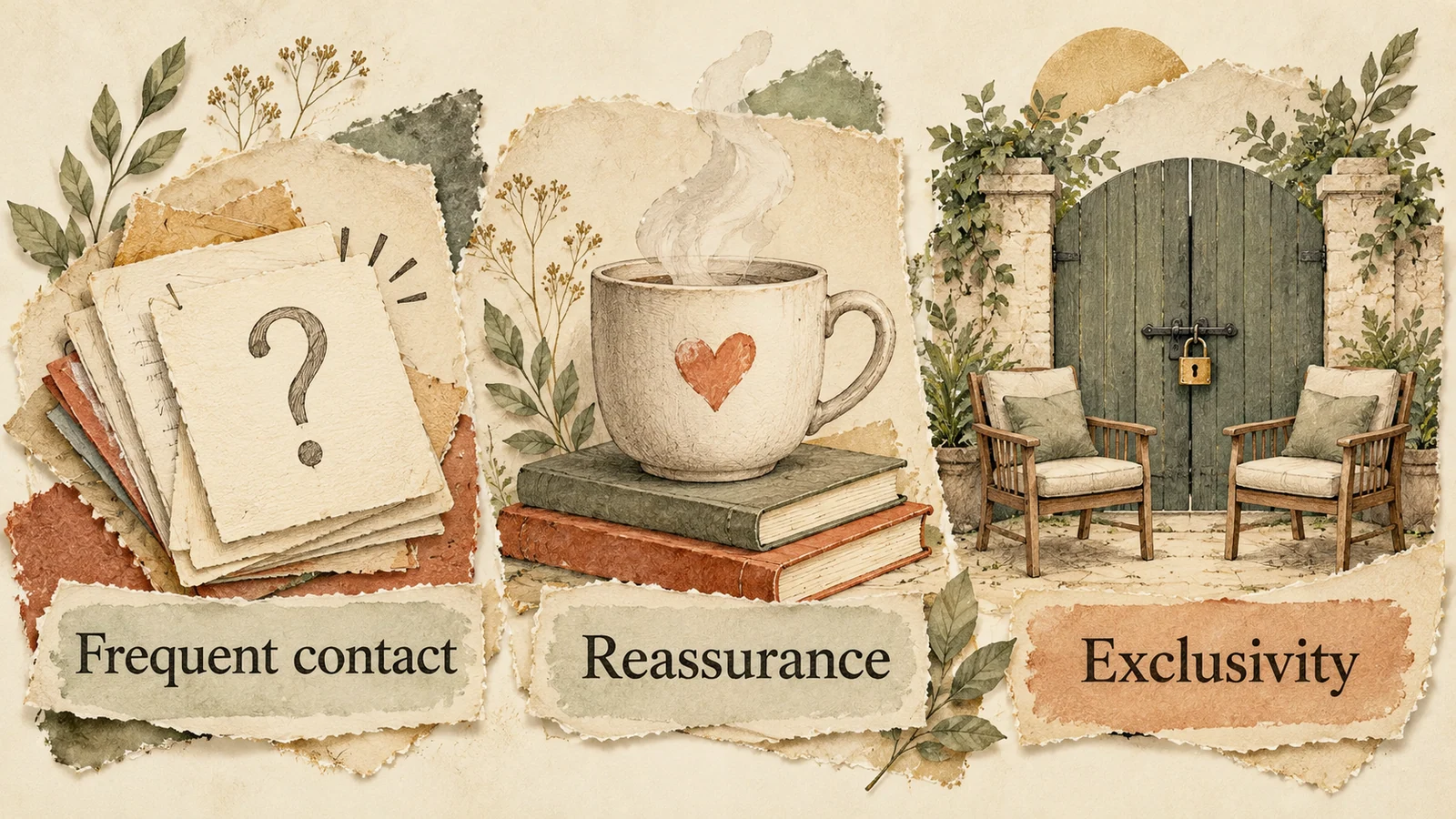
| Pattern | The issue to discuss | A clear starting point |
|---|---|---|
| Frequent everyday contact | Different preferences or availability | “I don't message throughout the day.” |
| Repeated reassurance | The same worry returns after an answer | “I can answer, but I can't keep revisiting this all evening.” |
| Expecting every plan together | Separate interests and time | “Some plans will be with other people or on my own.” |
| Pressure after a stated limit | Whether your choice is being respected | “I've answered. I won't keep debating my availability.” |
A busy friend is not automatically uncaring, and a friend who wants more contact is not automatically controlling. The important distinction is what each person asks for and whether either can accept an honest no.
Want to see yours?
Scan your palm for a full interpretive reading.


Place your palms here
Both palms, please: your left on the left, your right on the right.
Add a photo

Add a photo
Required · 18 or older
Photo privacy · Refund terms ·Details
- Your photos are sent to our analysis provider to write your reading. This browser may temporarily keep pending photos for sign-in or recovery. Photos sent from your phone are kept temporarily for hand-off. See our privacy policy for details.
- When you press Read my palms, both photos go to our analysis provider for a clarity check before payment. This checks the photos, not the validity of a reading.
- Doesn't sound like you? Email us within 7 days of your first reading for a full refund, if you haven't used a second. If a photo can't be read, that reading is returned.
- Next: your reading uses one of your readings, or a short checkout if you have none.
Photo tips
 Photo tips
Keep your palm flat, fingers slightly apart and lines in focus. Use bright, even light, and photograph each palm the same way.
 ✓ Like this
 ✕ Too dark
 ✕ Fingers cut off
Offer availability that is true on an ordinary week
State what you can actually offer, rather than an ideal level of contact you can maintain only briefly. You can be warm and specific without guaranteeing an exact response time. If you make an arrangement, consider work, sleep, caring responsibilities and your other relationships. An unsustainable promise postpones the same conversation.
For example: “I enjoy our calls, but I can't talk every night. Would a catch-up on Sunday suit us both?” Or: “I'm not available for ongoing messages while I'm working. I'll read them later, but I may not answer everything.”
Mayo Clinic describes assertive communication as direct and respectful. You can apply that principle by describing your own availability without making a verdict about your friend's worth. One Love's guidance on a clingy friendship also recommends identifying boundaries and hearing the friend out; that is relationship guidance, not a diagnosis or a guarantee that the conversation will feel comfortable.
If they want more contact than you can give, acknowledge the mismatch: “I understand you'd prefer daily calls. I can't offer that.” You do not have to call their preference wrong to be honest about yours.
Answer repeated checking without making a larger promise
When the same question returns, give a clear answer and a limit on repeating it. Do not escalate from “I'm busy” to “I'll always be here instantly” simply to stop the questions. You can care about the worry without agreeing to prove the friendship on demand or treating ordinary delayed contact as a wrongdoing to repair.
Here is a possible exchange:
Friend: “Are you angry? You haven't replied.”
You: “No, I'm not angry. I'm busy this afternoon and will talk when I'm free.”
Friend: “But are we okay? Promise you aren't going off me.”
You: “I've answered honestly. I care about our friendship, and I can't keep checking it by message today.”
Then act consistently with what you said. You do not need to send repeated explanations of why you have not replied to the explanations. If there is an actual unresolved disagreement, address it at a suitable time rather than using “everything is fine” to avoid a conversation you know is needed.
For a temporary pause rather than an ongoing contact arrangement, say that plainly. A pause and a sustainable everyday rhythm are different requests. Our boundary-setting guide has more examples of limits you can keep through your own actions.
Keep your other friendships and plans available
You can maintain separate friendships, interests and time alone without asking one friend to approve every plan. Be honest about agreements you have made, but distinguish a broken commitment from their disappointment that you chose to do something separately. Friendship does not require exclusivity unless you have adopted a rule you now need to reconsider together.
Try: “I'm meeting them on my own this time. That doesn't cancel our plan for Saturday.” If there is no plan together, do not invent one as reassurance. You can offer another invitation only if you actually want to make it.
If they criticize every other friend, demand access to private messages or expect proof of where you are, name the request you will not meet: “I won't share my private conversations.” You do not need to debate whether another person's relationship with you is sufficiently important to deserve privacy.
Friendship jealousy can help distinguish fear of replacement from a particular broken agreement. Understanding a feeling does not oblige you to accept every action taken in response to it.
Look at what happens after the limit
Distinguish disappointment from continued pressure. Your friend may feel hurt, need time or decide the available friendship is not enough for them. Those responses can coexist with respecting your choice. Repeated guilt, monitoring or punishment after you have been clear gives you different information about whether the arrangement is workable.
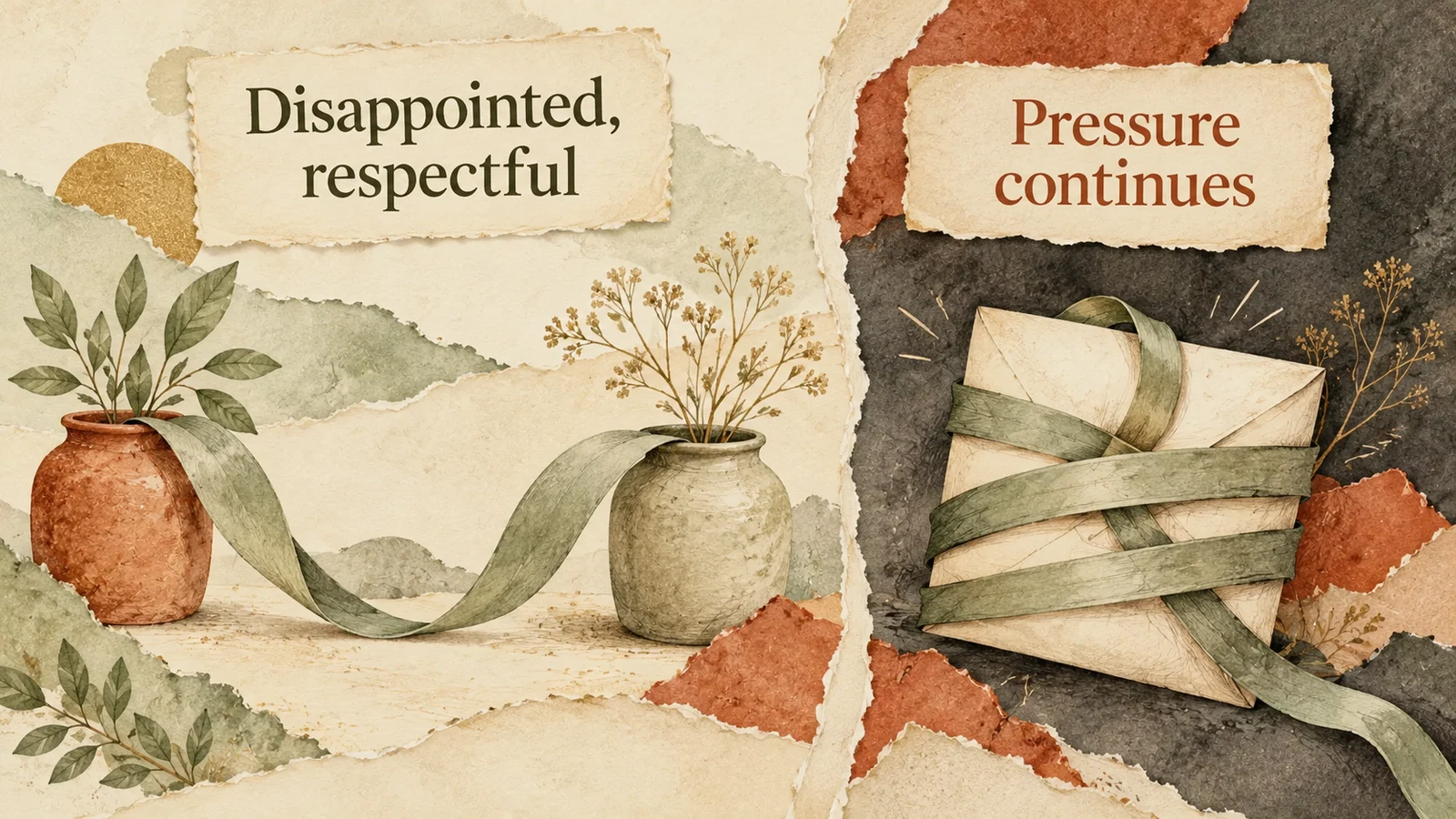
A respectful response might be: “I'm disappointed, but I understand you can't call tonight.” Pressure might sound like: “If you cared, you would cancel your other plans,” followed by repeated demands after your answer.
You can restate the limit once: “I'm not canceling. I'm ending this conversation for now.” You may then reduce contact or reconsider the friendship. The appropriate choice depends on the pattern and your circumstances; a single disappointed reply does not require ending a relationship, and persistent pressure does not require an unlimited series of chances.
If you decide to end it, how to end a friendship covers clear communication and shared-group logistics. You do not have to prove a diagnosis to decide an arrangement is not working for you.
Be caring without becoming the only support route
You can ask how your friend is doing and encourage a wider support network while keeping your own limits. A new difficulty may explain why they want more contact, but you still need an arrangement you can sustain. Do not agree to be the only person who knows about a serious safety concern or promise secrecy you cannot responsibly keep.
If someone says they are in immediate danger, treat that as a safety concern and seek appropriate emergency help rather than trying to settle it as a friendship disagreement. You do not need to decide whether a threat is sincere in order to involve suitable help. Avoid making continued private access to you the sole response.
For lighter self-reflection, PalmMingle's AI palm reading offers an optional interpretive experience. It cannot identify an attachment style from a hand or decide whether a friend will respect a limit. What they do after a clear conversation is more relevant than a label.
Palmistry is an interpretive tradition, not a diagnostic tool. PalmMingle frames palm readings as entertainment and self-reflection, not prediction.