

To make friends in a new city, choose a recurring activity you can realistically attend, talk to the same people again, and invite one person to a small next plan. Start with a place you would still enjoy if you did not make a friend that day. You need a route back into conversation, not a calendar packed with introductions.
For this week, make the task concrete: find a welcoming local group, check the practical details, attend once and ask when the next session happens. Friendship may take longer; returning is a step you can arrange now.
Choose somewhere you can become a familiar face
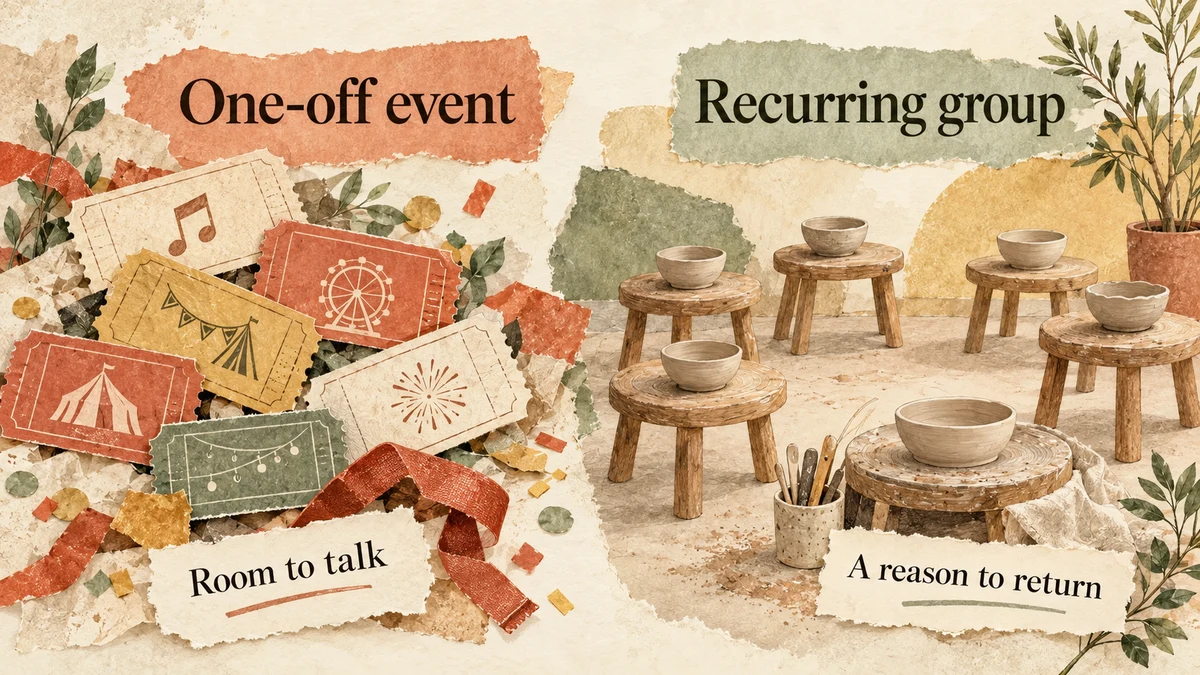
A good first place combines an activity you like with room to talk and a manageable return journey. A packed concert may be enjoyable but leave little opportunity for another conversation with the same person. A regular class, volunteering shift or neighbourhood game group can give you a shared task and a reason to meet again.
| Place to try | What gives conversation a starting point | Check before going |
|---|---|---|
| Library group or community class | A book, topic or shared learning task | Does the same group meet regularly? Is joining mid-session welcome? |
| Volunteer team | A task you can do alongside someone | Is training provided? Can you commit without overpromising? |
| Walking, craft or board-game group | Something to do while conversation develops | Is the pace, noise level or activity accessible to you? |
| Neighbourhood or cultural association | A local question or shared connection | Is the event open to newcomers? What does participation cost? |
| Online local-interest group | A shared interest and practical local information | Are there moderated, public in-person events if you want them? |
Search for the activity plus your neighbourhood, rather than only searching for friends. A community centre’s calendar or a library noticeboard can be as useful as an app. No particular platform is necessary.
Want to see yours?
Scan your palm for a full interpretive reading.


Place your palms here
Both palms, please: your left on the left, your right on the right.
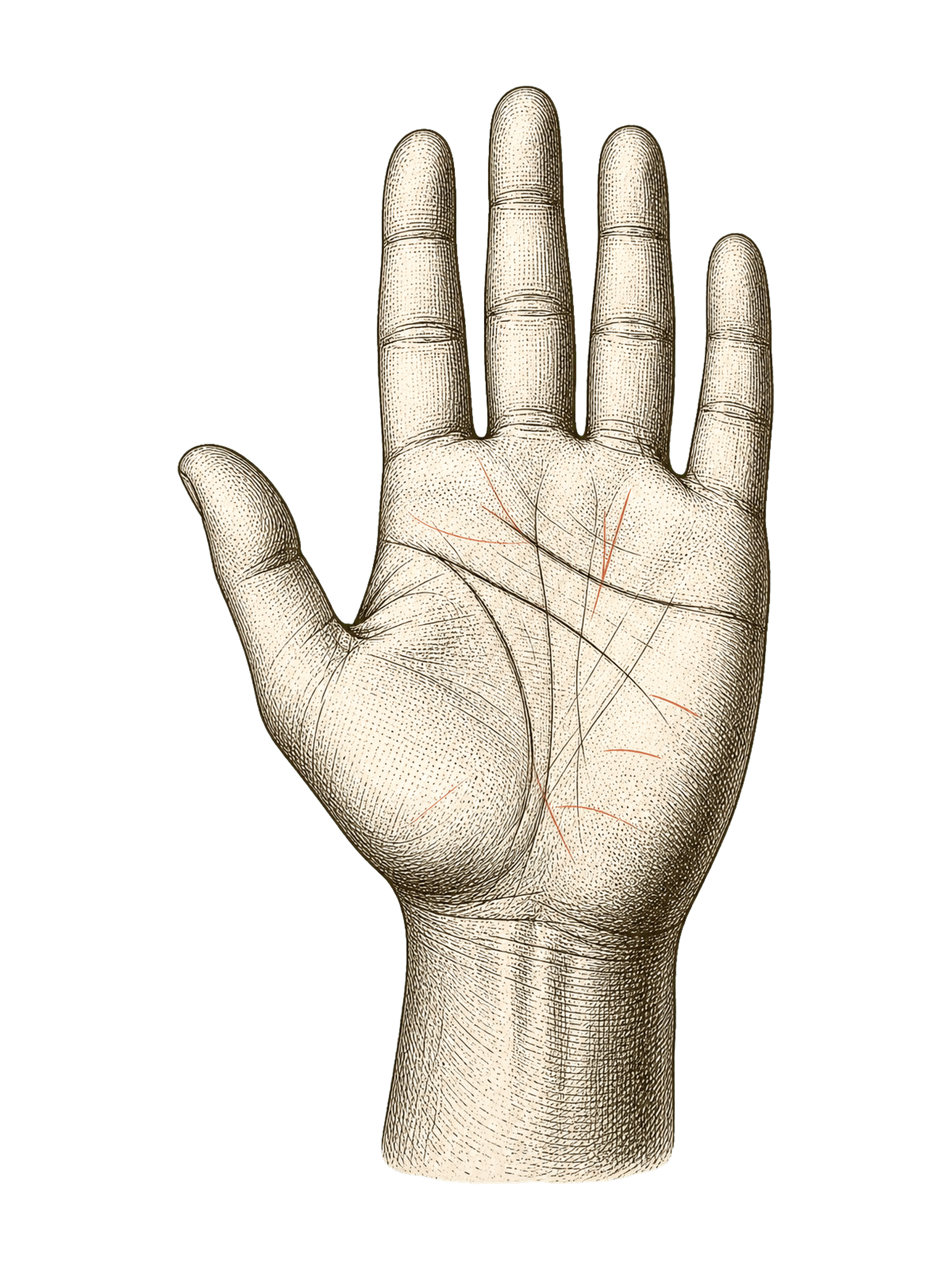
Add a photo

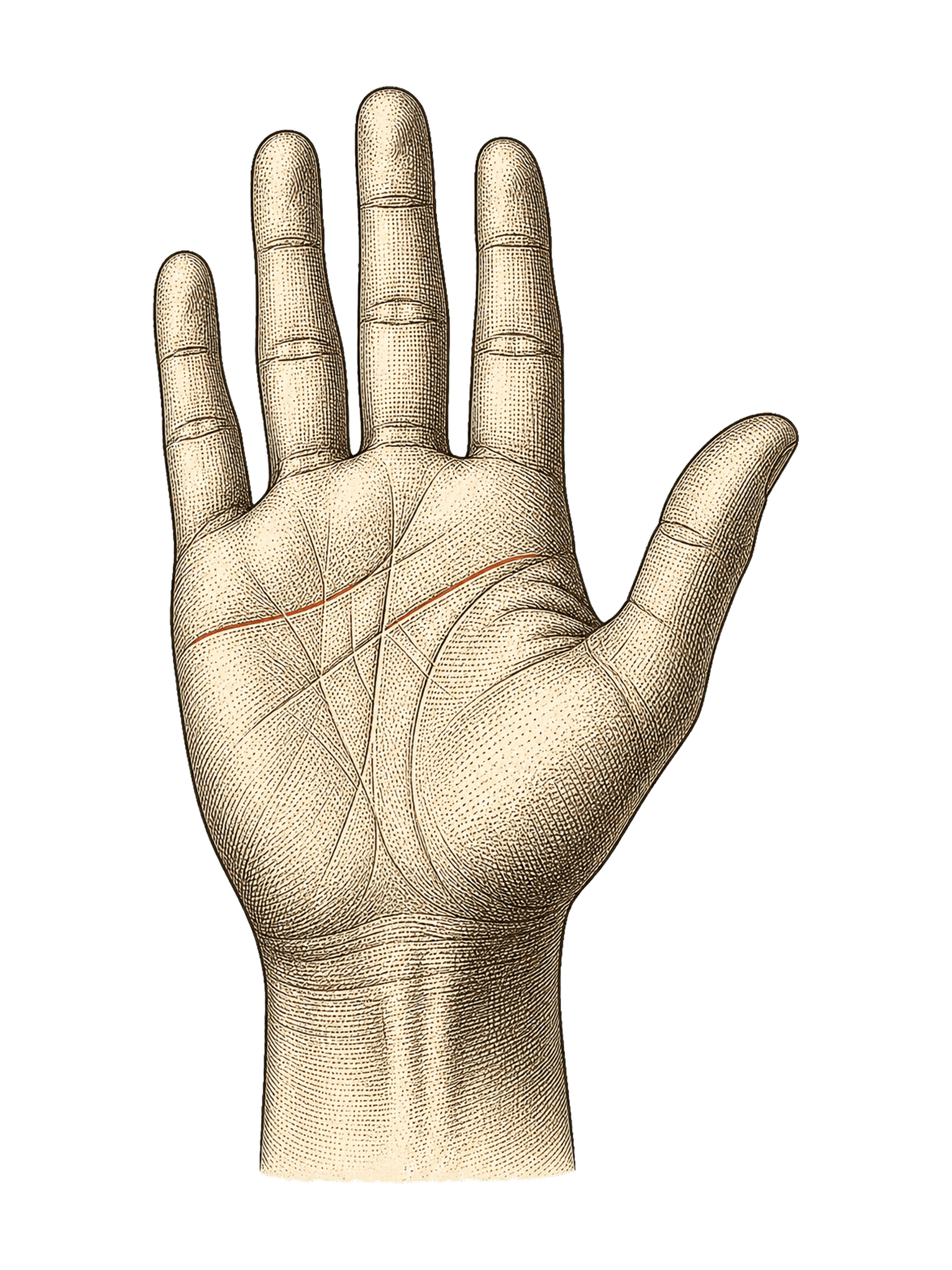
Add a photo
Required · 18 or older
Photo privacy · Refund terms ·Details
- Your photos are sent to our analysis provider to write your reading. This browser may temporarily keep pending photos for sign-in or recovery. Photos sent from your phone are kept temporarily for hand-off. See our privacy policy for details.
- When you press Read my palms, both photos go to our analysis provider for a clarity check before payment. This checks the photos, not the validity of a reading.
- Doesn't sound like you? Email us within 7 days of your first reading for a full refund, if you haven't used a second. If a photo can't be read, that reading is returned.
- Next: your reading uses one of your readings, or a short checkout if you have none.
Photo tips
 Photo tips
Keep your palm flat, fingers slightly apart and lines in focus. Use bright, even light, and photograph each palm the same way.
 ✓ Like this
 ✕ Too dark
 ✕ Fingers cut off
Ask the organiser the questions that make arrival easier
Before attending, find out where to enter, what to bring and whether newcomers usually arrive alone. Ask about step-free access, seating, toilets, language, quiet space or cost if those affect your ability to take part. You do not need to explain your personal history to ask whether a venue works for you.
Try a short message:
I’m new to the area and interested in the Thursday group. Is it suitable for someone coming alone? Do I need to book or bring anything?
If an event cannot meet an access need or requires a commitment you cannot afford, choose another route. Persistence does not mean repeatedly paying for a setting that excludes you.
For remote workers or people with irregular shifts, a weekend session or a group that welcomes occasional attendance may work better than an ambitious weekly promise. Build around your actual schedule.
Move from the activity to a small conversation
Begin with the situation you share: ask how a task works, what brought the other person to the group or whether they have been before. Introduce yourself when a natural pause arrives. The aim is to make a conversation possible, not to demonstrate that you would be an excellent best friend.
Some openings:
- At a class: Have you tried this before, or are you learning too?
- On a volunteer shift: Is there a way you usually divide this task?
- At a neighbourhood event: I’ve just moved nearby. Is this group usually here?
Give the other person room to finish, ask something back or return to the activity. Short answers can mean many things. If they turn away or stop engaging, let the conversation end without trying to win them over.
Give a good conversation somewhere to go next
When you have both seemed comfortable, suggest something small connected to the encounter. Coffee after the class is easier to understand than an undefined promise to hang out. Make the invitation specific enough to answer and light enough to decline. You are offering another meeting, not asking for a friendship commitment.
I’m going to the café across the road after next week’s session. Would you like to join me?
If you want to exchange contact details, ask rather than finding their personal accounts without an invitation. If they say yes to a plan, confirm the place and time. If they are unavailable but suggest another day, work with that. A vague answer can stay vague; you do not need to negotiate a reluctant yes.
Our guide to how long making a friend can take explains why friendship-hour estimates are not a countdown. The useful part here is creating room for another encounter, not tracking someone’s progress towards a label.
A first-month plan that leaves room for real life
Use the first month to test a routine, rather than setting a deadline to acquire a close friend. Return where the setting felt welcoming, adjust what was impractical and make an invitation when a conversation gives you a reason. Keep room for solitary time and existing relationships while the new city begins to feel familiar.
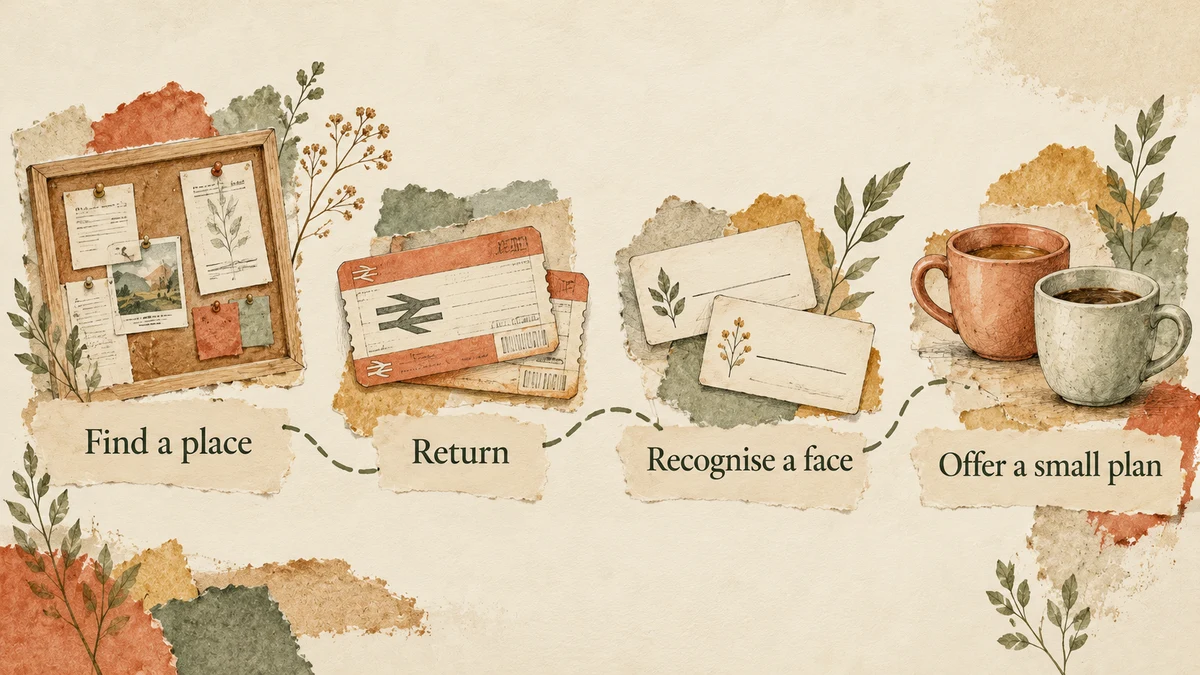
- Find a place: choose an activity you can reach and afford. Save the next date before closing the calendar.
- Attend and observe: notice whether newcomers are included and whether there is space for conversation.
- Return if it fits: greet someone you recognise and follow up on something they mentioned.
- Offer a small plan: suggest a nearby activity or a short catch-up when interest seems mutual.
If the first place feels wrong, change the setting rather than concluding that the whole city has rejected you. A group can be friendly yet be a poor fit for your interests, access needs or available time.
Count everyday connection as worthwhile too
Acquaintances matter even before a close friendship develops. In Sandstrom and Dunn’s research on weak ties, interactions with acquaintances were associated with well-being and belonging in the studied samples. That does not mean a particular club will produce a best friend. It does give a reason to value ordinary, pleasant contact along the way.
Keep in touch with people you already care about; building a local circle does not require abandoning them. If you want help sustaining those connections, reconnecting with an old friend offers low-pressure messages and reply-specific next steps.
If a familiar face becomes a longer conversation, our questions for friends offer prompts that leave room for a comfortable answer.
PalmMingle offers symbolic palm readings for self-reflection, if that is a kind of curiosity you enjoy. It cannot establish compatibility or replace the conversations through which a friendship takes shape. For today, choosing a place to return to is enough of a next step.
Palmistry is an interpretive tradition, not a diagnostic tool. PalmMingle frames palm readings as entertainment and self-reflection, not prediction.