

To politely decline an invitation, thank the person, give a clear no and add only the explanation you want to share. Suggest another plan only if you genuinely want one. If you already accepted, tell the host promptly that your answer has changed and address any practical commitment your cancellation leaves behind.
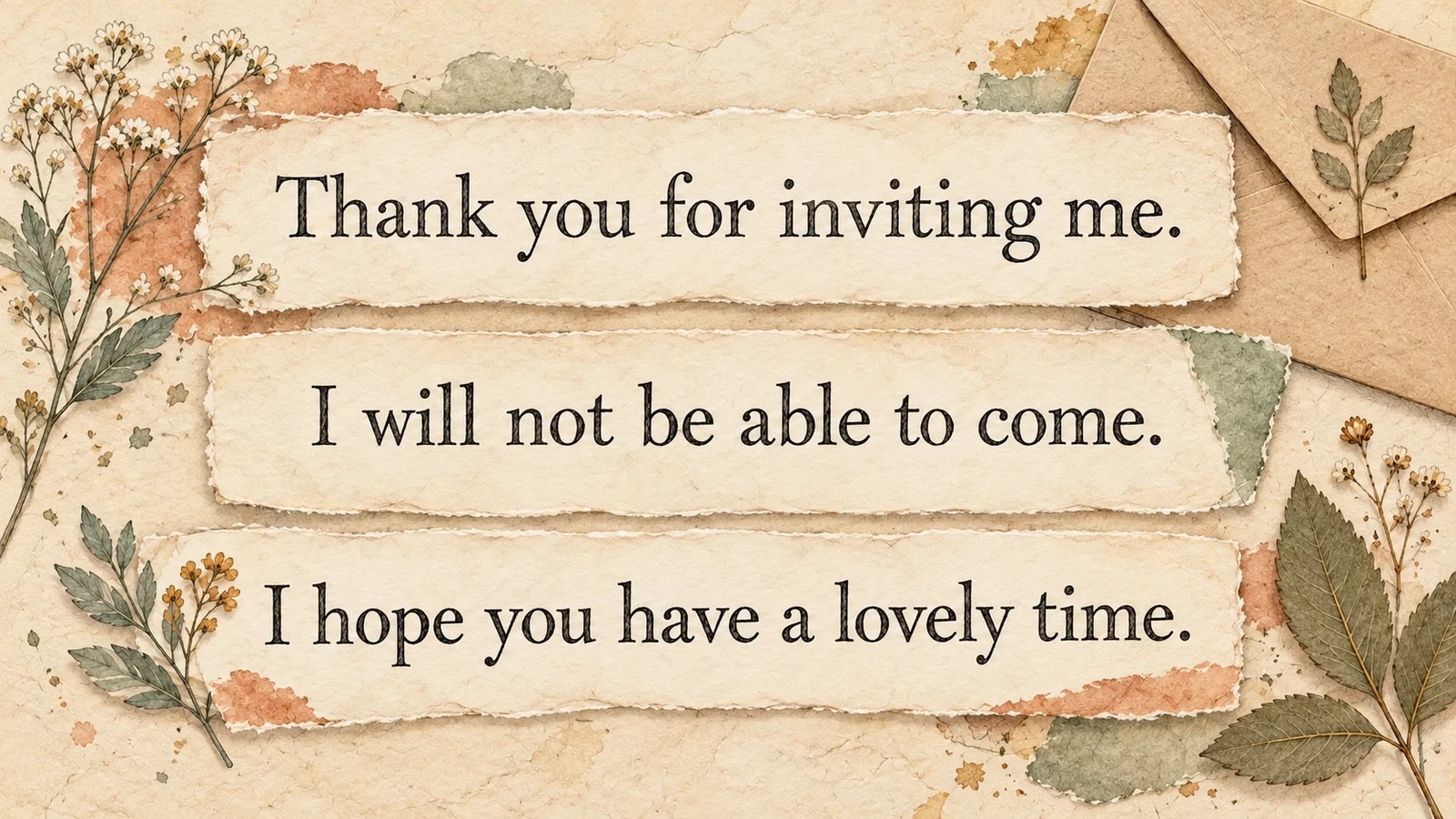
A simple reply is: “Thank you for inviting me. I won't be able to come, but I hope you have a lovely time.” You do not need to invent an appointment or make a promise about next time to make the no count.
Make the answer clear enough for the host to use
Give an answer rather than a hint. “That sounds lovely” acknowledges the invitation but does not say whether you are coming. “I will try” creates a different expectation from “I will not be there.” If you need time to decide, say when you can give a definite answer, and respect any actual RSVP deadline.
For a formal invitation, use the requested response channel as well as any personal message you want to send. For a casual text, reply directly. Check whether your answer applies to you alone or to others included in the invitation; do not quietly decline on another adult's behalf without agreeing with them.
You can be warm and brief at the same time. A clear answer helps the host plan; it does not require a detailed defense of your calendar.
Want to see yours?
Scan your palm for a full interpretive reading.


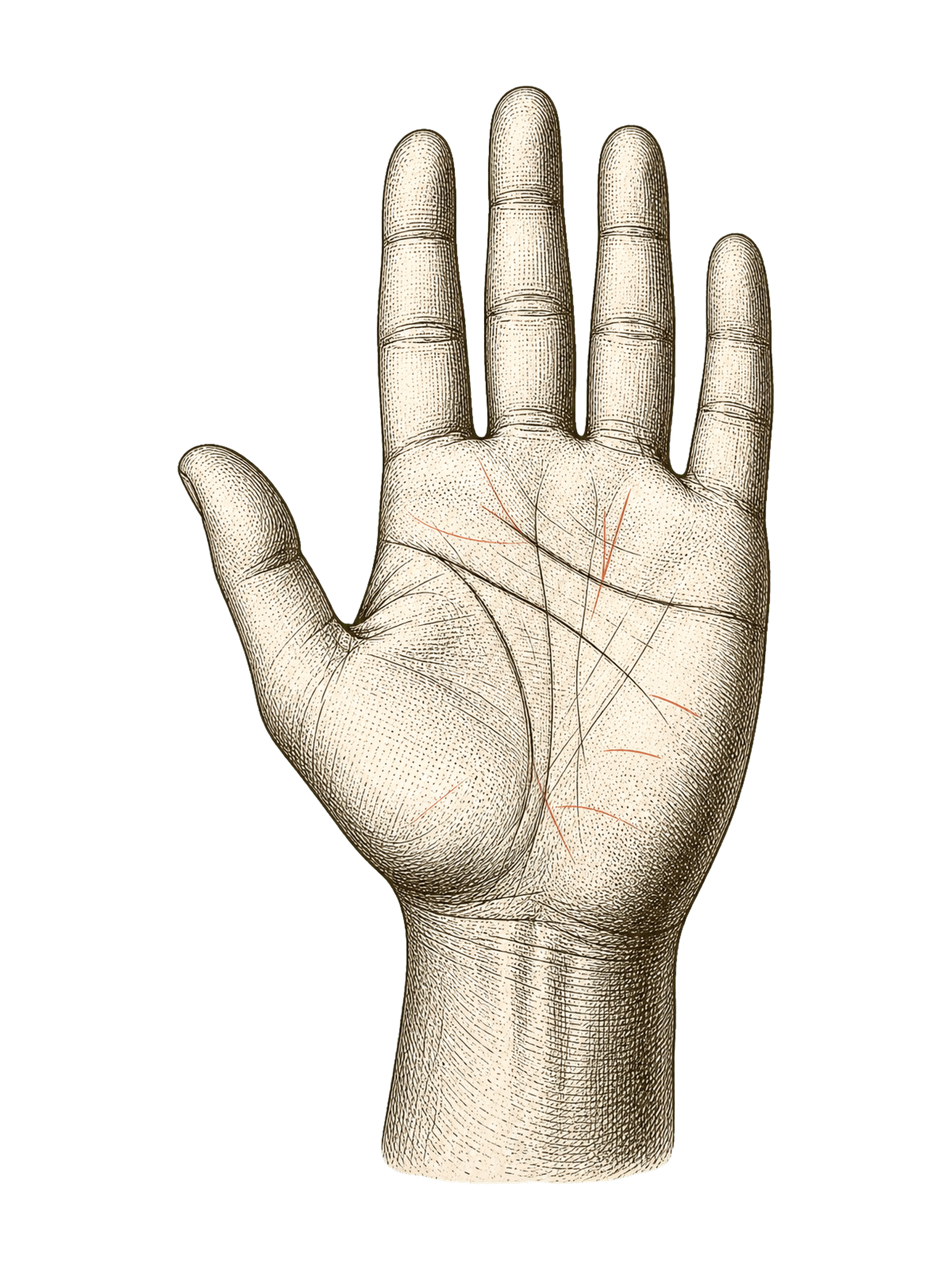
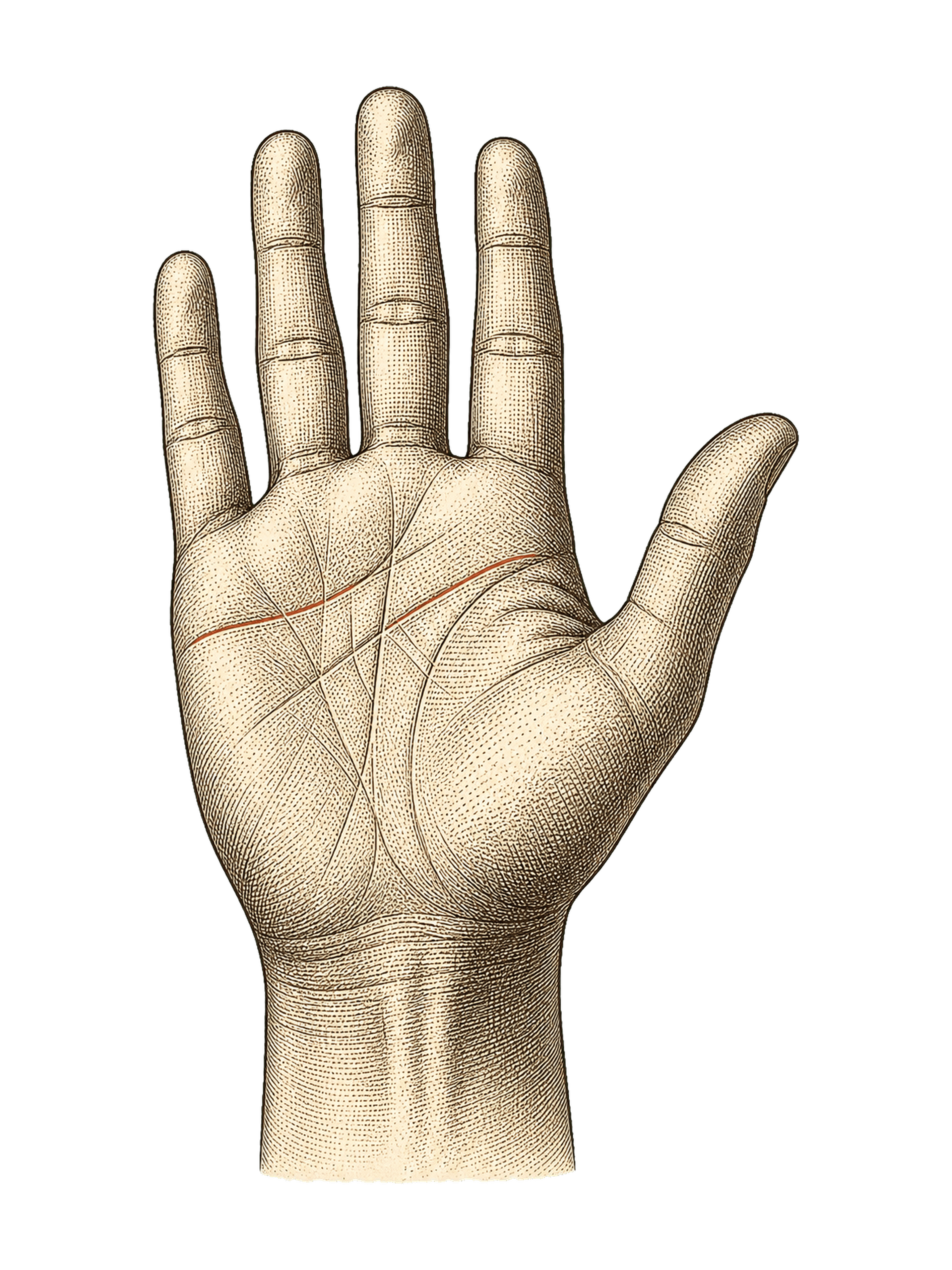
Place your palms here
Both palms, please: your left on the left, your right on the right.
Add a photo

Add a photo
Required · 18 or older
Photo privacy · Refund terms ·Details
- Your photos are sent to our analysis provider to write your reading. This browser may temporarily keep pending photos for sign-in or recovery. Photos sent from your phone are kept temporarily for hand-off. See our privacy policy for details.
- When you press Read my palms, both photos go to our analysis provider for a clarity check before payment. This checks the photos, not the validity of a reading.
- Doesn't sound like you? Email us within 7 days of your first reading for a full refund, if you haven't used a second. If a photo can't be read, that reading is returned.
- Next: your reading uses one of your readings, or a short checkout if you have none.
Photo tips
 Photo tips
Keep your palm flat, fingers slightly apart and lines in focus. Use bright, even light, and photograph each palm the same way.
 ✓ Like this
 ✕ Too dark
 ✕ Fingers cut off
Choose one of ten replies that matches your decision
Use the wording that describes your real situation. Keep the examples truthful and omit details you prefer to keep private. Replace the specifics and keep only the warmth or alternative plan you actually mean.
A straightforward no
- “Thank you for thinking of me. I won't be able to come, but I hope it goes really well.”
This works when the invitation needs an answer and there is no practical issue to explain. You can stop there.
You want a quiet evening
- “Thanks for inviting me. I'm keeping this evening quiet, so I'm going to sit this one out.”
Rest can be your plan. You do not have to claim illness or make the evening sound more impressive.
The cost does not work for you
- “I'd love to see you, but that trip is outside my budget. Would you be interested in a local walk another day?”
Offer the walk only if you want to arrange it. You can also decline without disclosing finances: “I can't make this one.”
The activity is not for you
- “Thank you for asking. I'm going to pass on the escape room, but I hope you all have fun.”
Decline the activity without criticizing the people who enjoy it. A preference does not need a review of the host's taste.
You like the person but cannot attend
- “I can't come on Saturday. I'd still like to catch up; are you free for lunch next week?”
This separates a no to the event from a yes to future contact. Make a concrete offer when you can, rather than leaving another vague promise.
You do not want to offer another time
- “Thank you for the invitation. I'm going to decline, and I wish you a lovely evening.”
Leave out “another time” when you do not mean it. You can be polite without creating an expectation of a future plan.
A formal event
- “Thank you for including me. Unfortunately, I won't be able to attend. Wishing you a wonderful celebration.”
Submit the formal RSVP too if one is requested. A warm private message may not update the guest list.
Your circumstances changed after accepting
- “I'm sorry, but I need to change my answer and won't be able to attend. I know you have already made arrangements. Can we sort out the ticket I committed to?”
Name the actual commitment. Do not promise reimbursement you cannot make or assume the host can recover a cost; discuss the real arrangement.
Someone keeps asking for a reason
- “It doesn't work for me, and I'm not going to be able to come. Thank you for understanding.”
You can repeat the answer without supplying a new reason for every objection. If the conversation becomes persistent or disrespectful, end it rather than arguing indefinitely.
You need a little time before deciding
- “Thanks for asking. I need to check one thing before I can commit. Can I give you a definite answer tomorrow?”
This is a request for time, not a decline. If their deadline is sooner, decide whether you can commit within it instead of leaving them waiting.
Distinguish declining from cancelling
Declining a new invitation and cancelling an accepted plan have different practical consequences. Once someone has arranged food, tickets, transport or a role around your yes, acknowledge that change promptly. You still may need to cancel, but a considerate message addresses what the other person now needs to organize.
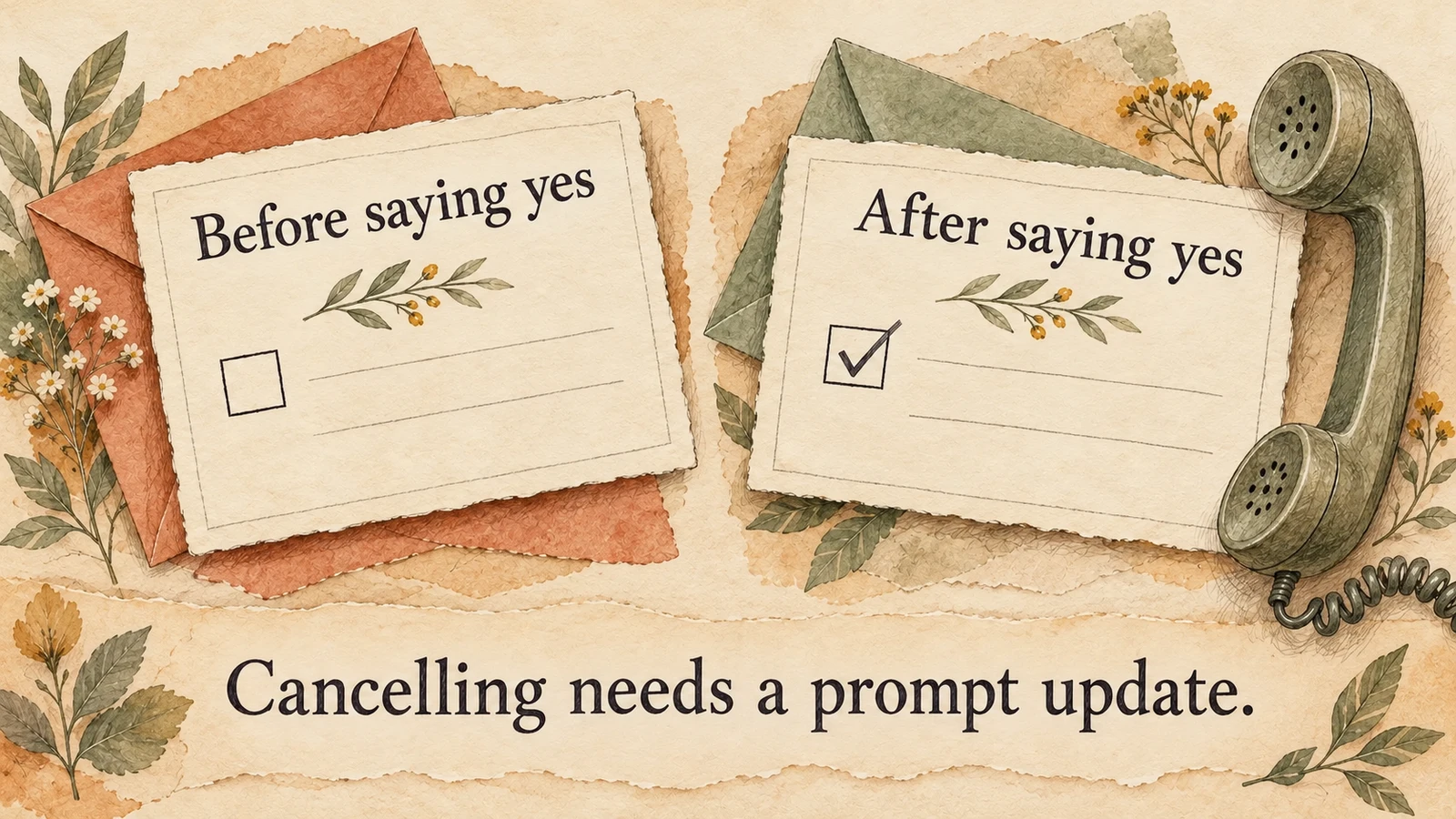
Check whether there is a booking in your name, a shared payment, an item you promised to bring or a task you agreed to do. Tell the relevant person what has changed. Avoid offering an unapproved replacement guest or assuming you can transfer a ticket; ask about the arrangement.
If cancellation is becoming a pattern, pause before accepting the next invitation. The guide to flaky plans separates tentative ideas from commitments and can help both sides make clearer arrangements.
Respond to disappointment without reopening a decision
Someone can be disappointed and still accept your answer. Acknowledge the feeling if you want to, while keeping the decision clear: “I know you wanted me there, and I'm sorry to miss it. I still won't be able to come.” You do not need to turn their disappointment into an accusation or your no into a debate.
If your friend says they feel you never make time, that may be a separate conversation worth having. Discuss the pattern when you can give it attention rather than promising attendance at an event you cannot manage. For a continuing issue, see boundaries with friends.
Emily Post's RSVP guidance recommends a brief, polite decline and responding in the manner requested by the invitation. The wording here adapts those everyday courtesies to different situations; it cannot promise how a host will feel about your answer.
For the inviting side, use clear hangout invitations. PalmMingle's palmistry explanation is an optional reflection experience, not a test of whether you are a good friend. Your answer to an invitation can come from your actual capacity and wishes.
Palmistry is an interpretive tradition, not a diagnostic tool. PalmMingle frames palm readings as entertainment and self-reflection, not prediction.