

Find sober friends through recurring alcohol-free activities, communities that explicitly welcome non-drinkers and invitations that say what kind of plan you want. Check the actual event before going: a daytime activity is not automatically alcohol-free, and a group that meets in a bar may not fit your needs. Recovery-support meetings have their own purpose and should not be treated as compulsory friendship mixers.
You can want friends who do not drink, friends who respect your choice not to drink, or both. Those are different searches, and being clear about yours saves some guesswork.
Choose the kind of connection you are looking for
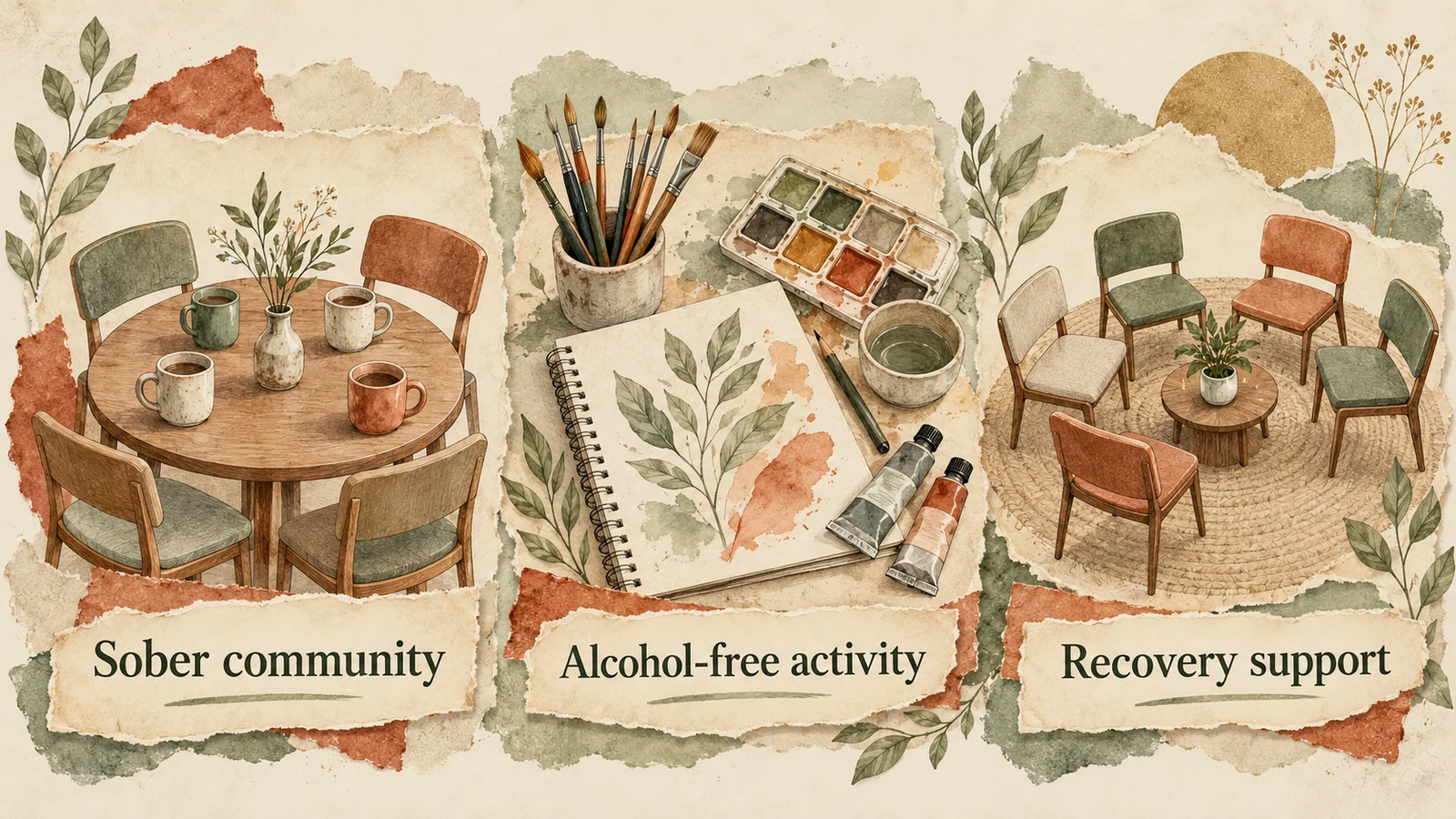
Distinguish a sober community, an alcohol-free activity and recovery support. They can overlap, but they do not make the same promise. A pottery class might provide an evening without alcohol while its members drink elsewhere. A sober social group may make not drinking central to participation. A support meeting exists for its stated support purpose.
| What you want | Places to investigate | What to check |
|---|---|---|
| People who also choose not to drink | Sober social groups and explicitly alcohol-free communities | Who the group is for and what “sober” means in its rules |
| A shared activity without alcohol | Classes, volunteering, walking groups and games events | Whether alcohol is served, brought by members or part of the plan afterwards |
| Support related to recovery | An appropriate support organization or meeting | Its purpose, eligibility, confidentiality and participation expectations |
| Existing friends who respect your choice | A clear invitation to an alcohol-free plan | Whether they agree to the plan without pressure or substitutions |
This is a guide to social plans, not advice about changing alcohol use or a recovery plan. If you are looking for treatment or recovery support, choose an appropriate service for that need rather than relying on a new friendship to provide it.
Want to see yours?
Scan your palm for a full interpretive reading.


Place your palms here
Both palms, please: your left on the left, your right on the right.
Add a photo

Add a photo
Required · 18 or older
Photo privacy · Refund terms ·Details
- Your photos are sent to our analysis provider to write your reading. This browser may temporarily keep pending photos for sign-in or recovery. Photos sent from your phone are kept temporarily for hand-off. See our privacy policy for details.
- When you press Read my palms, both photos go to our analysis provider for a clarity check before payment. This checks the photos, not the validity of a reading.
- Doesn't sound like you? Email us within 7 days of your first reading for a full refund, if you haven't used a second. If a photo can't be read, that reading is returned.
- Next: your reading uses one of your readings, or a short checkout if you have none.
Photo tips
 Photo tips
Keep your palm flat, fingers slightly apart and lines in focus. Use bright, even light, and photograph each palm the same way.
 ✓ Like this
 ✕ Too dark
 ✕ Fingers cut off
Search for a repeatable activity you would actually enjoy
Look for an activity you want to return to, with a schedule, expense and location you can manage. “Sober friends” is one search; adding a place or interest can make the results more useful. Your local library, community center, recreation provider and volunteer directory are other places to investigate without needing a specialist sober venue.
Possible searches include “alcohol-free board games near me,” “sober walking group” or “weekend community art class.” Treat a search result as a lead to check, not proof that a group is active, welcoming or suitable. Look for a current date, a named organizer, clear rules and a way to ask questions.
If attending in person is difficult, look for an organized online activity with repeat sessions and moderation. You can keep personal details limited while deciding whether you want to participate. Do not send money, identification or sensitive information just because someone presents a group as supportive.
Our guide to making friends in a new city compares ways to choose a place you can return to. You do not need to join everything you find; one suitable option is enough to investigate first.
Ask the organizer a concrete question
Before booking or attending, ask about the part of the event that matters to you. A clear practical question is more useful than trying to infer the atmosphere from photographs. You can explain the requirement without sharing your personal history, and you can decide a vague or dismissive answer is not enough information.
Try: “I'm interested in the next games evening. Is the event alcohol-free, including drinks people bring themselves? Are new people welcome to come alone?”
Depending on your needs, you might also ask about access, seating, expense, transport, the finish time or whether socializing moves to another venue. If “alcohol-free” has a particular meaning for you, describe it rather than assuming everyone uses the term identically.
In Alcohol Change UK's socializing guidance, Emily Syphas recommends checking ahead, making plans that suit you and keeping an exit option. That is practical advice about arrangements, not evidence that a particular event or friendship will work for everyone.
Give the first visit an arrival plan and an exit
Plan how to arrive, what to say to the host and how to leave when you want to. You can aim to participate in the activity and learn a little about the group without deciding whether these are your future closest friends. Keep your transport and departure choices independent where possible.
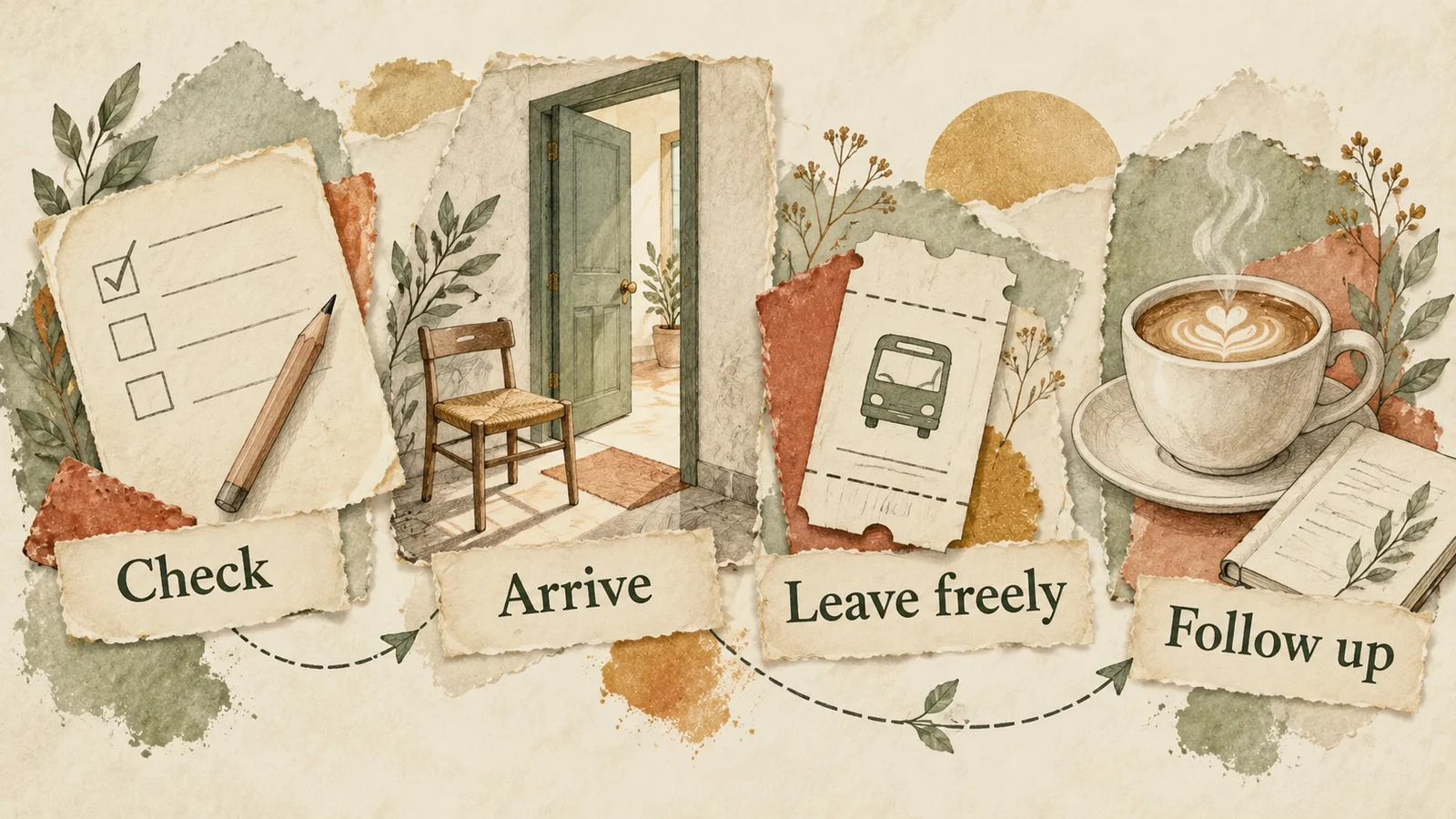
At arrival: “Hi, I'm new. Is there somewhere I should join in?” During the activity: “Have you been coming to this group long?” Before leaving: “I enjoyed the game. Do you know when the next session is?”
There is no need to give a personal account of why you do not drink. “I don't drink,” “I'm here for the activity,” or “I keep that part private” are available answers. Someone else's willingness to share their story does not require you to match it.
If the event changes into a drinking plan you did not agree to, you can leave: “I'm heading home now. It was good meeting you.” You do not have to stay to prove you are easygoing, and you do not need to persuade the group to change before you can go.
Turn an enjoyable conversation into a specific invitation
After a mutual conversation, suggest something that preserves the condition that brought you there. Name the activity and make declining easy. A new acquaintance may enjoy seeing you in the group without wanting a separate friendship, so use their response rather than treating shared sobriety as automatic closeness.
For example: “I enjoyed talking about your garden. Would you like to get coffee after the next walk?” Or: “I'm going to the Saturday sketching session. Would you like the details?”
If they say yes, confirm the practical details. If they say no, accept it. If they prefer group contact, you can continue there. You can also make friends with people who drink if they respect the plans you agree to; you get to decide whether that meets what you want.
With existing friends, try: “I'd like to see you. Can we make it an alcohol-free lunch this time?” That is clearer than agreeing to drinks and hoping the evening will change. For other invitation formats, see how to ask someone to hang out. If someone pressures you to change the plan, use a clear limit you can keep.
Keep friendship and support roles clear
Let a new friendship develop without making either person responsible for the other's recovery, availability or safety. A friend can care and still have limits. If you meet through a support setting, respect its confidentiality and rules, and ask before moving contact outside that setting. Participation is not consent to a private message or social invitation.
You can say, “Would you prefer to keep our conversations within the group?” A yes is an answer to respect. Do not share someone else's membership, story or photographs with people outside the setting.
If you enjoy palmistry as symbolism, PalmMingle's AI palm reading is an optional entertainment and reflection experience. It is not recovery support, treatment or a test of who will be a good friend. Choose people and plans by how they actually treat you and the agreements you make together.
Palmistry is an interpretive tradition, not a diagnostic tool. PalmMingle frames palm readings as entertainment and self-reflection, not prediction.