
Chinese, Indian and Western palmistry cannot be reduced to three fixed styles: practical, spiritual and psychological. Those labels describe neither every historical text nor every reader working today.

A better comparison names the sources, acknowledges their different periods and asks what each actually claims. None becomes a reliable health, financial or personality assessment because its cultural vocabulary is appealing.
If your question compares kinds of reading rather than named regional sources, the palmistry-and-astrology comparison separates their different inputs and shared evidential limits.
Brihat Samhita chapter 68 discusses general body features; it is not a hand-reading manual.
Compare a feature only after matching the source
To compare Chinese, Indian and Western palmistry, make one row for each named account. Similar English labels do not establish an identical feature or belief. The three sources below differ in date, genre and scope, so a blank cell can be an accurate result.
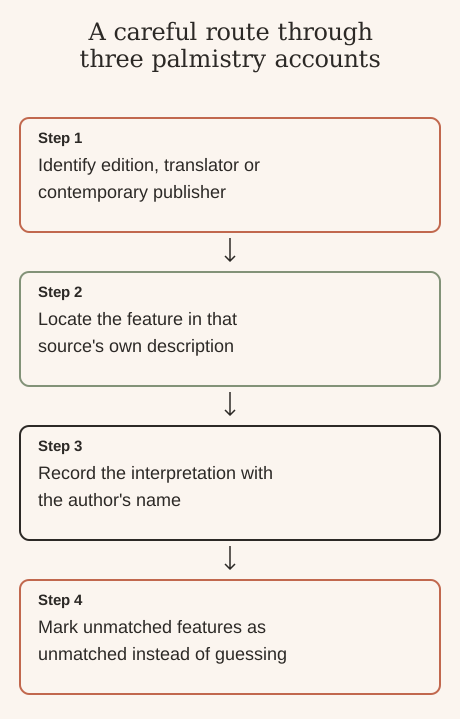
Match the source, period and named feature before comparing regional accounts.
- Identify edition, translator or contemporary publisher.
- Locate the feature in that source's own description.
- Record the interpretation with the author's name.
- Mark unmatched features as unmatched instead of guessing.
Imagine a modern article offers a neat palm-region diagram, while a historical chapter describes bodily signs in prose. You can compare the kinds of claims each makes, but you cannot assume that every region in the modern drawing has a historical equivalent. Write “not established from this passage” where appropriate. Your result is then a comparison of evidence you can inspect, rather than a league table of cultures. No feature match establishes that either interpretation predicts an individual's future.
For a closer look, explore the contemporary Chinese account; check two historical palmistry terms; compare a particular hand-shape system.
Want to see yours?
Scan your palm for a full interpretive reading.
Place your palms here
Both palms, please: your left on the left, your right on the right.
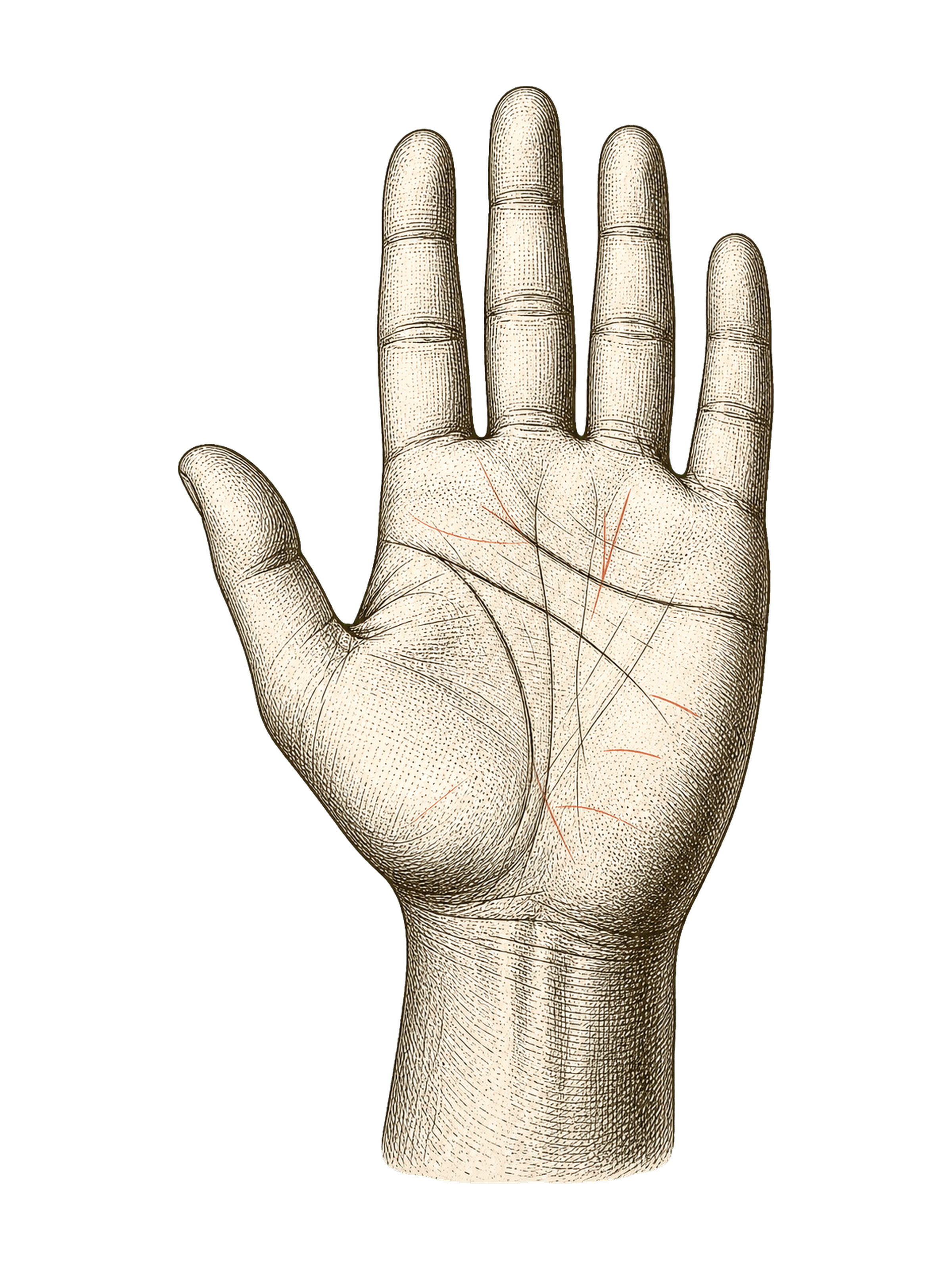
Tap to upload

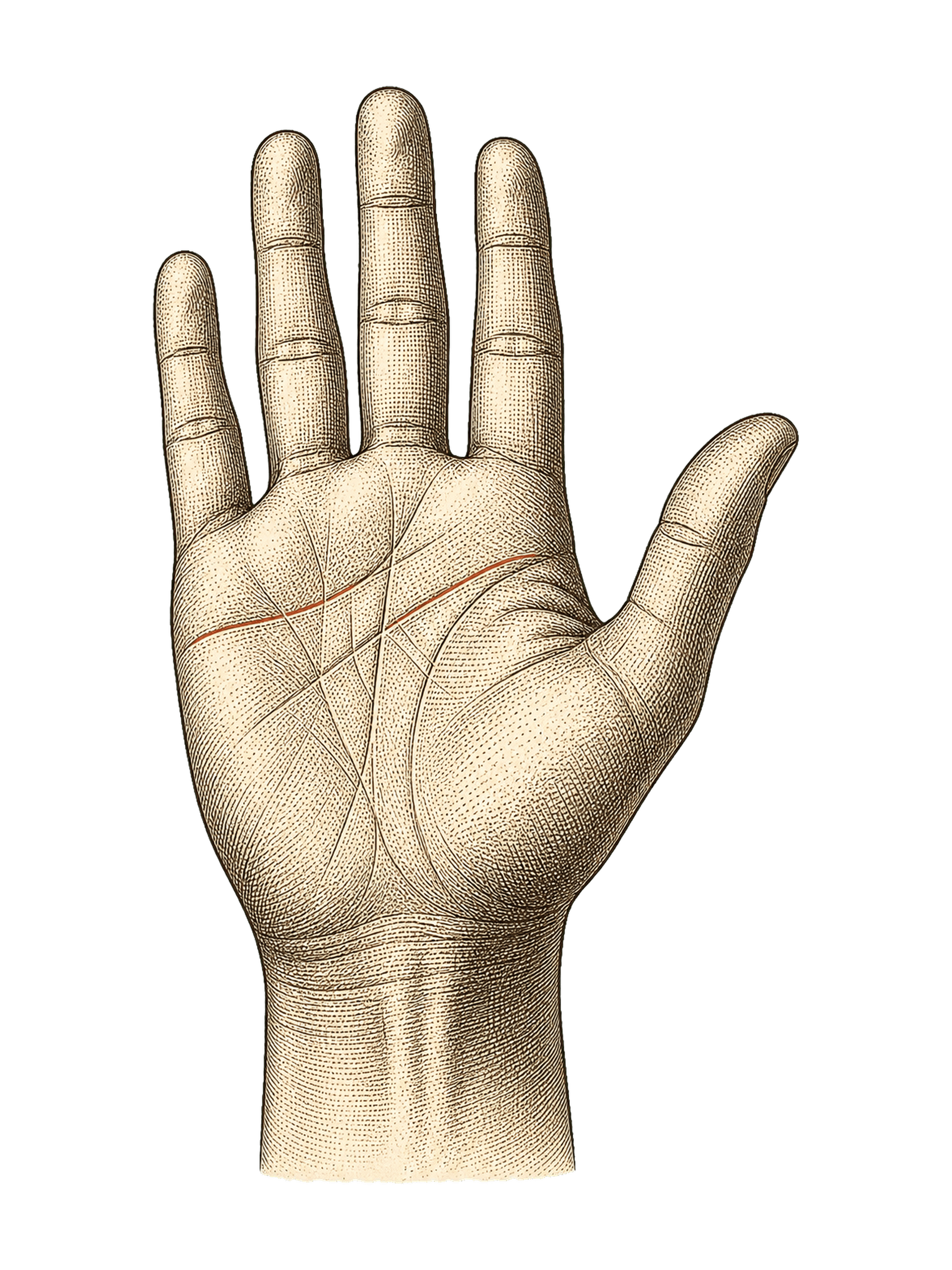
Tap to upload
Required · 18 or older
Photo privacy · Refund terms ·Details
- Your photos are sent to our analysis provider to write your reading. This browser may temporarily keep pending photos for sign-in or recovery. Photos sent from your phone are kept temporarily for hand-off. See our privacy policy for details.
- When you press Read my palms, both photos go to our analysis provider for a clarity check before payment. This checks the photos, not the validity of a reading.
- Doesn't sound like you? Email us within 7 days of your first reading for a full refund, if you haven't used a second. If a photo can't be read, your credit is returned.
- Next: your reading uses one of your readings, or a short checkout if you have none.
Photo tips
 Photo tips
Keep your palm flat, fingers slightly apart and lines in focus. Use bright, even light, and photograph each palm the same way.
 ✓ Like this
 ✕ Too dark
 ✕ Fingers cut off
Three sources, deliberately not three national verdicts
This comparison uses a contemporary practitioner article, a translation of a historical Sanskrit work and an early twentieth-century English-language manual. They are not equivalent samples and cannot stand for whole cultures.
| Source | What we can compare | What we cannot conclude |
|---|---|---|
| WOFS, "Chinese Palm Reading" | Its five-element vocabulary, palm regions and predictions | That all Chinese readers share one approach |
| Varahamihira's Brihat Samhita, chapter 68, in Chidambaram Iyer's 1884 translation | A historical text connecting bodily features with fortune | That it represents every Indian palmistry tradition |
| Cheiro, Palmistry for All (1916) | A particular manual's hand types, mounts, lines and interpretations | That Western palmistry is simply modern psychology |
The dates and source types are part of the comparison, not footnotes to ignore.
Where the vocabulary differs
WOFS describes Wood, Fire, Earth, Metal and Water categories and discusses an eight-trigram arrangement of the palm. Cheiro uses planetary mount names and discusses seven hand types.
Chapter 68 of the Brihat Samhita translation concerns bodily features more broadly, not just a modern three-line palm diagram. Its sections on hands include symbolic marks and predictions.
This is why a familiar English word does not always supply a direct translation between systems. Locate the feature in the source's own diagram or description before comparing a meaning. Our mount map introduces one Western vocabulary; it is not a universal map.
Even one book can use a word at different scopes, as the chirognomy and chiromancy comparison shows through its preface and section headings.
Where the sources have an uncomfortable similarity
All three selected accounts connect appearance with claims beyond what the appearance itself establishes. Predictive and character claims are not confined to one region.
Historical texts also contain social, gender and bodily hierarchies that we reject. Cultural interest is not a reason to repeat them as truths about people. Nor should a modern retelling quietly replace them with claims about anxiety, attachment or emotional intelligence and call that science.
An accurate summary can say "this author believed X" while making clear that the belief is unsupported as a personal assessment.
A way to compare one claim carefully
Choose a visible feature, such as a crease or padded region. For each source, write four short notes:
- What does the source call it?
- How does it locate or describe it?
- What meaning does the author attach?
- What evidence, if any, establishes that meaning as fact?
If one source does not discuss the same feature, leave the comparison incomplete. An honest blank is more useful than inventing a tidy cross-cultural match.
The exercise can reveal differences in language without deciding which culture is "more accurate" or "more practical".
Choosing a reading without choosing a stereotype
If you want historical learning, choose an accessible named source with its edition and translator identified. If you want imaginative reflection, choose language that leaves you free to disagree.
Do not select a palmistry system to make investment decisions, diagnose symptoms or determine whether a partner is trustworthy. Those questions need appropriate evidence about the actual situation.
PalmMingle's AI-assisted palm reading is interpretive entertainment. It does not settle disagreements among traditions or validate their claims.
Common questions
Is one tradition more accurate?
These sources do not establish that any system reliably predicts personal outcomes. A comparison of vocabulary is not an accuracy test.
Do they all use the same hand?
Do not assume so. Check each author's stated left/right or dominance convention. Our which-hand guide explains the distinction.
Can I combine the systems?
You can explore them, but identify when you are making your own blend. Do not attribute a new combination to an entire historical tradition.
A good comparison makes the differences more precise. It should make the people behind those traditions less stereotyped, not more.
Palmistry is an interpretive tradition, not a diagnostic tool. PalmMingle frames palm readings as entertainment and self-reflection, not prediction.